


Loading...



Explore stories and insights
Loading...


 13
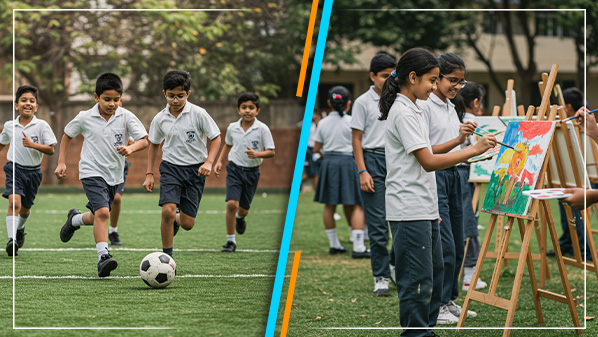
In this competitive world, the need for an all round education cannot be overstated with vagaries. An all round education in a holistic way assures that students not just excel in academics but also imbibe lifelong skills, creativity, and physical well-being. Among the many factors that influence a child's overall growth, sports and arts play a crucial role. They foster physical health, emotional intelligence, and cultural awareness, shaping students into balanced individuals. Many parents and educators often wonder how to choose the best CBSE school in Siliguri that offers a comprehensive curriculum inclusive of sports and arts. Role of Sports in Holistic Development Sports are a part of physical development and through them, children are taught discipline, team work and courage. Participation in different games improves motor skills, enhances immunity and instills a healthy lifestyle. Aside from physical development, sports also teach important life skills such as leadership, determination, and planning. In the context of how to choose the best CBSE school in Siliguri , it's important to look for institutions that emphasize sports as part of their curriculum. Schools that prioritize sports activities provide students with opportunities to participate in inter-school competitions, fitness training, and outdoor adventures. Significance of Creativity and Emotional Intelligence The best school for arts stream in Siliguri arts stream covers all forms of creative endeavors that are essential for comprehensive development. They develop creativity, self-expression, and appreciation for culture. Involvement in arts helps children think creatively, solve problems imaginatively, and communicate effectively. When considering how to choose the best CBSE school in Siliguri , seek schools that embed arts thoroughly into their teaching programs. Schools in Siliguri that offer unconventional teaching styles tend to have arts as a central part, providing a climate in which creativity can flourish alongside academic progress. Involvement in arts activities enhances emotional intelligence so that students learn to manage and comprehend their feelings more effectively. It enhances confidence, social skills, and offers a healthy avenue to express emotions. Arts-promoting schools usually have art studios, music rooms, and performance halls where students get to choose from various platforms to express their talents. How to Choose the Best CBSE School in Siliguri? For parents looking for quality education, the decision of how to choose the best CBSE school in Siliguri requires analysis of a number of important factors. First, look at the academic reputation and infrastructure of the school. Second, determine how much focus the school is on putting on extracurricular activities such as sports and arts. Schools with innovative teaching methods in Siliguri often adopt modern interactive curricula that engage students actively. Additionally, talk to existing students and parents to see how they feel. A school that promotes participation in sports and the arts alongside academic excellence suggests a balanced learning environment. Remember how to choose the best CBSE school in Siliguri not only depends on academic rankings but also on the quality of life and growth opportunities it offers. Conclusion Sports and arts are essential pillars of holistic education in siliguri school , nurturing not just intellectual development but also physical health, emotional intelligence and creativity. When considering how to choose the best CBSE school in Siliguri , parents should prioritize schools that foster these aspects through dedicated facilities, innovative teaching methods, and inclusive extracurricular programs. Investing in a holistic education that combines the best of sports, arts, and academics is the key to nurturing vibrant, resilient, and creative individuals. So, take the time to explore options that align with these values, and choose a school that will inspire your child to achieve their fullest potential. You May Know: Tips to Avoid Procrastination While Preparing for Exams Ensuring Overall Growth of a Student with Holistic Child Development School Siliguri
 18 Jun 2025
 12
Academic excellence in itself is not sufficient to equip students with what they need for the future. Leadership skills from an early age are essential, and student voice and choice in the school system is perhaps one of the best measures to attain this. At Narayana, one of the best CBSE schools in Fulbari , its philosophy of empowering students to think and own their learning process is at the core of its education. This process helps develop confident and responsible citizens. Empowering Through Voice: Encouraging Expression and Responsibility Student voice is much more than merely providing students with a platform to voice their opinions; it means hearing them out and using their feedback in decision-making. Narayana Fulbari provides several avenues for students to be heard through classroom discussions, student councils, peer mentoring schemes, school activities, etc. The students eventually come to realise that their voice counts and that they can impact their learning environment. This kind of practice paves the way for a sense of responsibility and belonging to develop within the students. It educates the learners on expressing themselves effectively and constructively engage in discussions. The students can make suggestions on how school activities can be enhanced or propose improvements to class projects, promoting a feeling of agency. Being a top CBSE school in Fulbari, Narayana has incorporated student voice as a core part of its pedagogical practice, which ensures that students become articulate and responsible leaders. Choice in Learning: Fostering Independence and Self-Motivation A determining factor of Narayana Fulbari's leadership development process is to enable the students to have significant choices when it comes to their learning. Tasks like choosing the subjects of research projects and selecting co-curricular activities, empower the students to make choices solely relying on their area of interests and strengths. This instils intrinsic motivation since students learn better when they have a choice in what and how they learn. The teachers help the students establish academic and personal objectives and reflect on results. The student-centred culture here boosts problem-solving capabilities and encourages creativity. The focus on choice also prepares students for the realities of the world, where autonomous decision-making and flexibility are the mantras for success. Being a top CBSE school in Fulbari , Narayana incorporates this philosophy across all grade levels, gradually increasing the level of choice as students mature. This structured freedom builds confidence and helps learners understand the consequences of their decisions, further reinforcing leadership traits. Building a Leadership Culture Across the School Leadership within Narayana goes much above and beyond formal roles like student council or class monitor. It permeates through the fabric of school life. It is encouraged to lead group projects and participate in community service activities. These experiences develop the skills of teamwork, time management, moral responsibility, etc., that are necessary for successful leadership . Teachers and school leaders lead by example by introducing an inclusive culture in which each student feels heard and noticed. Guest speakers and community service with global and local communities contribute hugely towards the leadership training provided at Narayana. The school finds potential leadership in each child and strives to develop it through pragmatic application and real-life experience. Being a top CBSE school in Fulbari , Narayana constantly innovates its practices to respond to the changing needs of the learners. Its student voice and choice ensure that the students are not only academically accomplished but also emotionally intelligent and prepared to lead complex lives. In short, Narayana's dedication to voice and choice in empowering students makes it a pioneering school. By infusing leadership development in all the activities of school life, Narayana equips its students to be future-thinking and empathetic leaders. It is this forward-looking and student-friendly strategy that makes it the top CBSE school in Fulbari , building a tradition of excellence and future-proof learners. Additional Reading: The Narayana Edge: What Sets Fulbari Campus Apart? Best School for Arts Stream in Fulbari – A Parent’s Guide for Understanding Different Learning Styles
18 Jun 2025 11
In the world today, academic achievement alone is no longer the only testament that bears the measure of success. Emotional intelligence (EI), being able to comprehend, control and utilise emotions effectively, has become as important, if not more so, than intellectual capacity. Schools play an undeniable part in developing the social and emotional aspects of a child. For communities aspiring to create well-rounded human beings, the inclusion of emotional intelligence in the curriculum has become the need of the hour. This is why the best schools in Khidderpore are now putting more emphasis on cultivating EI in addition to academic education. The Role of Emotional Intelligence in Student Development Emotional intelligence starts to develop very early in life, sometimes even before a child goes to school. But it is in the organised setting of a school that one can work on developing these skills. Emotionally intelligent children can better manage their stress levels and deal with situations that are complex socially. They also have more resilience towards failure and tend to receive more favourable interactions from teachers and peers alike. The best schools in Khidderpore know that EI has a direct impact on a student's mental wellbeing and overall happiness. Through special programmes that incorporate mindfulness and social-emotional learning (SEL) activities, these schools set the stage for lifelong emotional wellbeing . By blending in EI into everyday lessons and classroom life, teachers can greatly enhance student motivation and classroom harmony. How EI Enhances Academic and Social Outcomes? Rather than diverting from scholarly learning, emotional intelligence actually supports it. Research has revealed that highly EI students also perform higher academically. This is mainly due to the fact that emotionally intelligent students are better motivated and are better in being able to cope with academic stress. When the student feels safe and supported emotionally, he or she is more likely to take scholarly risks and see difficulties through. The best schools in Khidderpore have recognised this link and are pioneering innovative teaching methods that encourage emotional growth. Teachers are trained not just as subject experts but also as emotional coaches. They are equipped to recognise signs of emotional distress and to intervene in constructive ways. In such environments, bullying is less prevalent, conflicts are resolved more amicably and students are more likely to develop strong, lasting friendships. Preparing for a Future Beyond the Classroom In a time when automation and artificial intelligence are reshaping the labour market, people skills like communication and empathy are more valuable than ever. Emotional intelligence is at the core of all these abilities. Employers actively look for candidates who can function effectively in teams, with sensitivity as leaders, and with interpersonal difficulties. The best schools in Khidderpore understand this change and are educating their students not only to take exams but to lead life. By enabling EI, they are empowering children with the abilities to succeed in inclusive workplaces and get along with people across all sections which in turn helps them be good global citizens. Students graduating from such schools are usually characterised by their assurance and demeanour, assessing their capacity to relate to individuals of all backgrounds. The increase in the interconnectedness in today's scenario marks emotional intelligence as the hallmark of successful people. Parents now seek to ensure a fulfilling future for their children and are now opting for schools that believe emotional development is as important as academic stringency. To this end, the best schools in Khidderpore are creating a brilliant model of what it means to be well-rounded in terms of education. You May Know: Best International Boarding Schools in Kolkata for Expats – What to Look For? How To Apply To Narayana International School Kolkata – A Comprehensive Guide
17 Jun 2025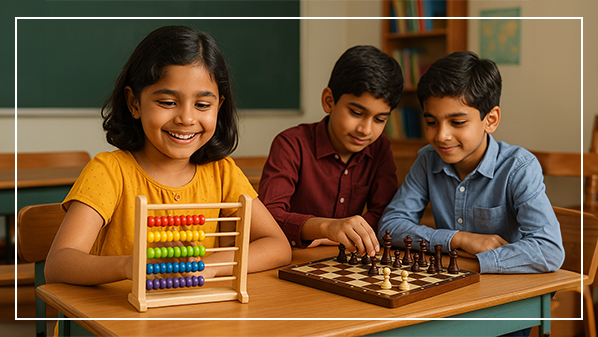 13
Gamification has taken the center stage in recent years as a learning technique, particularly in classroom settings that are committed to reaching digital-native students. Gamification, the act of applying game mechanics to non-game environments such as schooling, purports to make learning more fun and interactive. But as international schools with innovation and technology focus increasingly embrace this approach, the question still lingers: does gamification actually enhance learning? The Science Behind Gamification Gamification is much more than merely gamifying lessons. It borrows a lot of motivation and psychological principles to drive behaviour and learning. The prime elements of gamification like point systems and level progression tap into the human need to achieve and be recognised. These factors, when inserted strategically into learning activity, can maximise student engagement and focus. Many studies indicate that gamified learning can enhance student motivation and time on task. For example, students studying through a gamified math platform are likely to spend more time and effort to solve challenging problems in order to access the next level or receive a virtual badge. More time spent on task tends to accompany better understanding and retention. Although its effect might differ based on the way gamification is used, its ability to construct an engaging and adaptive learning space is apparent. Gamification in Practice In the classroom, gamification comes in a variety of different forms. Teachers may employ quizzes with leaderboards, virtual escape rooms, or interactive storytelling websites . These formats can especially help students who have difficulty in the standard classroom environment by giving them other means of proving knowledge and gaining confidence. International schools with innovation and technology focus are particularly placed to adopt gamification. With access to some of the best digital tools and platforms, such schools can create learning experiences that are immersive and personalised. Let's say for instance, employing virtual reality for simulations of historical periods or coding games to impart computer science ideas engages the students and also enhances their knowledge through experiential learning. Notably, successful gamification relies on well-defined educational outcomes. Adding game elements without pedagogical underpinnings can result in distraction rather than increased learning. Successful implementations balance fun with rigour and ensure that the game mechanics reinforce, but do not substitute, substantial learning objectives. Is Gamification the Future of Learning? As educational requirements change, gamification provides a powerful solution to the issues of student motivation and individualised learning. It is well in line with the thrusts of top international schools in West Bengal with holistic education , which are always looking for means to make learning more relevant and effective for an international student population. However, it is important to note that gamification is not a panacea. It is meant to supplement, not substitute for, good teaching practices. Teachers must be given professional development to know how to incorporate gamification meaningfully, and the schools should evaluate its effect continuously. Also, teachers should be aware of students who are not likely to react favourably to competitive activities and provide differentiated experiences to accommodate different learning preferences. When applied with careful consideration, gamification has the potential to turn the classroom environment into one where students are engaged active participants in their own education. Gamification promotes persistence and curiosity which are the abilities that are essential within and outside of school. To put it in perspective, gamification is not here today and gone tomorrow but is a weapon that can redefine education if handled carefully. This transformation is being initiated by best international school in kolkata areas of study and setting the pace for others to follow suit. As we venture into new means of motivating and educating, gamification is an interesting strategy that, if backed by good pedagogy, actually delivers. Additional Reading: Why Personalised Education Is the New-Gen Method of Learning? Shaping Physical Health with International Schools with Sports Facilities in Kolkata
12 Jun 2025 13
A growth mindset, the belief that abilities and intelligence can be developed through effort, learning, and perseverance, is a critical concept in shaping a child's approach to challenges. It contrasts with a fixed mindset, where children believe their abilities are innate and unchangeable. Fostering a growth mindset in school-aged children not only enhances their academic performance but also helps them develop resilience, motivation, and the ability to view failure as a natural part of the learning process. Here's how the best English-medium school in West Bengal cultivate a growth mindset in young learners. 8 Ways to Include Growth Mindset Among Children Many students in the best CBSE schools in Durgaur are guided and groomed in such a way that they develop a growth mindset at a very early age. Here are some of the best ways they incorporate to enhance growth mindset among school-aged children. 1. Praise Effort, Not Just Intelligence One of the most potent ways to build a growth mindset is through the way you praise children. Instead of simply commending them for being "smart," praise the effort they put into their tasks. When children are told they're smart, they may develop a fear of failure because they want to maintain that image. However, when they are praised for their effort and persistence, they learn that effort leads to growth. For instance, instead of saying, "You're so smart!" try saying, "I'm proud of how hard you worked on this problem!" This shift in praise encourages children to view challenges as opportunities for growth rather than as threats to their intelligence. 2. Encourage the Power of "Yet" One of the most effective strategies to encourage a growth mindset is the use of the word "yet." When a child says, "I can't do this," introduce the word "yet." For example, say, "You can't do this yet, but with practice, you will get there." This subtle shift in language helps children understand that skills and abilities are not fixed but can improve with time and effort. Children need to realise that the road to success isn't always immediate. Struggling today doesn't mean failure; it simply means they haven't yet mastered it. It reinforces the idea that learning is a process, promoting patience and perseverance. 3. Embrace Mistakes as Learning Opportunities In a growth mindset, mistakes are viewed as valuable learning opportunities rather than a sign of failure. When children make mistakes, it's important to help them understand that errors are a natural part of the learning process. Instead of focusing on the mistake, ask questions like, "What did you learn from this?" or "What would you try differently next time?" According to the faculty of the best English-medium school in West Bengal , fostering a positive attitude toward mistakes enables children to develop resilience and learn that setbacks are a natural part of the improvement process. This helps them develop a more flexible attitude toward challenges and prevents them from giving up easily. 4. Model a Growth Mindset Yourself Children learn a great deal from observing the adults around them, especially their parents and teachers. If they see you embracing challenges, learning from mistakes, and persevering through difficulties, they are more likely to adopt a similar approach. For example, if you're working on something challenging, talk through your thought process out loud. Please share your own mistakes and explain how you fixed them. When children see you handling obstacles with a positive attitude and a willingness to learn, they will be more likely to do the same. 5. Provide Opportunities for Challenges For children to develop a growth mindset, they need opportunities to face and overcome challenges. According to the best English-medium school in West Bengal , it's essential to provide them with tasks that are neither too easy nor too overwhelming. Tasks that lie in the "zone of proximal development" (the space between what they can do independently and what they can do with support) are ideal. Encourage activities that require effort and persistence, whether it's solving a challenging math problem, learning a new skill, or competing in a demanding sport or game. These tasks will help them understand that they can improve with practice and determination. 6. Use Language That Promotes Growth The language we use has a profound impact on how children perceive their abilities. Encourage children to use phrases like "I can improve with practice" or "This is hard, but I'm getting better." Reinforce the idea that their abilities are not set in stone but instead can be developed through effort and persistence. When children face difficulty, avoid using phrases like "You can't do this" or "This is too hard for you." Instead, offer encouraging statements such as "Let's figure this out together" or "It may take a little more practice, but you'll get it." 7. Foster a Love of Learning, Not Just Results Focus on the learning process, not just the outcome. Encourage children to be curious and explore new subjects without the pressure of achieving a perfect grade. Emphasise the value of knowledge and self-improvement over winning or being the best. This can be done by incorporating activities that encourage exploration and creativity, such as art projects, science experiments, or hands-on learning activities . When children are excited about learning for the sake of learning, they develop a growth mindset that values progress over perfection. 8. Set Realistic Expectations and Goals Help children set realistic, achievable goals that challenge them without overwhelming them. Break larger tasks into smaller, manageable steps and celebrate their progress as you go. This approach enables children to experience a sense of accomplishment, even in small steps, which motivates them to continue. By focusing on continuous improvement rather than perfection, children learn that growth is a journey that requires patience and persistence. Conclusion: Building a growth mindset in school-aged children is not an overnight process. It requires consistent encouragement, positive reinforcement, and a supportive environment where mistakes are viewed as opportunities for learning. By praising effort, embracing challenges, and fostering a love of learning, you can help children develop the resilience, motivation, and self-belief necessary to overcome obstacles and thrive in all aspects of their lives. A growth mindset not only enables children to excel academically but also equips them with the mental tools they need to succeed in the face of adversity throughout their education and beyond. Choose best English-medium school in West Bengal that help your child get a growth mindset and shine in life. Additional Reading: How Narayana Stands Out as a School with Innovative Teaching Methods ? How English Medium Schools in Durgapur Enhance Communication Skills?
12 Jun 2025 13
With the world transforming at an unprecedented rate, the abilities students must master are also transforming. As automation, digitalisation, and worldwide collaboration remake industries, education, too, needs to transform to remain pertinent. No longer is it just about academic success but rather equipping students with skills that will be relevant in 2025 and beyond. For the top CBSE school in Fulbari , gearing students for the demands of 2025 and beyond is our central directive. Critical Thinking and Problem Solving Information, as it is right now, is at the fingertips and consequently so, being able to think critically is more vital than ever. Students must critically evaluate data and creatively solve intricate problems. These skills are vital not just in STEM but across all subjects and professions. The top CBSE school in Fulbari incorporates these skills into daily learning through inquiry-based teaching and collaborative discussions. From science labs to literature classes, the students are encouraged to question and come to their own conclusions. Problem-solving is also facilitated through group activities that mimic everyday situations. From creating a water purification system in science to mediating a pretend community dispute in social studies, students are taught the way to examine circumstances and create solutions that can be put into action. This manner ensures that students are not mere receptive targets of knowledge but dynamic actors within their learning process. Digital Literacy and Adaptability Technology keeps changing the manner in which we work and live, and digital literacy is not anymore a choice. Being at ease with new tools, knowing how to assess online information, and applying technology ethically are vital skills. Top CBSE school in Fulbari has students interacting with multiple digital platforms at a young age. They are taught to code and apply educational apps that promote innovation and creativity. Additionally, flexibility is also kind of a central priority. As industries continue to shift quickly, the capacity to learn, unlearn, and relearn will determine future success. We introduce students to multiple learning experiences that challenge them to move beyond their comfort zones and adopt change. Whether through global projects or exposure to international viewpoints, students are taught that change is not a threat but an opportunity for development. Emotional Intelligence and Communication While technical abilities are valuable, employers now look for emotional intelligence more and more. The capacity to be aware of and be in control of one's emotions and function well within a team is crucial. The top CBSE school in Fulbari promotes these qualities through a robust focus on peer mentoring and teamwork. Students are encouraged to achieve self-awareness and social responsibility . Verbal and written communication are the basic aspects of good leadership and teamwork. Our curriculum attempts to cover routine provisions for public speaking and debate. Students are taught to clearly express themselves and to respond respectfully to alternative perspectives. This improves their academic achievement along with empowering them and preparing them for later leadership. It has become evident that a holistic skill set will be the key to success when we talk about the future. The top CBSE school in Fulbari is dedicated to making its scholars into flexible and conscientious world citizens. With a balanced strategy and skills building, we are moulding tomorrow's leaders. The future is for those who are ready. Today we are setting the foundation for the skills students will require in 2025 and beyond. With a progressive eye on critical thinking, digital literacy, flexibility, emotional intelligence, and communication, we are preparing our students for whatever comes next. Addtional Reading: How to Choose the Best CBSE School in Fulbari ? Best School for Arts Stream in Fulbari – A Parent’s Guide for Understanding Different Learning Styles
12 Jun 2025