
Loading...

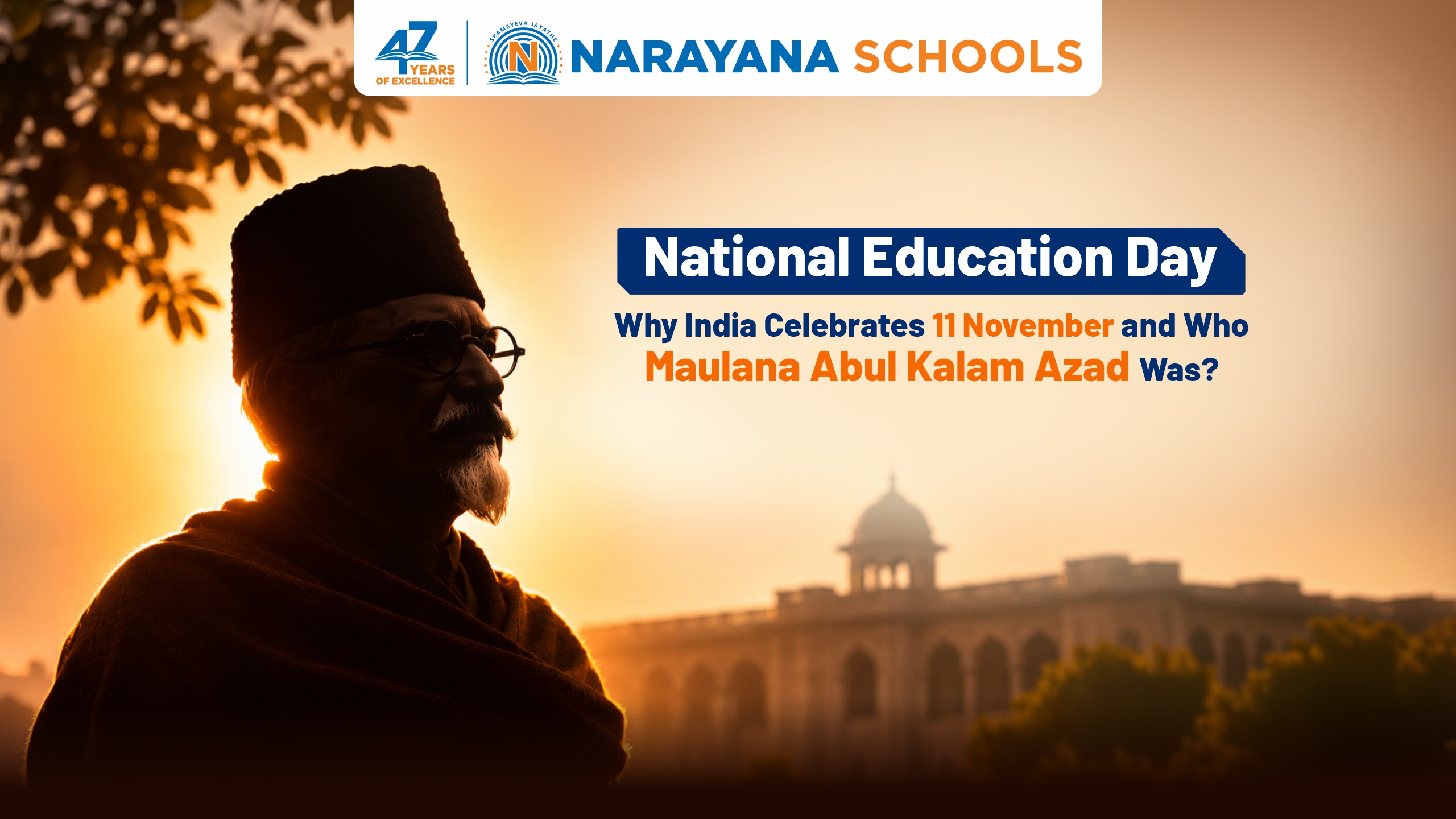
What connects a newspaper that reached nearly 25,000 to 30,000 readers, the establishment of India's first Indian Institute of Technology (IIT) and a day dedicated to celebrating education?
All three lead back to one remarkable figure: Maulana Abul Kalam Azad.
A scholar, journalist, freedom fighter and independent India's first Education Minister, Abul Kalam Azad's contributions extended from shaping public opinion during the freedom movement to helping build the foundations of India's education system. His birth anniversary, 11 November, is observed as National Education Day, recognising a vision of education that went beyond textbooks and examinations.
1. A journalist who challenged colonial rule:
2. The youngest Congress President of his time:
3. A champion of education for all:
4. Institutions that shaped higher education:
5. A strong supporter of India's arts and languages:
Why Is His Vision Relevant in 2026?
Several priorities shaping modern education in India reflect the educational vision championed by Maulana Abul Kalam Azad. As independent India's first Education Minister, he advocated free and compulsory education for children up to 14 years, girls' education and equal access to learning, believing that education was essential to building a strong and inclusive nation.
His contribution forms an important part of the evolution of India's education system. The country's first National Policy on Education was introduced in 1968, based on the recommendations of the Kothari Commission (1964–1966). It emphasised equal educational opportunities, science education and the three-language formula. Although Azad did not directly draft the policy, these priorities reflected several principles he had championed during his tenure.
The National Education Policy (NEP) 2020 carries forward some of these ideas through its focus on equitable access, foundational literacy, multilingual learning and holistic development. Its emphasis on vocational exposure, multidisciplinary learning, critical thinking and creativity also echoes Azad's belief that education should extend beyond textbooks to include practical skills, scientific understanding and cultural awareness.
Although introduced decades after his tenure, these policies highlight the continuing relevance of Azad's vision: education for all, inclusion, scientific progress and the all-round development of learners.
Keeping His Vision Alive at Narayana Schools
Maulana Abul Kalam Azad believed that education should empower every child with knowledge, broaden perspectives and prepare them to contribute meaningfully to society. Reflecting these values, Narayana Schools places emphasis on learning that goes beyond academic achievement to nurture curiosity, confidence, creativity and independent thinking.
In line with the holistic vision of NEP 2020, Narayana Schools offers age-appropriate programmes as part of its beyond academics approach, supporting the overall development of every child:
Alongside these, the Disha mental wellbeing programme supports students’ emotional health and resilience.
Through conceptual understanding, experiential learning, critical thinking and holistic development, students are encouraged to question, explore ideas and apply their knowledge to real-world situations. This approach also recognises the importance of developing scientific understanding, practical skills and an appreciation for learning beyond textbooks.
By creating opportunities for academic growth and all-round development, we aim to help every child recognise their potential, pursue their aspirations and fulfil their dreams, because at Narayana Schools, your dreams are our dreams.
1. When is National Education Day celebrated in India?
National Education Day is celebrated every year on 11 November, the birth anniversary of Maulana Abul Kalam Azad.
2. Why is Maulana Abul Kalam Azad remembered in Indian history?
Maulana Abul Kalam Azad is remembered as a freedom fighter, scholar, journalist, who championed universal education and contributed to the development of higher education, scientific learning and cultural institutions.
3. Who was India's first Education Minister after Independence?
Maulana Abul Kalam Azad became India's first Education Minister on 15 August 1947 and served until his death in 1958.
4. What were Maulana Abul Kalam Azad's major contributions to education?
His contributions included advocating free and compulsory education for children up to 14, promoting girls' education, supporting technical learning and helping strengthen institutions such as IIT Kharagpur and the University Grants Commission.
5. What is the connection between National Education Day and NEP 2020?
National Education Day honours Azad's vision of accessible and inclusive education. The National Education Policy 2020 advances several related principles, including multilingual learning, equitable access, vocational education and holistic development.
6. Why is National Education Day important for students?
It encourages students to value education as a means of gaining knowledge, developing essential life skills, exploring opportunities and contributing positively to society.


