


Loading...



Explore stories and insights
Loading...


 17
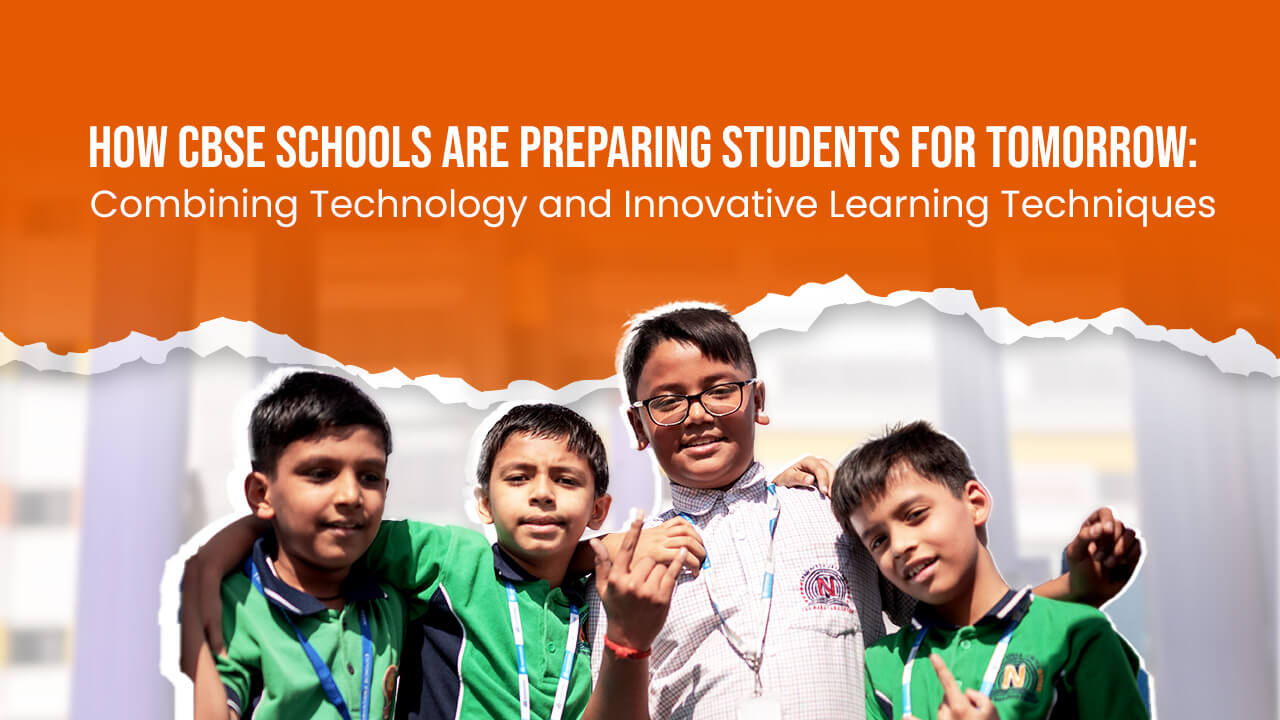
Imagine a scenario where your child returns from school with lots of excitement and a twinkle in their eyes. They describe their flying through space in school or assembling a mobile robot that can move. There is no textbook boredom but pure wonder. A good CBSE school can make this possible. They combine intelligent technology with new learning techniques. Children don't merely learn. They dream big and acquire life skills for tomorrow. Parents like you get that warm hope as your child becomes equipped for a faster world. But how do you know if you are picking the right school? Let us take a look. What is a CBSE School? CBSE stands for the Central Board of Secondary Education, which operates under the aegis of the Ministry of Education, Government of India. CBSE-affiliated schools teach from little tots to class 12 and have a concrete plan. Children study maths, science, English and so on. But apart from academics, focus is also on sports, arts and games. Most CBSE schools are English medium schools. This ensures proper language acquisition, making children more confident. These schools are spread far in different locations and parents trust them for their deep roots. Good CBSE schools emphasise thinking skills and their exams measure genuine understanding and not mere words. The teachers here behave as guides by identifying every child's individual spark. Safety shines bright. Playgrounds hum and labs call for experiments. Parents often search for a “ CBSE school near me” on Google and they locate institutions that suit family life. This is because CBSE opens wide doors to many colleges. A lot of careers welcome their students. CBSE builds more than knowledge as it nurtures hearts. Children learn virtues such as diligence and compassion. In a dynamic world, this counts. Hope abounds as dreams soar, and you, as parents, feel the pride as your child excels in life. Embracing Smart Classrooms for Joyful Learning CBSE schools make lessons into adventures. Smart classrooms take the lead as large electronic boards shine. Teachers display videos of rivers flowing or stars sparkling. Children tap screens and they zoom in on tiny cells or old maps as their excitement springs high. Projectors make stories come alive. No more flat words. Animations come alive and difficult concepts feel easy. Students discuss on platforms like Google Classroom. They exchange ideas at home. Teachers send fun tasks. Parents look in as well and feel connected. Everyone stays close. It is beneficial, as children learn concepts quickly, and they remember their lessons longer. Studies indicate that tech improves scores by 20-30% . This transformation is a joy. Children rush to school, and no boredom is ever seen. AI and Personal Tools: Tailoring Dreams for Each Child AI adds a magic touch as it watches how kids learn. Slow steps get gentle help. Quick-thinking minds can face fun challenges. Chatbots answer questions day or night. There’s no waiting as doubt melts away. Personalised plans shine. Software fits each child's pace. Weak spots strengthen. Strengths grow bold. Gamification turns work into play. Points and badges make kids smile and pride swells. In a CBSE-affiliated English medium school , this generates hope. Every student is noticed, as no one gets left behind. Facts show 88% of parents cheer for AI . It gets children ready for tomorrow's workforce. Enthusiasm builds up as futures appear bright. Virtual Worlds and Labs: Hands-On Wonders Without Limits Virtual reality transports children to new worlds. They stroll down ancient streets or swim with fish. No bus is needed, as it is safe and exciting. Virtual labs allow them to combine colours or create circuits. In these schools, children learn from failures, as they do not cause any harm. One can try again and again. STEM tools ignite sparks Robotic arms move Coding makes games fun Hands become busy Minds think deeply Critical skills flourish Problem-solving becomes fun The CBSE curriculum encourages this as NEP 2020 leads it. Students learn at their own pace. Hearts are filled with wonder. Parents notice this progress. Stats indicate more than 10 million children use these resources every day. In many places, these dreams become larger. Collaborative Tools: Creating Teams and Friendships Microsoft Teams is one of the tools that brings everyone together. Online groups solve riddles, and ideas flow freely. Teachers facilitate discussions as assignments come easily. Even the feedback comes promptly. This instils the value of sharing. Children learn to listen as cooperation develops strongly. International connections make them feel more excited. There are virtual conversations with students from distant locales. These interweaving cultures help hearts spread wider. These benefits touch souls. Many shy and hesitant children speak. Ties bond closely as communication skills take flight. In the vast world, this counts. Feel the warmth while friendships endure. Contemporary Approaches Beyond Technology: Projects and Real-Life Competencies Projects make ideas come alive. Children build models or study cases. They put knowledge into practice. Memorisation of every lesson isn’t needed as the concepts will be clear. Flipped classes translate to view at home, discuss at school. As there are many questions abound, understanding becomes better. Competency-based approaches emphasise skills. Once you are good at one, you can proceed to another. Critical thinking prevails. Early vocational options start opening up. It could be IT or arts training. Fulfilling careers seem to be a near possibility. STEAM combines science with imagination. Design projects bring delight. Arts integrate as innovation is free-flowing. Holistic growth builds layers. Yoga soothes minds. Eco clubs take trees to the ground. Mindfulness dissolves worries. Empathy lessons construct kind hearts. Global exchanges inculcate respect. Community service beckons. Children help neighbours in distress. Civic hearts beat strong. They understand the purpose of life as their lives gain a lot of meaning. Overcoming Obstacles: Making Tech Work for Everyone Obstacles arise. Some households do not have an internet connection. Schools provide devices. Offline apps help a lot. Teachers work tirelessly. They learn tools as equity shines. The digital divide dissolves drastically. Subsidies translate into access. Everyone is on board. Hope triumphs at the end. CBSE schools spend intelligently as their infrastructures expand. Teachers keep focus on the kids. Administration becomes easier. Parents remain in the loop as unity emerges. Factors to Consider Before Choosing a School Hope and worry get combined while selecting a school. Think wisely. Nearby Location: Locality heads the chart. Select a CBSE school nearby. Shorter travel means more playtime. Kids come with smiles. Curriculum: Curriculum matters a lot. Opt for tech integration with CBSE. AI, laboratories, and projects shape futures. Infrastructure delights with computer rooms, secure play areas, and well-stocked libraries. Teachers are the most important. Kind educators teach new methods of learning. Fees, Safety and Hygiene: The fee balance is worth it. Verify add-ons such as sports. Safety protects hearts with hygienic places and medical check-ups. Parent meetings establish trust. Apps share all relevant news. Feedback: Reviews share secrets. Notice scores and smiles. Extracurriculars feed souls in the form of dance, music, and karate. There are good CBSE schools that provide this. Decide with care. Your child's happiness awaits. Why Choose Us at Narayana School for Your Child For 46 years, every dream has found direction and care at Narayana Schools. Your child's smile motivates us. We design plans just for them. Our R&D team curates study paths from pre-primary delights to higher secondary aspirations. E-Kidz begins with play. Happiness fills little hearts. E-Champs fosters wonder. Curiosity ignites. E-Techno gains confidence. Skills for tomorrow flourish. Sr. Secondary prepares for life. Knowledge and wisdom converge. An integrated curriculum blends CBSE magic. State boards and exams weave in. Children learn broadly and deeply as mentors are present in the ratio of one per twenty children. There are calls every fortnight. We hear and we solve all issues along with teachers. No anxiety remains. Technology defines our world. Virtual classes sparkle. Labs buzz with exploration, Libraries invite endless stories. Microschedules organise days wisely. Adoption calls connect souls. Extracurriculars become an integral part of life. Skating glides, music sings and visual arts colour dreams. Basketballs bounce high, whereas karate builds strength. Speech and drama voice thoughts as life skills root deep. Parents share from their hearts. Noor Alam of Fulbari believes values shape adults Radhey Shyam Shaw of Howrah observes motivation rise Shubadip Bhiswas of Kalyani enjoys our care M. D. Sanaullah of Kalimpong observes eagerness grow Arindam Chakravorty of Durgapur applauds full development Millions of students learn every year. We own hearts. Choose us for your dreams to become a reality. Your child can flourish here. Conclusion CBSE schools interweave tech and new methods into bright futures. Children spread their wings. Parents experience profound peace. This magic happens now. Don't wait. Come to the nearest branch of Narayana Schools immediately. Talk to us about admitting your child. Let joy and triumph begin. FAQs Q1. How do smartboards make lessons enjoyable for children? Ans. Smartboards transform walls into windows. Children scribble on them. Videos stream live. Questions appear interactive. Laughter echoes through the room. Learning holds fast like glue. Q2. What if my child learns at a slow pace using technology? Ans. AI identifies the speed. It offers simple steps initially and gradually builds up slowly. Teachers offer some extra help. Confidence builds this way, as there is no hurry and just consistent gains. Q3. Do these methods assist with exams as well? Ans. Yes. Projects teach real answers. Online tests help to practise speed. Feedback corrects errors fast. This way, scores rise, and children appear for board exams with smiles. Q4. How does technology protect children online? Ans. Schools use filters. Teachers monitor closely. Lessons in safe nets begin early. Parents receive tips as well. Worry disappears as trust develops strongly. Q5. Can technology help with homework at home? Ans. Apps send homework home. Videos can explain again. Parents can join the chats. There are no frozen moments. Quality time becomes useful as family relationships strengthen. Q6. What skills do virtual labs teach besides books? Ans. They demonstrate safe experiments. Children experiment boldly. Failure is the best teacher. Curiosity takes over as authentic science hearts beat faster. Q7. How do collaborative tools help shy children? Ans. Virtual communities allow shy voices to write first. Ideas are shared without glances. Friends are made easily as bravery sneaks in and hearts are opened wide. Q8. Are new approaches healthy for the body and mind? Ans. Yoga apps soothe storms. SEL games are taught to feel. Eco projects align with the Earth. Balance is maintained as joyful minds learn best.
 27 Feb 2026
 17
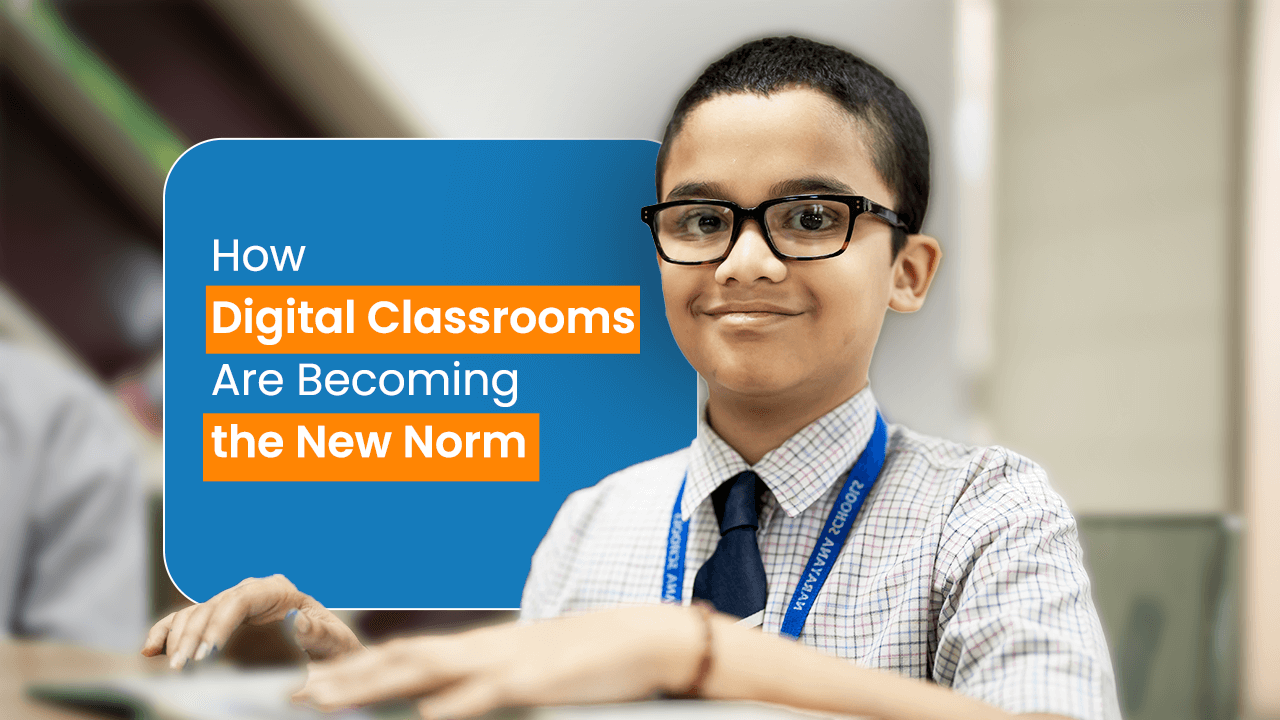
There once was a time when learning meant blackboard, chalk and heavy backpacks. Today, brightly coloured rooms filled with smart screens and smiling faces welcome our children. Teaching has become increasingly lively, clear and curiosity-driven. Digital classrooms are capable of helping every child learn more quickly and dream more broadly. More than just a change in tools, it is a beautiful and welcome change in the field of education. A New Dawn In Learning: How Classrooms Have Changed Do you remember the good old days, when you, as a student, used to carry a bulky schoolbag and piles of notebooks? Chalk particles were sprinkled around and blackboards were at the centre of each classroom. Education was all about listening, memorising and noting down what the teacher wrote on the board. Things are different today. Kids enter bright rooms with big screens and colourful images. Teachers smile as they work on digital boards to turn even the most difficult lessons into easy and fun experiences. As parents, you could be feeling astonished and wondering, "How quickly education has transformed!" But this transformation is more than just screens or devices. It's about simplifying learning, making it joyful, and more meaningful. Digital classrooms are making every child learn more, and every teacher teaches better. Let's see what's so unique about these new-generation classrooms. What is a Digital Classroom? A digital classroom is not merely a room with a computer or projector. It's an environment where teachers use smart tools such as interactive boards, videos, and apps to present lessons more clearly. Imagine this — Kids observe the water cycle via animated videos rather than learning about it by reading from a book. Kids understand math concepts through animations and interactive technology on boards, rather than just solving sums on paper. Kids watch and listen to the recorded lessons at home when they miss school. Learning no longer equals pressure, but it feels like play instead. Kids love what they are learning, and parents can monitor their progress. Virtual classrooms are making education an experience every kid adores. Why Are Digital Classrooms The New Normal In India This change is spreading all over the nation, from the crowded schools of the metros to those in smaller cities. The New Education Policy (NEP 2020) has influenced schools to utilise technology to make learning more practical and innovative. But the truth is simple: the world is evolving, and our kids need to learn with it. Parents desire their kids to be tech-savvy, not merely to play but to learn. Kids enjoy visual learning, and they learn better if they can see and hear. Schools desire to equip kids with a future where all work is technology-based. This transformation is not imposed. Most students have welcomed it with enthusiasm and pride. Education is going digital, and every virtual classroom is in the direction of a smarter India. How Digital Classrooms Bring Learning To Life Imagine this: A teacher describes the solar system and on the screen, the planets begin to rotate. The children's eyes are bright as they feel mesmerised by the glowing red colour of Mars or the sparkle of Saturn's rings. Learning together comes to life. Students are divided into groups, writing on smart tablets, building ideas and solving puzzles. It develops teamwork and self-belief. Even the quiet ones join in. Quizzes and interactive games help the weaker students feel stronger. If they don't get it, they can re-watch lessons later. Every kid learns differently — some by seeing, some by listening and some through action. Digital classrooms enable teachers to teach every type of learner. Learning truly comes to life and is personal at last. The Hidden Benefits That Parents Often Ignore Parents may see the screens but not the magic behind them. These are the hidden benefits of digital learning: Kids discuss more about what they learned. Learning becomes a matter of pride for the family to boast about. Parents can monitor lessons and know how their child is progressing via online apps. It makes study time safer due to fewer outside tuition and more guided learning at home. Emotionally, parents are proud to observe their child learning in a modern, global manner. Most of all, it develops curiosity, a quality that lasts a lifetime. In the controlled school environment, this comes along with the important human touch that only teachers can provide. Digital classrooms not only make good students; they make confident, inquisitive learners. Teachers: The Real Heroes Behind The Screens A lot of people believe technology replaces teachers, but that's not so. Technology helps, but teachers still make the difference. Think of a small-town teacher learning to use smart boards for the first time. She practises late at night, determined to get a smile and a clearer understanding from her students. That's the real spirit behind each digital classroom. Teachers now employ videos, images, and real-life anecdotes to teach challenging subjects. Workshops and training keep them on their toes and informed. Behind each smart classroom, there is a smarter, more committed teacher. Overcoming The Challenges Similar to each new concept, smart classrooms have some areas for improvement. Some of the schools experience internet problems or power outages. Gadgets require maintenance. Parents occasionally complain about excessive screen time. Schools, however, are discovering smart solutions. Most of them implement hybrid teaching by combining books with technology. Teachers instruct students about safe and balanced screen use. Rural schools embrace cost-effective solar-powered devices. Every new system has a few bumps, but there is a strong desire to get better. Digital learning is not going anywhere, and it's improving daily. What Should Parents Look for In A School With Digital Classrooms When you tour a school, don't just see the glitz of the screens. Ask these basic questions: Do the teachers explain the lessons well, and are they suitable for your child's age? Are teachers trained effectively to utilise digital tools? Does the school maintain a balance between screens, books, and handwriting? Can parents easily understand how their child is progressing at a parent-teacher meeting or by using an app? Do the children learn healthy screen habits and teamwork? When you pick up your mobile phone to search for “schools near me” or “best school”, remember these are the real things you want, not just a classroom with cool gadgets. A good digital classroom helps to educate our hearts, as well as our minds. How Schools Are Setting The Trend India has always had a love affair with learning. Now, the nation is spearheading another revolution, called online learning. Lots of schools are already integrating smart boards and e-learning laboratories. Students conduct science experiments through simulations, so difficult subjects become easy to understand. In villages, certain schools employ solar-powered equipment to provide lessons even during power failures. As of recent updates, approximately 65% of India's private schools have implemented digital learning environments, either in full or in part. India's young minds were always bright. With digital education, they are now shining brighter than ever. The Emotional Impact: A New Way Of Learning And Living Digital classrooms are changing not just how our children learn, but also the way families think and interact. Kids feel eager to go to school and share what they've learnt. Parents feel engaged, proud, and much more involved with their child's progress. Teachers feel valued for learning something new and positive, like new tools, and for their impact on a young mind. Communities feel hopeful about education in schools for our students in the future. More than a shift in tools, it's a shift in thinking. Digital classrooms are not substituting old values. They are making them stronger. Learning becomes more equitable, interactive, and heartfelt. How Narayana School Is Building The Future With Digital Learning In Narayana Schools, our principle is straightforward: "Learning must encourage curiosity, not fear." All the classrooms here are a combination of technology and care. Smart boards, digital laboratories, robotics classes, and AI-powered resources make learning fun and simple. Teachers and parents remain connected through special apps and notifications. Every child receives personalised mentoring. No one is left out. Technology at Narayana is not used for flair. It's employed to make children feel more confident, creative, and future-ready. That's why we are proud to be among the top schools for digital education. Conclusion: The Future Is Already Here The classroom that your child enters today might be different, with screens and lights. But the mission stays the same: to enable them to grow, think, and dream, and prepare them for the world they will be a part of in the future. Digital classrooms are the future, and the future has already arrived. As a parent, you can be a part of it. Talk to schools, ask questions, and observe how your child learns. Your child's world is moving quickly. Let's go hand in hand with them towards this bright, digital future. Frequently Asked Questions (FAQs) Q1. Is digital learning appropriate for very young children? Ans. Yes. Under teacher guidance, digital lessons for small children employ colourful images, songs, and games. It makes learning easy and fun at an early age. Q2. How does digital teaching help shy students? Ans. Technology helps quiet students to learn at their own pace. They re-watch lessons and participate in group work without fear. Q3. Will my child continue writing in notebooks? Ans. Of course! Learning digitally supports writing, but does not replace it. Students continue writing notes, homework, and handwriting. Q4. How much screen time will I allow my child at home? Ans. Balance is the key. Restrict entertainment screen time and permit learning content with monitoring. Discuss further details with your child’s teachers. Q5. What internet connection does a school have for digital classrooms? Ans. A consistent broadband or Wi-Fi link is sufficient. Schools usually maintain backup systems for hassle-free classes. Q6. Are digital classrooms expensive for parents? Ans. No. Most schools incorporate digital facilities as part of regular fees. It often economises on money incurred on extra tuition. Q7. What do teachers do if a child is absent from a digital lesson? Ans. Teachers post recorded lessons or notes online so that the child can easily catch up. Q8. Will digital classrooms better prepare my child for college and careers? Ans. Yes. Children learn how to handle computers, do online research, and learn teamwork. All these skills will serve them well in higher education and careers.
24 Feb 2026 46
Selecting a suitable school for your child is among the most significant choices as a parent. A school is not a mere building where education is imparted. It is the institution where your child will spend the majority of their formative years. It is where their values, discipline, skills and aspirations will take shape. All parents hope to provide their child with the best facilities that life can offer, and it all begins with choosing the right school. In India, parents are increasingly opting for CBSE schools today. They want schools that provide good education while also preparing the children for the rapidly changing future. But with so many schools out there, how do you know which one is suitable for your child? This guide will walk you through all the factors you need to consider so that you can make an informed choice. What is CBSE Education? CBSE refers to the Central Board of Secondary Education. CBSE is among the most sought-after educational boards in India. CBSE schools follow a curriculum that the NCERT (National Council of Educational Research and Training) has drafted. This curriculum is uniform all over the nation. CBSE schools emphasise a balanced education. In addition to subjects such as science, mathematics and English, they also promote physical activities, sports, co-curricular activities and life skills. Another significant benefit is that CBSE schools prepare children extremely well for competitive exams such as JEE, NEET and civil services. For parents, good CBSE schools are increasingly becoming their first choice. The reason is that they offer a combination of academic excellence, contemporary teaching, and robust values–the three pillars on which a holistic education stands. Why Parents Choose CBSE Schools The education system has changed hand in hand with the times. Parents of today want their children to receive exposure to national-level education and global best practices. Here are some of the specific reasons: English-medium Education: In this global era, English proficiency is a must. More and more parents are seeking out English medium schools to enable their children to communicate and compete in the world. Future-proof Curriculum: CBSE's curriculum is so planned that children understand concepts clearly, rather than memorising them, and build a strong conceptual framework. This has major benefits in higher education. Improved Prospects: Many entrance examinations in India are conducted according to the CBSE curriculum. Parents, therefore, consider a CBSE education as an apt stepping stone to future professions. Focus on Overall Development: Apart from academic aptitude, the emphasis is also on sports, arts, music, technology, and leadership, leading to overall development. This is the reason why if you type " CBSE school near me " , you will see increasingly more parents opting for CBSE schools for their kids. Key Things to Consider Before Selecting a CBSE School For most children, school is a second home where they will develop proper values, confidence and knowledge. As a result, parents need to consider a number of factors when choosing a school. Here are the most crucial ones to consider while choosing a CBSE school : School Reputation and Legacy A well-established school has already demonstrated its worth over time. Parents should find out how long the school has been teaching. They need to confirm the kinds of results it has produced. As a parent, find out what the parents of past students think about it. A school that has successfully educated kids for many years tends to build trust. Additionally, the school's reputation ensures that your child is in capable hands. Quality of Teachers Teachers have the largest influence on your child's mind. A good teacher doesn't just teach by explaining lessons but also encourages children to think and to love learning. A good teacher also makes complex subjects easy and interesting. When you select a school, try to find out whether the teachers are well-qualified, well-trained and experienced. A patient and friendly teacher can transform your child's life. Infrastructure and Facilities The world is changing at a rapid pace, and children require access to new facilities. Check if the school has enough classrooms and science laboratories. It must have a library with informative books and computer laboratories as well. Sports fields and art spaces also count since children also learn outside textbooks. Appropriate infrastructure in a school enables children to discover new skills with comfort and security. Emphasise Technology Technology these days is not a luxury but a necessity. A good school that follows the CBSE curriculum employs smart boards, digital applications and internet tools to teach. These make lessons simpler to follow. They also prepare children for what will eventually be an integral part of every profession. Student-Teacher Ratio Kids require individual attention to study well. If a teacher has to deal with too many pupils, it is not possible to provide personalised care. A healthy student-teacher ratio ensures that your child's questions are attended to and addressed. It also ensures your child has a stronger sense of bonding with the teacher. Co-curricular Activities Education is not marks alone. A good school makes kids participate in sports, arts, dance, music, and debates. These activities unveil unseen talents in children and make them confident. An English-medium school with a CBSE curriculum offers co-curricular activities to make your kid a well-rounded and happy person. Distance and Location Long travel hours daily can make children tired and affect their ability to study. That is why parents are often found searching for a good “ CBSE school near me ” . A school closer to your home saves travel time and makes life easier for both parents and children. Always consider how far the school is. Also, consider how safe the travel route will be for your child. Safety and Discipline The safety of kids at school should also be a priority for parents. Verify if the school has appropriate security personnel, CCTV cameras, and safe school transport. Also, verify how the school enforces discipline. A good school educates kids on values and manners with care and affection rather than fear. Fee Structure All parents desire the best education for their child, but it must also be within their means. Compare the fees of various CBSE schools . Observe what kind of facilities they are offering for the amount they are charging. Remember, the most costly school is not necessarily the best. Sometimes, the cheapest could turn out to be of high quality. Hence, select a school that has a good cost-benefit ratio. Parent Reviews and Feedback Sometimes, the best way to learn about a school is to speak with other parents. Speak with parents who already have children studying there. Are they satisfied with the teachers? Do the kids feel comfortable and safe? Real accounts from other parents will provide a better picture than advertisements or pamphlets. Why Choose Narayana School for Your Child’s CBSE Education? We at Narayana School, understand that each child is unique. We also understand the strong feelings parents experience when they entrust their child to a school. That's why we have created a platform where children can learn, flourish and excel with confidence. Strong Academic Foundation: Our CBSE curriculum aims to provide concept clarity and prepare students for competitive examinations. Modern Classrooms: We employ smart boards, apps, and state-of-the-art laboratories to ensure learning becomes an interactive experience. Qualified Teachers: Our teachers exceed textbooks. They coach, mentor and nurture every child on an individual basis. Emphasis on Overall Development: Overall development is our venture, from sports to arts, from the science club to leader development. Each talent has the potential to be nurtured. Safe and Caring Environment: Students' safety is our priority. Our campuses are safe. We take pride in the fact that our teachers are trained to take the best care. Legacy of Trust: Narayana is a name trusted throughout India. We carry that legacy of quality to all our branches in the country. At Narayana School, we assure you that your child's tomorrow starts here with us. Conclusion Choosing the best school is not an easy decision. A good CBSE school can give your child a flying start in life. Look for reputation, quality teaching, facilities and values. Most importantly, before anything else, look for a school where your child is happy. In Narayana School, we integrate knowledge, technology and care. We aim to provide your child with the wings to fly. If you are looking for the right destination, we would like to welcome you to visit us. Let us walk hand in hand in creating your child's bright future. Admission is open now. Provide your child with the Narayana advantage today! FAQs Q1. How is CBSE different from state boards? CBSE follows a national syllabus, while state boards follow regional ones. CBSE makes it easier for students to prepare for national-level competitive exams. It also helps if families move between states. Q2. Does a CBSE school focus only on academics? No. A good CBSE school also promotes sports, arts, leadership, and life skills. The aim is to shape well-rounded students. Q3. Are CBSE schools more expensive than state-board schools? It varies from school to school. Some schools of the CBSE board charge more fees for modern facilities and new methods of teaching. Yet, there are also low-cost CBSE schools. Q4. What is the role of technology in the classrooms of CBSE schools? Most schools today employ smart boards, projectors, online apps, and digital labs to teach in a fun and interactive way. This makes children learn better. Q5. Will my child struggle if we change from a state board to CBSE? There might be some adjustments in the initial stage. But with the help of teachers, your child will settle down very fast. It is because CBSE emphasises clear concepts. Q6. How do I know if a CBSE school nearby is good? Check its reputation, results, infrastructure, teachers, and parent reviews. Visiting the campus personally also helps in judging the environment. Q7. Are the children in CBSE schools prepared for international opportunities? Yes. As CBSE is accepted internationally, students of CBSE schools are assured to pursue higher studies both within India and outside with confidence. Q8. Why should I opt for Narayana School compared to other CBSE schools? At Narayana, we provide a solid academic base, current facilities, nurturing teachers, and a legacy of trust throughout India. We’re not a school, we’re a collaborator in your child's success.
23 Feb 2026 19
Every student has a mix of strong and weak subjects. While excelling in favourite topics feels natural, scoring well in areas you struggle with can be challenging. However, with the right strategies and a focused approach, it is possible to turn weaknesses into strengths. Whether you are preparing for school exams or competitive tests, improving in weak subjects requires patience, consistent practice, and proper guidance. 1. Understand the Root of the Weakness The first step is identifying why you find the subject difficult. Is it due to a lack of interest, gaps in basic concepts, or limited practice? For example, many students struggle with mathematics because they missed out on foundational concepts in earlier grades. Similarly, subjects like science or history can feel overwhelming if you don't have a proper study plan. A good school environment plays a vital role here. The best English-medium school in West Bengal ensures that students receive regular assessments and personalised feedback, helping them identify problem areas early. 2. Build a Strong Foundation Weak subjects often stem from a lack of clarity in basic concepts. Go back to the fundamentals, even if it means revisiting lower-grade textbooks. Once the basics are straightforward, advanced topics become easier to understand. Please don't rush through chapters; instead, break them into smaller sections and master one at a time. Teachers in the best English medium school in West Bengal follow structured lesson plans and revision techniques to strengthen core concepts, ensuring students don't carry forward any knowledge gaps. 3. Create a Study Plan Focused on Weak Areas A well-planned timetable can make a huge difference. Dedicate extra time to your weaker subjects without completely neglecting your strong ones. Short, consistent study sessions are more effective than long, irregular ones. Allocate 30–45 minutes daily to the subject you find difficult. Break topics into small, manageable parts. Revise regularly to retain what you've learned. Schools with proper academic planning, such as the best English-medium school in West Bengal , train students to follow systematic schedules and balanced routines to ensure overall progress. 4. Practice Through Questions and Mock Tests For subjects like mathematics and science, practice is the key to improvement. Solve as many sample papers, past questions, and mock tests as possible. For theoretical subjects, practise writing detailed answers to improve presentation and retention. Mock tests also help you understand the exam pattern and enhance your time management skills . Analysing your mistakes and learning from them is as important as studying itself. 5. Seek Help When Needed Don't hesitate to ask for help from teachers, friends, or tutors. A fresh explanation can sometimes clear doubts instantly. Forming study groups can also be beneficial, as discussing topics with peers helps reinforce understanding. Schools that prioritise student-teacher interaction make a significant difference. Regular doubt-clearing sessions and one-on-one mentoring ensure that no child feels left behind. 6. Use Different Learning Techniques Sometimes, changing your learning method can transform your understanding. Visual aids, such as charts, diagrams, and videos, can make complex topics easier to understand. Teaching the concept to someone else is also an effective way to reinforce learning. For language subjects, reading newspapers, practising vocabulary, and writing regularly can boost performance. For science, relate concepts to real-life examples. Experiment with different methods until you find what works for you. 7. Stay Consistent and Positive Improving in weak subjects takes time. Don't let initial setbacks discourage you. Track your progress regularly and celebrate even the most minor improvements. A positive mindset plays a huge role in overcoming fear and building confidence. Schools that create a supportive learning atmosphere help students develop resilience and a growth mindset. When students are encouraged to view mistakes as learning opportunities, they are more likely to succeed. 8. Balance Revision and Rest Cramming before exams rarely helps, especially for subjects you are weak in. Instead, focus on regular revisions and thoroughly understanding the concepts. At the same time, ensure you get enough rest. A fresh and relaxed mind absorbs information better than a stressed one. Conclusion Scoring well in weak subjects is not about an overnight transformation; it's about consistent effort, innovative study plans, and proper guidance. Start with small goals, strengthen your basics, and practice regularly. Remember, every student has the potential to improve with the right mindset and support. Choosing the right school environment is equally important. Institutions like the best English medium school in West Bengal provide structured teaching methods, personalised attention, and a motivating atmosphere that helps students overcome academic challenges. With patience, planning, and perseverance, you can turn your weakest subject into one of your scoring strengths. Additional Reading: What Makes an International School in Kolkata Affordable Yet High Quality? Shaping Physical Health with International Schools with Sports Facilities in Kolkata
31 Jul 2025 74
Parents are looking for schools that provide more than just academic instruction in Kolkata's constantly changing educational scene. They seek educational institutions that recognise the potential of every child and foster innovation and growth. Narayana Khiddirpore has become a popular option among the expanding list of reputable institutions. It provides a combination of academic rigour, individualised attention, future-focused learning, etc., and is widely regarded as one of the best schools in Khiddirpore . However, why are parents choosing Narayana Khiddirpore? Let's examine it more closely. 1. Holistic Development with Modern Curriculum Students today need skills and confidence in addition to rote knowledge. Among the best schools in Khiddirpore , Narayana Khiddirpore is establishing new standards with its extensive and up-to-date curriculum. Through the integration of STREAM (Science, Technology, Reading, Engineering, Arts, and Mathematics) modules with CBSE academics, the school allows children to participate in inquiry-based, hands-on learning. The lessons are meant to inspire as much as to educate. The institution's in-house research team created a customised scheduling system that is equally important because it enables teachers to recognise and support each student's unique learning style. While maintaining a strong foundation in academic principles, students acquire practical skills through project-based assignments and interactive learning platforms. Parents have commended this combination for helping kids develop a lifelong love of learning and independent thinking skills . 2. State-of-the-Art Facilities and Safety Standards For any parent selecting a school, infrastructure and safety are musts. Both of these issues are thoughtfully and precisely addressed by Narayana Khiddirpore. Smart classrooms, state-of-the-art labs, art studios, robotics rooms, large sports facilities, and a wide range of features are available in its well-planned campus. In addition to being aesthetically pleasing, these are also practical, allowing students to explore and find their interests. Beyond appearances, school culture is firmly rooted in safety. The institution provides peace of mind through CCTV surveillance, emergency response procedures, trained security personnel, and monitored entry points. To ensure efficient classroom management and one-on-one assistance, the teacher-to-student ratio is kept low. Narayana Khiddirpore is ranked among the best schools in Khiddirpore because of its emphasis on both learning and well being. 3. Mentorship and Community Engagement Another one of the hallmarks of Narayana Khiddirpore’s approach is its genuine commitment to pastoral care. Every student is assigned a mentor who plays the role of bridge between the school and home. Parents find comfort in knowing there is always a professional keeping an eye on their child’s academic and emotional journey. This school stresses on community service and this is yet another unique feature. For extending learning outside of the classroom, students are encouraged to take part in community service projects. At an early age, this cultivates civic duty and awareness. 4. Proven Track Record of Results Because of Narayana Khiddirpore's track record of academic success, many parents choose it. The school's track record of successful board exams and competitive exam scores demonstrates its culture of motivated and disciplined preparation. With the help of continual training and development, the teaching staff guarantees that students not only perform well but also comprehend concepts thoroughly. The school's standing as one of the best schools in Khiddirpore has only grown as a result of its performance. 5. Parental Involvement in Student Growth Parents here can be active participants in their children's education rather than passive observers. Communication is transparent and truthful, and it takes the form of open feedback forums, progress tracking systems, parent-teacher conferences and many more communication options. Students flourish in a learning ecosystem created by this degree of engagement. Narayana Khiddirpore provides parents in Kolkata with a foundation that is prepared for the future, not just a school. It stands out for its dedication to open communication, safety, individualised care, academic excellence, and many other values. Being one of the best schools in Khiddirpore , it consistently produces self-assured and competent individuals who are well-equipped to tackle the challenges of the future. Additional Reading: Why Personalised Education Is the New-Gen Method of Learning? Shaping Physical Health with International Schools with Sports Facilities in Kolkata
31 Jul 2025 18
In a rapidly evolving digital landscape of today technology has become an important part of our daily lives influencing how we communicate and form relationships. One of the most promising advancements is how tech is being harnessed to cultivate emotional intelligence (EI) across all age groups. From early childhood to adulthood, innovative technological tools are helping individuals develop better empathy making Naraya Schools one of the best CBSE school for working parents in Siliguri. Understanding Emotional Intelligence and Its Importance Emotional intelligence is the capacity to identify the management capacity and control our own feelings as well as identify and control others' feelings. Higher EI has been associated with enhanced mental well-being, healthier relationships, and more effective performance in the workplace. With growing interconnectedness in societies, developing EI becomes increasingly important, something technology is now doing very effectively. Tech’s Role in Early Childhood Education The foundation of emotional intelligence is often laid in childhood. The best CBSE school for working parents in Siliguri recognizes this by integrating technology based tools to support emotional development. Interactive apps and digital storytelling platforms help young children identify their feelings and understand different emotional responses. Such schools with innovative teaching methods in Siliguri use gamified learning modules that make emotional learning engaging and accessible, even for busy parents juggling work and family commitments. Moreover, virtual reality (VR) experiences are being adopted to foster empathy among young learners. For example children can walk in someone else's shoes virtually, experiencing situations from other perspectives which is pivotal in nurturing empathy, a core component of EI. These technological innovations ensure that even in crowded classrooms or homes children receive tailored emotional support. Enhancing Emotional Skills in Adolescents Adolescence is an important phase for growth of emotions that is usually characterized by emotional turmoil and social challenges. Technology offers channels for teenagers to attain self awareness and emotional control in a responsible manner. Social media platforms if utilized with care can provide a means for self expression and interaction and create a sense of belonging. Several of the best CBSE school for working parents in Siliguri incorporate digital journaling apps, mindfulness meditation apps and online counseling services to support adolescent emotional wellbeing. Tools of such kind enable teenagers to reflect on their feelings and seek help when needed conveniently breaking down barriers to mental health support. Technological Solutions for Adults and Working Professionals For adults, especially working professionals, balancing career demands with emotional health is often challenging. Technology offers flexible solutions like online emotional intelligence training modules, virtual coaching sessions, and mobile apps that promote mindfulness and emotional regulation throughout the time of hectic work schedules. The COVID-19 pandemic accelerated the adoption of such tools illustrating how teletherapy and digital self-help resources are vital in managing stress and cultivating EI. Companies and institutions recognize the importance of emotionally intelligent leadership and hence many of the best CBSE schools for working parents in Siliguri now extend their EI curriculum to include adult learning programs emphasizing continuous emotional development. The Future of Tech in Emotional Intelligence Development Looking ahead the continuous evolution of artificial intelligence (AI) and machine learning promises even more personalized emotional learning experiences. AI powered chatbots and virtual assistants can offer real time emotional support helping users recognize and regulate their feelings as they happen. Furthermore the incorporation of data analytics into educational platforms allows educators and parents to track emotional development progress customizing interventions where needed. This granularity ensures targeted support especially unique in schools with innovative teaching methods in Siliguri where embracing technology can make a measurable difference. Conclusion The use of technology in developing emotional intelligence of all ages is revolutionizing. It makes learning emotionally accessible, engaging and personalized to the individual needs irrespective of age or origin. For the best CBSE school for working parents in Siliguri adopting novel tech-driven models for emotional education is not only a fad but an imperative in developing emotionally intelligent students to deal with the complexities of an emotionally rich world. Additional Reading: Tips to Avoid Procrastination While Preparing for Exams Ensuring Overall Growth of a Student with Holistic Child Development School Siliguri
31 Jul 2025