World Mental Health Day 2026: Why Students Need to Be Heard and How Narayana Schools' Disha Makes Room for It
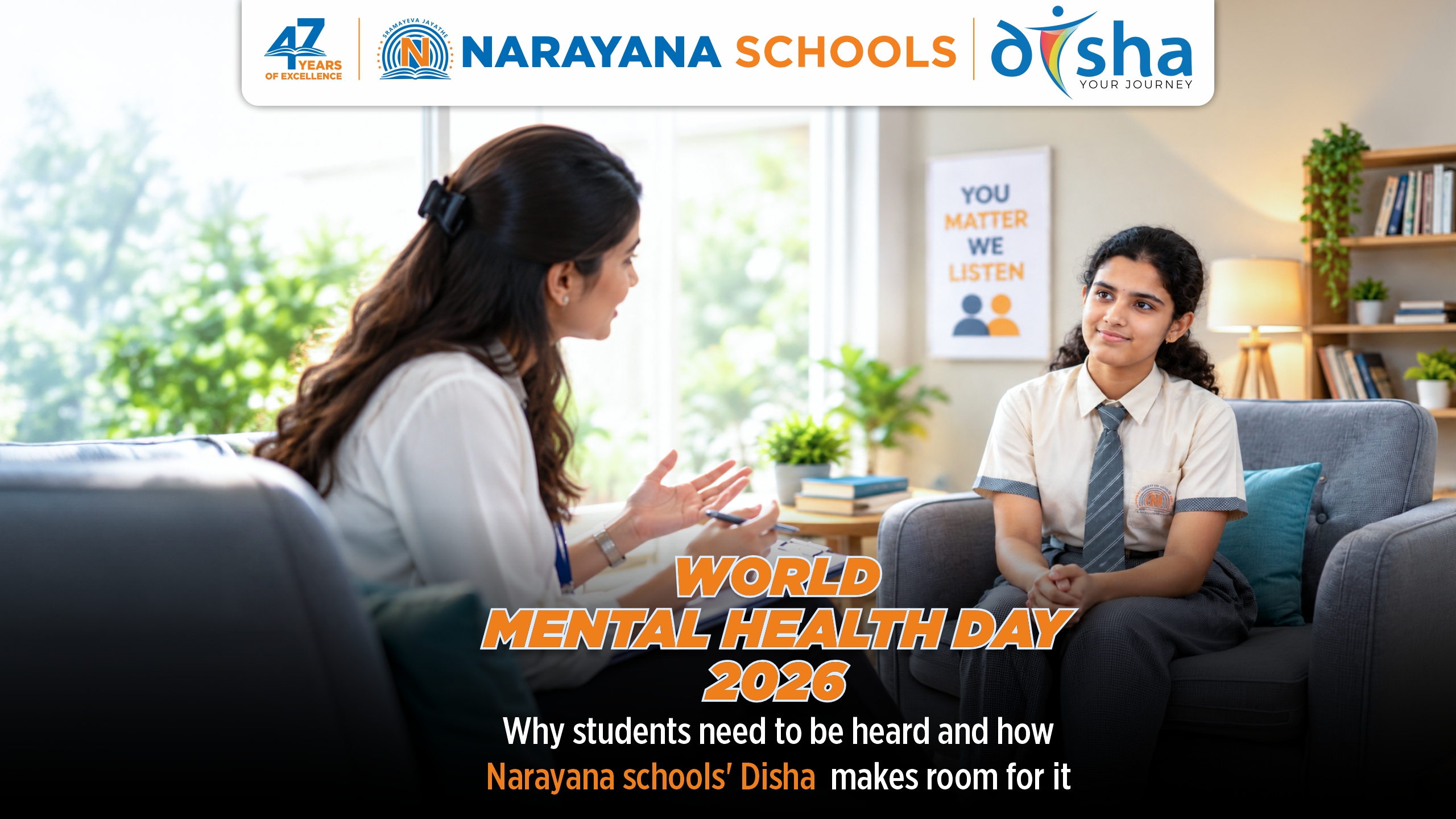
A student saying “I am fine” does not always mean everything is fine. Sometimes a change in sleep, withdrawal from friends, irritability or reluctance to attend school says more than a direct answer.
World Mental Health Day, observed on 10 October, has “Lived experiences heard: real voices, real change” as its theme for 2026, highlighting the importance of listening to people’s experiences and turning their voices into meaningful action and stronger mental health support.
For Indian families, this matters across every school stage. According to the World Health Organization (WHO), around one in seven adolescents aged 10 to 19 globally experiences a mental health condition. Furthermore, the WHO and the United Nations International Children’s Emergency Fund (UNICEF) report that one-third of mental health conditions emerge before the age of 14 and half before the age of 18 worldwide. These findings highlight the importance of early support and nurturing environments at home and school.
- Why Students Need to Be Heard?
Mental health in students is shaped by academic expectations, friendships, family relationships, bullying, identity, social pressures and major life changes.
- Signs of stress in school students can include changes in behaviour, sleep, appetite, concentration or social interaction.
- Listening without immediately correcting or judging can make it easier for a child to speak honestly.
- How parents can support children's mental health starts with simple conversations: “What felt difficult today?” or “Is there something that has been bothering you?”
- Listening Is More Than Asking Questions
Supporting student mental health does not mean solving every problem immediately.
- Give conversations time rather than rushing towards advice.
- Take concerns seriously even when they seem small to adults.
- Avoid comparing academic performance or emotional responses with siblings or classmates.
- Encourage healthy routines involving sleep, physical activity, friendships and breaks.
- Persistent or severe emotional, behavioural or physical changes may require support from a qualified mental health professional.
WHO recommends age-appropriate psychosocial interventions that can be delivered in schools and communities, reinforcing the importance of accessible support around young people.
- Government Initiatives in India for Mental Health and Well-being
Student wellbeing is also a public priority. National and state initiatives now give families places to turn for support. National initiatives
- Tele-MANAS (14416): A free, 24x7 national helpline offering mental health support in 20 languages, with a mobile app that includes video consultation.
- Manodarpan (Ministry of Education): Psychosocial support for students, teachers and parents, including a toll-free helpline and resources.
- National and District Mental Health Programmes: These bring mental health services closer to communities, and the district programme now covers 704 districts.
- Mental Healthcare Act, 2017: It guarantees every citizen the right to access mental healthcare services.
- Supreme Court guidelines (July 2025): Institutions with 100 or more students must appoint a qualified counsellor, psychologist or social worker.
- National School Mental Health Policy: Announced by the Ministry of Education for rollout by 1 June 2026, reportedly covering counsellor ratios and early screening.
State initiatives
- Telangana: The School Mental Health Programme, run by State Council of Educational Research and Training (SCERT) with School Initiative for Mental Health Awareness (SIMHA), trains teachers identified as counsellors to support students.
- Karnataka: Rashtriya Kishor Swasthya Karyakram (RKSK) Adolescent Health Days give students a platform to discuss health concerns, and government colleges are being oriented on student mental health with National Institute of Mental Health and Neuro Sciences (NIMHANS).
- Kerala: A joint Health and General Education programme, announced in January 2026, covers children's physical and mental wellbeing.
- How Narayana Schools' DISHA Makes Room for Students
At Narayana Schools, DISHA Mental Wellness Programme has supported students since 2017 through a dedicated system for academic, social and emotional wellbeing.
- Personal Assistance Programme: One-to-one support in a safe and confidential setting.
- Group Assistance Programme: Sessions that encourage mental health awareness and resilience.
- Parent Assistance Programme: Guidance that helps families understand and respond to children's emotional needs.
- 130+ counsellors and psychologists: A dedicated professional network supporting students across the system.
This creates space not only to identify concerns but also to normalise conversations around mental wellbeing.
5. Small Changes at Home Can Make a Difference
Practical mental health tips for students can begin with everyday habits:
- Make one regular, distraction-free time for conversation.
- Listen before offering solutions.
- Notice changes in behaviour rather than focusing only on marks.
- Protect sleep, meals, recreation and family time during demanding academic periods.
- Praise effort, honesty and resilience alongside achievement.
At Narayana Schools, creating spaces to listen, understand and support student wellbeing helps children grow with confidence and resilience, turning care into action and helping them move towards fulfilling their dreams, because your dreams are our dreams.
FAQs
- Why is World Mental Health Day 2026 important for students? Its theme, “Lived experiences heard: real voices, real change”, highlights the importance of listening to people with lived experience and allowing their voices to influence support and services.
- How can parents recognise signs of mental health concerns in their child? Persistent changes in mood, sleep, appetite, concentration, behaviour, school attendance or social interaction may indicate that a child is struggling and could benefit from additional support.
- How can parents support children's mental health? Regular conversations, patient listening, realistic expectations and healthy routines can create a more supportive environment.
- What is DISHA at Narayana Schools? DISHA is Narayana Schools' dedicated mental wellness programme offering group, individual and parent support for academic, social and emotional concerns.
- When should professional help be considered? If emotional or behavioural changes are persistent, severe or affecting daily functioning, assessment by an appropriately qualified professional is advisable.