
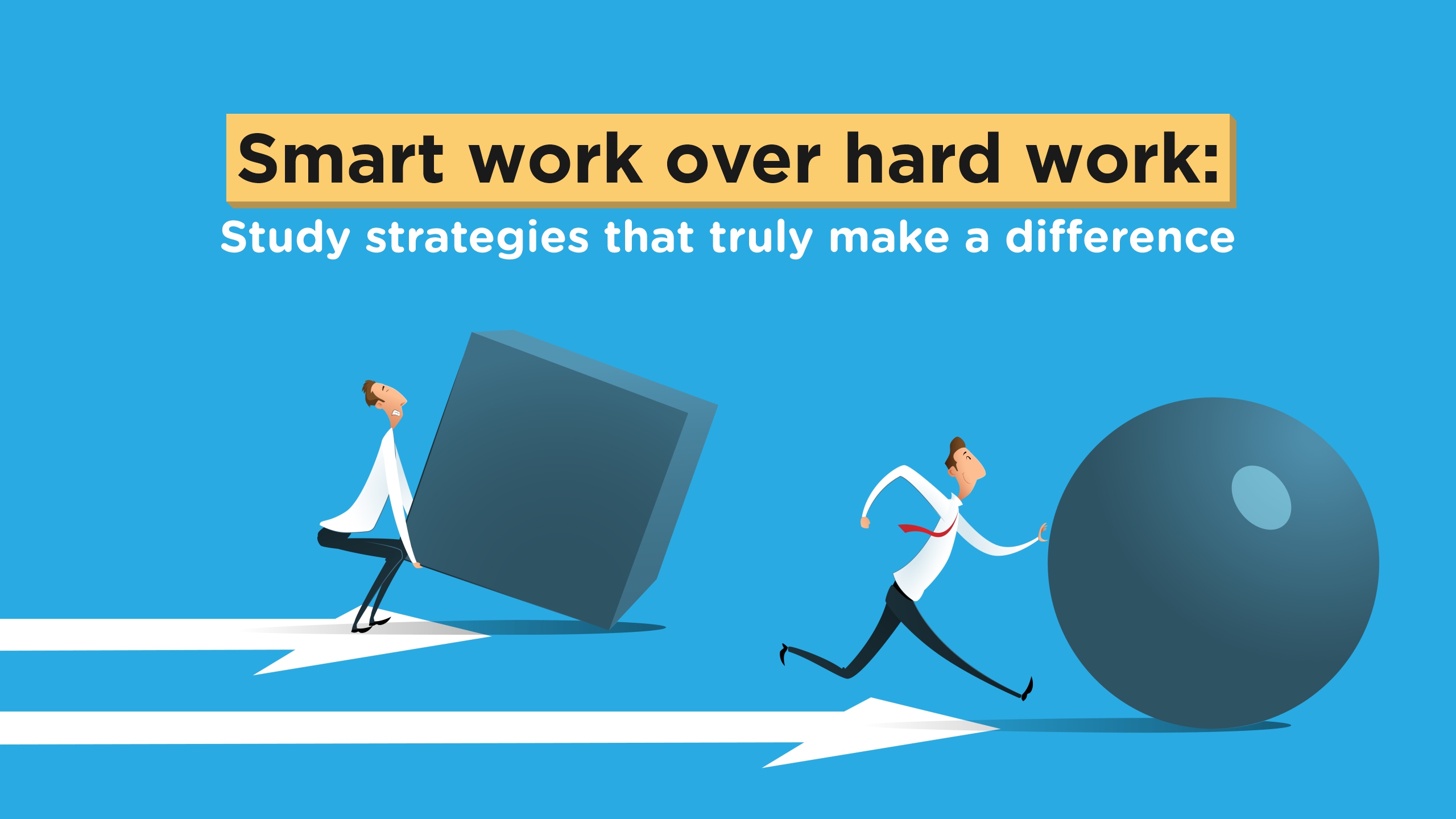
In an era where information is abundant but time is limited, the key to academic success lies not in how long students study, but in how smartly they do it. As 21st-century learning evolves, the spotlight has moved from sheer hard work to strategies that promote efficiency, clarity and emotional balance, the factors that enable students to learn better and not just longer.
The Shift in the Purpose of Education
The traditional education system has long rewarded hard work. However, the future of education is built on working smarter, developing critical thinking, clarity and adaptive learning.
Modern education requires students to:
• Understand how to learn, not just what to learn.
• Develop skills beyond academics like emotional intelligence, resilience and self-management.
• Balance cognitive effort with mental wellness.
Why Smart Work Matters in Early Learning
Research by Stanford University and the American Psychological Association indicates that students who use strategic learning methods outperform those relying solely on repetition.
Benefits of Smart Studying:
• Better academic retention and recall.
• Lower stress and increased motivation.
• Improved time management and goal setting.
• Stronger social-emotional development and confidence.
Proven Smart Study Strategies
1. Goal-Oriented Learning – Instead of unstructured long hours, students should:
• Set clear, achievable daily and weekly targets.
• Break complex tasks into smaller, time bound goals.
• Use planners or goal charts for visual tracking.
2. Spaced Repetition and Active Recall – This scientific technique improves memory and concept clarity:
• Create flashcards or use apps like Anki.
• Revise topics in intervals (1 day – 3 days – 7 days – 14 days).
• Test retention with weekly quizzes or oral recaps.
3. Pomodoro Technique and Time Blocking – Focus improves when study is segmented into focused sprints:
• 25 minutes of concentrated work, then a break of 5 minutes.
• After 4 cycles, take loner breaks of 15–30 minutes.
• Encourages discipline and prevents fatigue.
4. Conceptual Learning Over Rote Memorisation – Understanding the “why” behind every concept promotes deep learning:
• Use real-life analogies or examples.
Example: To explain the concept of electric circuits use the analogy of water flowing through pipes. Voltage is like water pressure, current is the flow of water and resistance is the size of the pipe. This analogy helps students visualise the abstract idea in a familiar and tangible context.
• Relate abstract concepts to tangible experiences.
Example: To teach probability ask students to estimate the chances of it raining on a cloudy day or drawing a red ball from a bag.
This connects mathematical probability with everyday decision-making, helping students internalise the concept.
Parents can support deeper understanding at home by referring to Narayana Schools’ concept-driven modules on the nLearn app. For instance, in physics, Newton’s Laws of Motion are not just memorised from a textbook. Instead, students watch animated explanations and conduct hands-on activities with toy cars and inclined planes. They observe motion, note the effect of varying forces, and then explain why motion changes—creating a meaningful bridge between theory and practical understanding.
To further strengthen conceptual grounding, Narayana Schools have the CDF approach, where every topic begins with a clear understanding of the concept. Only once the student grasps the logic behind the idea, are the definition and formula introduced. This way, formulas are not just memorised but understood as logical extensions of a concept. This method nurtures long-term retention and problem-solving skills, especially in subjects like mathematics and science.
Visual Learning for Concept Retention
Studies show that students using visual learning aids like mind maps or flowcharts:
• Retain up to 23% more information.
• Improve long term memory through visual associations.
• Make connections across subjects and themes easily.
Recommended tools:
• Mind maps (hand drawn or digital)
• Diagrams and infographics
• Colour coded notes and flowcharts
Mental Wellness and Study Balance
The importance of emotional development in early years cannot be overstated. According to Harvard Medical School:
• Sleep plays a critical role in memory consolidation
• Exercise enhances concentration and focus
• Mindful breaks prevent burnout and support mental clarity
Encouraging balance helps children develop emotional resilience, an essential skill for academic and life success.
Role of Parents in Nurturing Smarter Study Habits
Parents play a central role in promoting emotional intelligence for kids and smart study culture:
• Encourage effort over hours spent
• Help children reflect on what methods work best
• Recognise signs of stress or burnout and guide accordingly
The goal is no longer just academic excellence. It is about raising capable, confident individuals ready for real world challenges. When students adopt smart work over hard work, they not only perform better in exams but also develop a lifelong love for learning.
At Narayana Schools, we believe that curiosity sparks imagination, imagination sows the seeds of dreams, and with the joy of discovery and love for learning, we help students turn dreams into reality, because your dreams are our dreams.
The shift from hard work to smart work makes so much sense in today’s fast-paced learning environments. Techniques like spaced repetition and active recall can really transform how students retain information.
The ‘active recall vs. passive review’ comparison is gold—our school’s toppers swear by self-quizzing with Anki. Missing link: how sleep consolidates these efforts (studying 6 hours with 8 hours’ sleep beats 8 hours with 4 hours’ sleep). A ‘neuroscience of learning’ infographic would make this irresistible for visual learners.