
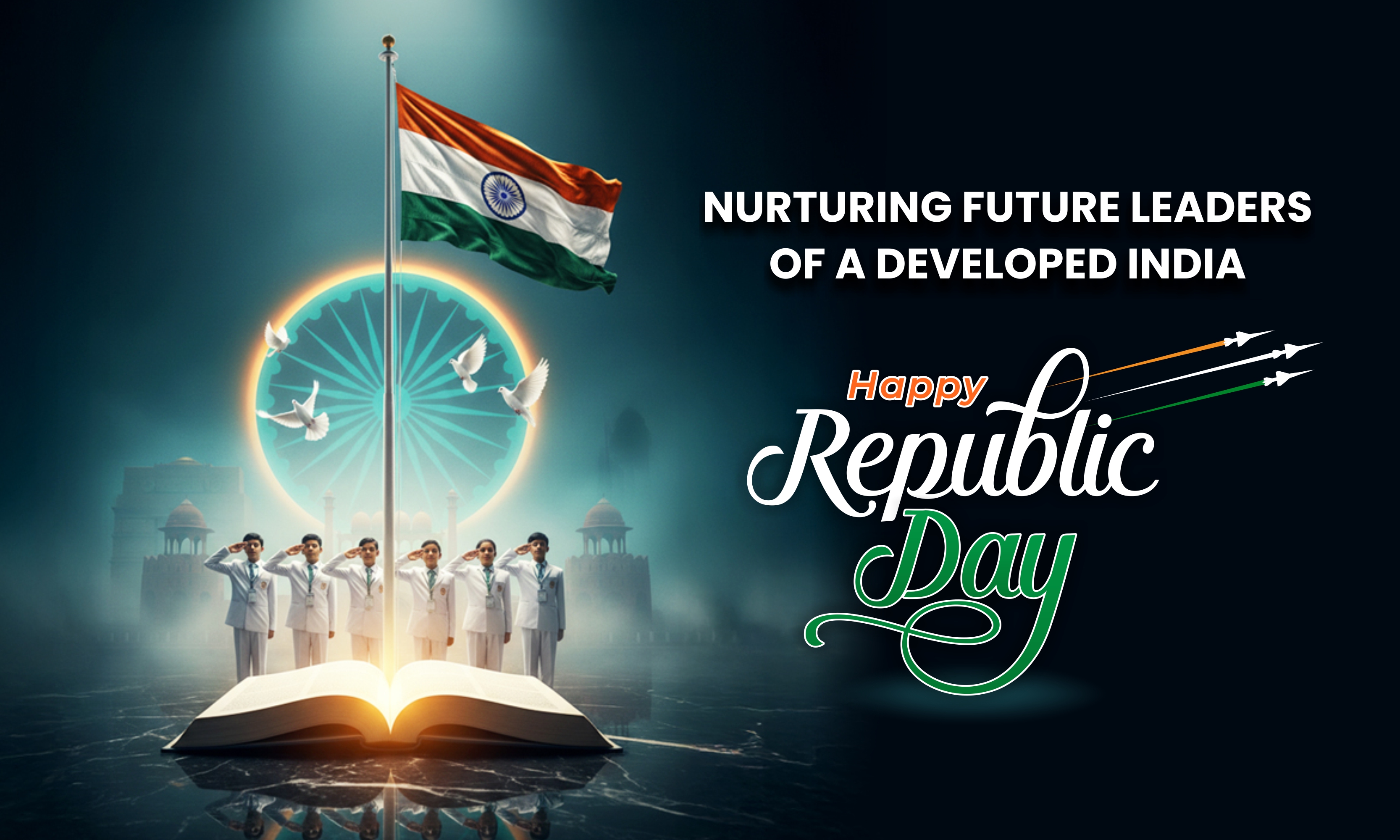
Celebrated every year on 26 January, Republic Day marks the adoption of the Indian Constitution in 1950, laying the foundation for India as a sovereign democratic republic. The date was deliberately chosen to honour 26 January 1930, the day when the Indian National Congress declared Purna Swaraj (complete self-rule), symbolising the long-standing aspiration for self-governance. While 15 August 1947 represents political freedom from colonial rule, 26 January signifies the moment India gave itself a constitutional identity and a system of laws by its own people. In 2026, this occasion carries added significance as India continues its journey towards Viksit Bharat, or a developed nation. For families, Republic Day becomes more than a parade or a holiday. It becomes a powerful moment to help children understand constitutional values, citizenship education and leadership rooted in responsibility.
- Why Republic Day Matters for Young Minds
- Republic Day commemorates the transition from colonial rule to self-governance through the Constitution.
- Civic education research shows that early exposure to constitutional principles strengthens democratic awareness.
- Understanding this day helps children see freedom as a responsibility shaped by law and ethics.
- The Constitution as a Leadership Blueprint
- The Constitution emphasises justice, liberty, equality and fraternity as guiding ideals.
- Studies in political science education highlight that value-based learning builds ethical decision-making skills.
- These principles form the backbone of leadership development in students.
- Building Leadership Through Responsibility
- Developmental psychology research links responsibility-taking in childhood with stronger leadership traits in adulthood.
- Encouraging accountability at home and school nurtures confidence and problem-solving abilities.
- Such habits align with the vision of raising future-ready citizens of India.
- Education as the Engine of a Developed India
- UNESCO studies confirm that quality education drives innovation, economic growth and social stability.
- A balanced focus on academics, critical thinking and emotional intelligence supports holistic child development.
- Republic Day reinforces the idea that education is nation-building in action.
- Role Models and the Power of Example
- Social learning research shows that children absorb civic values by observing everyday behaviour.
- Discussions around leaders, scientists and change makers inspire ambition rooted in service.
- These conversations strengthen national pride and civic responsibility.
- Encouraging Critical Thinking and Voice
- Educational psychology highlights that questioning and dialogue improve civic understanding.
- Mock parliaments, debates and discussions on current affairs promote informed thinking.
- Such practices prepare children for active participation in a democratic society.
- Republic Day as a Family Learning Moment
- Cultural studies show that national observances strengthen collective identity.
- Connecting the parade, flag symbolism and constitutional stories makes learning memorable.
- These experiences help shape responsible citizens for a developed India.
Republic Day 2026 stands as a reminder that India’s progress depends on the minds being shaped today. When children grow up understanding democracy, values and responsibility, leadership becomes a natural outcome. Nurturing these qualities at home and school ensures that the vision of a developed India is carried forward with integrity, wisdom and purpose.
It’s inspiring to see how Republic Day is evolving beyond a holiday and becoming an opportunity for families to teach the next generation about the importance of constitutional values and leadership. With India moving towards Viksit Bharat, nurturing future leaders is more important than ever.
It is very important to choose a responsible and great leader in every prescription for large and democratic nation like INDIA ?? and other is our responsibility to choose them wisely in each and every field and we must fight for the development of our nation by choosing a great leader. Thanks for giving a great acknowledgement and creting a great awareness about choosing a leader for a nation. BHARAT MATA KI JAY.