
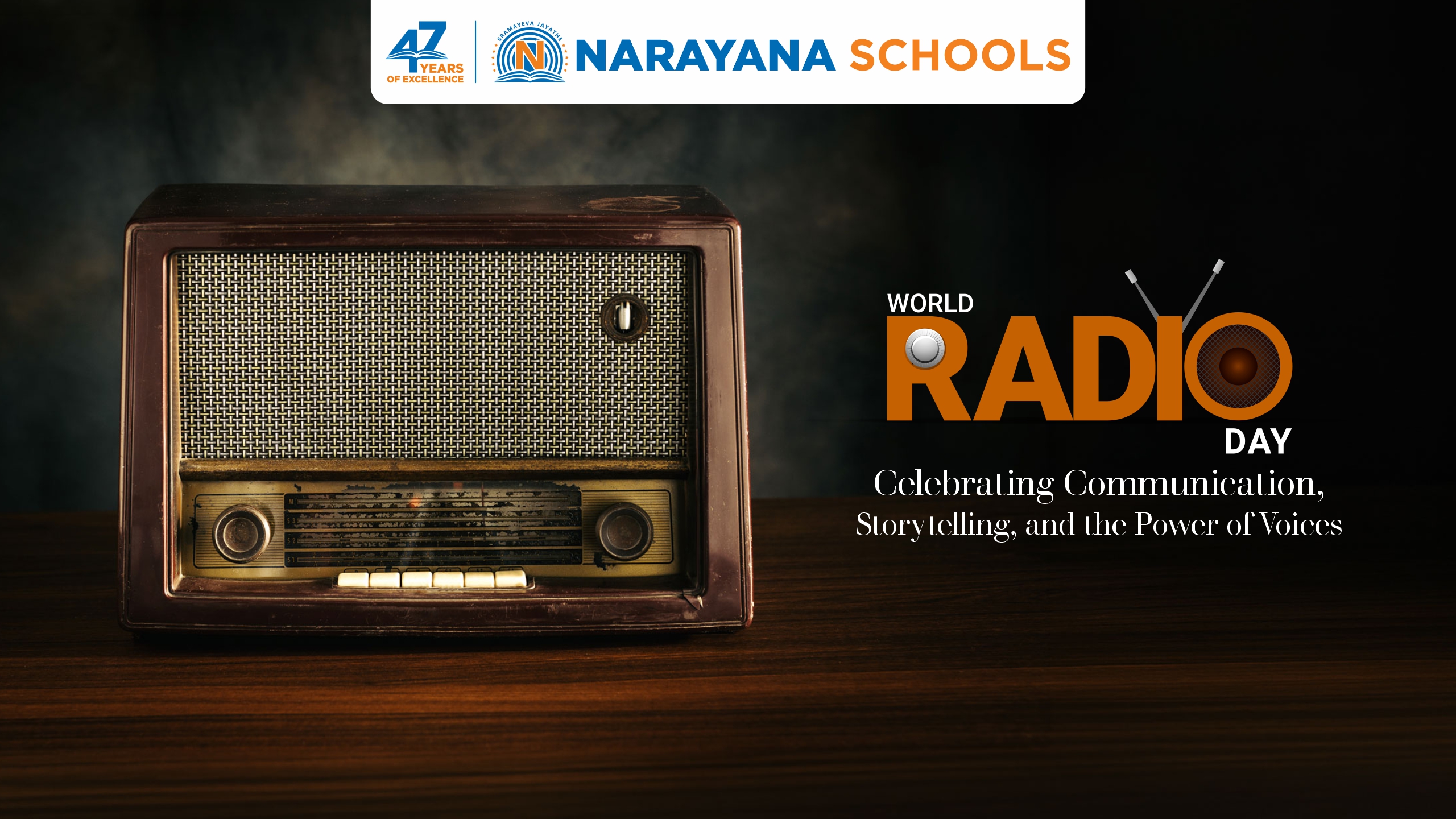
Observed every year on 13 February, World Radio Day celebrates the enduring power of radio as a medium of communication, storytelling and education. The date marks a historic milestone, as United Nations Radio aired its very first broadcast on 13 February 1946, symbolising radio’s ability to connect people across borders and cultures. Even in today’s digital-first world, radio remains a trusted source of information, imagination and learning. For families across India, World Radio Day highlights how simple audio storytelling and spoken communication continue to shape listening skills, language development, curiosity and critical thinking in children of all age groups.
The History and Science Behind Radio
- Radio was pioneered in the late 19th century through the scientific work of innovators such as Guglielmo Marconi, who successfully demonstrated wireless communication using electromagnetic waves.
- The original purpose of radio was to enable long-distance communication without physical connections, revolutionising how information could travel across regions and borders.
- From a scientific perspective, radio functions by converting sound waves into electromagnetic signals, which are transmitted through the air.
- These signals are then received and reconverted into sound by a radio receiver, allowing voices and music to be heard at a distance.
- This breakthrough laid the foundation for modern communication systems, including broadcasting, telecommunications and digital audio technologies.
The Role of Radio in Education
- Research by UNESCO and UNICEF highlights radio’s long-standing contribution to inclusive education, particularly in reaching learners across diverse, rural and remote communities.
- Educational broadcasts and radio lessons support structured learning beyond the classroom.
- Storytelling and children’s radio programmes strengthen language acquisition, listening comprehension and imagination, especially in early learners.
- Audio-based learning encourages focus and cognitive engagement without screen dependence.
- During periods of school disruption, radio-based education ensured learning continuity, reinforcing radio’s role as a reliable and accessible educational tool.
Major Educational Radio Initiatives in India and Globally
- Gyan Vani (All India Radio): A dedicated educational FM radio network developed by AIR and IGNOU, offering curriculum-aligned programmes for school, higher education and adult learners across multiple disciplines.
- AIR Educational Broadcasts (School and College Sections): Regular subject-based lessons mapped to CBSE and State Board syllabi, broadcast in regional languages to support foundational learning and exam readiness.
- Radio School Programmes (State Education Departments): Launched during pandemic learning disruptions and continued in blended formats, these broadcasts support remedial learning, foundational literacy and numeracy.
- Pariksha Pe Charcha (Audio Editions and AIR Broadcasts): A nationally recognised initiative by the Government of India, featuring guidance on exam stress management, motivation and wellbeing, broadcast through AIR and digital audio platforms.
- Man Ki Baat (Prime Minister’s Monthly Address) Education Segments: While broader in scope, recurring education-focussed segments highlight learning, innovation, student achievements and life skills, reinforcing civic and academic values.
- Community Radio Stations (CRS): Over 400 stations across India offering hyper-local education on literacy, health, environment, vocational skills and youth development, particularly in rural and tribal regions.
- Radio Learning Modules by UNICEF India: Audio lessons designed to support foundational education, gender equity and inclusive learning, especially in low-connectivity regions.
- BBC Learning English (BBC World Service, UK): One of the world’s most widely used audio learning programmes for English language development, listening comprehension and pronunciation.
- Radio France International (Savoirs): Educational broadcasts promoting language learning, culture and global awareness.
- UNESCO Educational Radio Initiatives: Long-running projects using radio to promote literacy, girls’ education and lifelong learning, especially in developing regions.
- UNICEF Radio Schooling Programmes: Active across multiple countries to ensure education continuity during crises, with a strong focus on child-friendly and inclusive content.
Why Radio Still Matters for Learning Today
- Despite rapid digital growth, radio remains one of the most trusted sources of information worldwide, especially for news, education and cultural storytelling.
- Educational and cognitive studies show that audio-based learning strengthens attention span, listening comprehension and memory, skills often challenged by prolonged screen exposure.
- Modern advancements such as FM expansion, digital radio, podcasts and community radio platforms have transformed radio into a flexible learning medium that blends live broadcasts with on-demand access.
- Global platforms like BBC Sounds, iHeartRadio and TuneIn, along with India’s expanding community radio networks, integrate radio with mobile apps and smart speakers, making learning accessible anytime.
- Supported by advances in audio science, data analytics and AI-assisted broadcasting, radio continues to evolve as a screen free, inclusive and future-ready educational tool for children across age groups.
The Future of Radio
- The future of radio lies in hybrid audio ecosystems that combine traditional broadcasting with digital streaming, educational podcasts and on-demand content.
- Media studies experts note that audio-based learning enhances cognitive focus, emotional regulation and empathy, supporting balanced and screen-moderated education models.
- Advances in Artificial Intelligence (AI) now enable personalised audio recommendations, adaptive learning playlists and multilingual accessibility for diverse learners.
- Digital Audio Broadcasting (DAB+) projects, currently expanding across Europe and parts of Asia, improve sound quality, signal stability and data integration, allowing experimentation in radio to deliver educational text, visuals and emergency alerts alongside audio.
- Research in neuroscience suggests that listening-only formats enhance memory retention and sustained attention.
- With increased accessibility, personalisation and educational integration, radio is expected to remain a core pillar of media literacy, inclusive learning and lifelong education.
World Radio Day reminds families that learning does not always require screens or textbooks. Through voices, stories and shared listening moments, radio continues to nurture curiosity, communication and connection, quietly shaping confident learners for the future.
It’s amazing how radio continues to play such a pivotal role in shaping children’s development, even in today’s digital world. It’s a powerful tool for fostering language skills and curiosity—something we often overlook in our tech-focused society.