Pre-Board Exams for Class 10 and 12: How to Use Them to Score Higher in the Boards
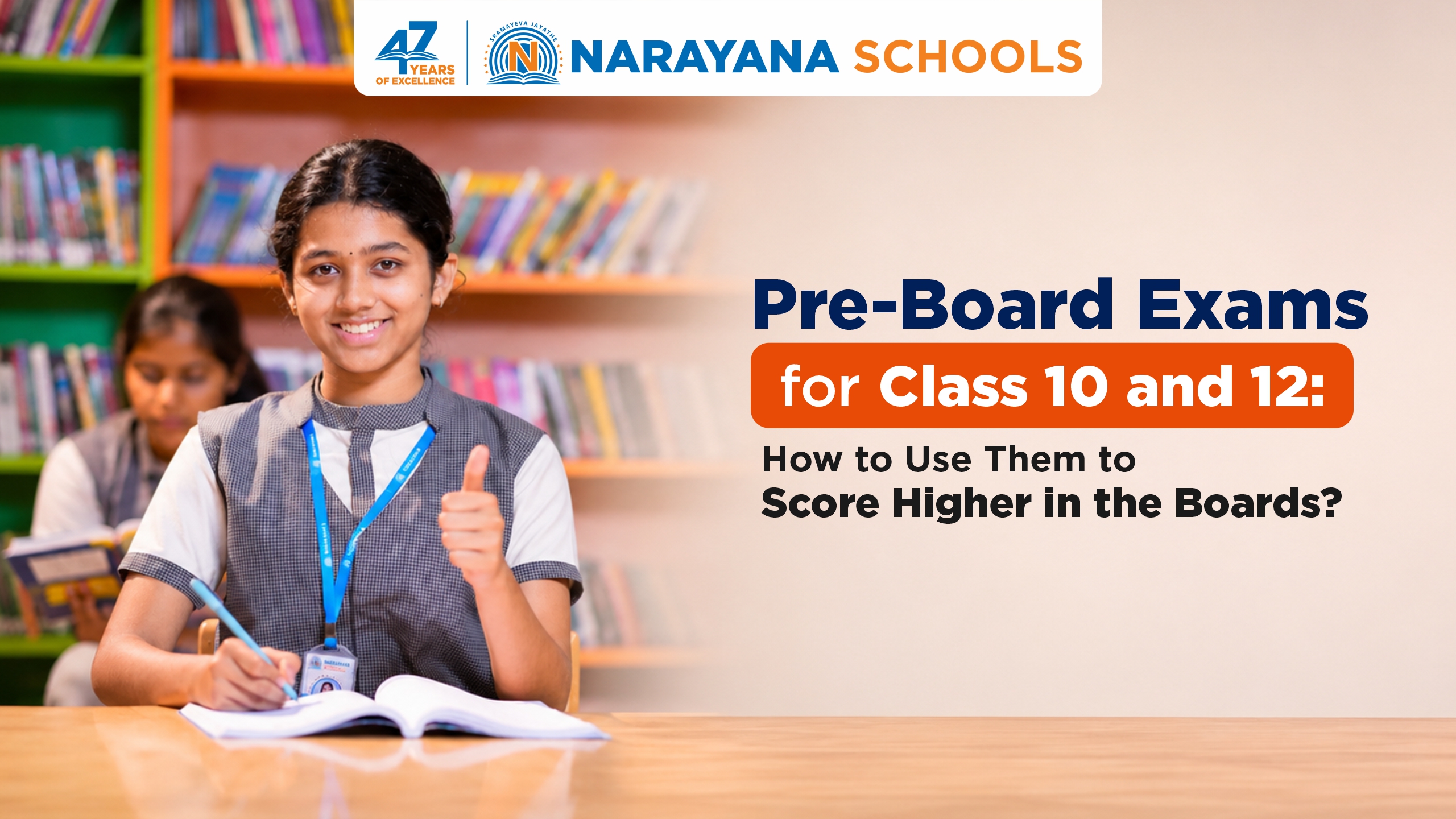
Pre-Board Exams for Class 10 and 12: How to Use Them to Score Higher in the Boards
For students preparing for CBSE Class 10 and 12 board exams, pre-boards are an important opportunity to assess preparation before the final examinations. But simply appearing for tests is not enough. The real improvement comes from analysing mistakes, practising the right questions and revising strategically. With the right resources, parents can help turn every pre-board into a step towards better board results.
8 ways to turn pre-boards into better board results
1. Identify Learning Gaps: Review the child's subject-wise marks to identify weak chapters, concepts and topics that require additional revision.
2. Practise CBSE Sample Papers: Encourage the child to solve subject-wise CBSE sample question papers and CBSE-aligned practice papers to become familiar with examination formats.
3. Understand the Marking Scheme: Ask the child to study answer keys and marking schemes to understand stepwise marking, expected keywords and answer presentation.
4. Improve Time Management: Have the child attempt complete papers within the prescribed duration and practise allocating time according to marks.
5. Maintain an Error Notebook: Encourage the child to record conceptual, calculation and presentation mistakes and revisit these before every subsequent test.
6. Strengthen Competency-Based Learning: Help the child practise case-based, application-oriented and analytical questions rather than relying entirely on memorisation.
7. Follow a Chapter-Wise Revision Plan: Help the child balance difficult topics with regular revision of completed chapters and use spaced practice instead of last-minute cramming.
8. Prioritise well-being and manage stress: Encourage adequate sleep, nutritious meals, short breaks and relaxation techniques to manage exam stress.
Why practice tests work?
A 2006 study by Henry L. Roediger III and Jeffrey D. Karpicke, published in Psychological Science, demonstrated the testing effect: retrieving information through practice tests improves long-term retention. This makes regular assessments and mistake analysis valuable components of board preparation.
Narayana Schools builds this principle into every stage of preparation. A structured microschedule breaks the syllabus into clear, manageable targets, so students know exactly what to study and revise each day. Daily practice tests help students recall what they have learned while it is still fresh, weekly tests check how well each topic has been retained, and monthly tests measure overall progress and readiness for the board examinations.
Every test leads to learning. Through error analysis and correction on nLearn (Narayana Schools’ digital learning platform offering interactive resources, practice materials and academic support for self-paced learning), students identify where marks were lost, understand the reason behind each mistake and correct it before it becomes a pattern. When a concept is still unclear, AI-powered ASTRA is there to help students with their doubts, so questions are resolved quickly instead of piling up. The Learner Support Programme helps students with learning gaps and DISHA counselling further supports students’ academic progress with emotional well-being during examination preparation.
Through structured assessments, targeted practice and individual learning support, we help students overcome challenges, strengthen preparation and move towards fulfilling their dreams, because at Narayana Schools, your dreams are our dreams.
Frequently Asked Questions
1. Are pre-board marks included in CBSE board results?
No. Pre-board marks are not added to the final CBSE board examination scores.
2. How many sample papers should students solve?
Prioritise quality, subject coverage and detailed mistake analysis over a fixed number.
3. Where can students download CBSE sample papers?
Subject-wise papers and marking schemes are available on the CBSE Academic website and free practice-paper resource pages.
4. What if pre-board marks are low?
Identify weak areas, seek teacher guidance and follow a targeted revision plan.
5. Are pre-board papers harder than CBSE board papers?
Difficulty varies between schools. Their purpose is to assess readiness and identify learning gaps.
6. How can parents support board preparation?
Encourage consistent practice, realistic timetables, adequate rest and confidence without unnecessary pressure.