
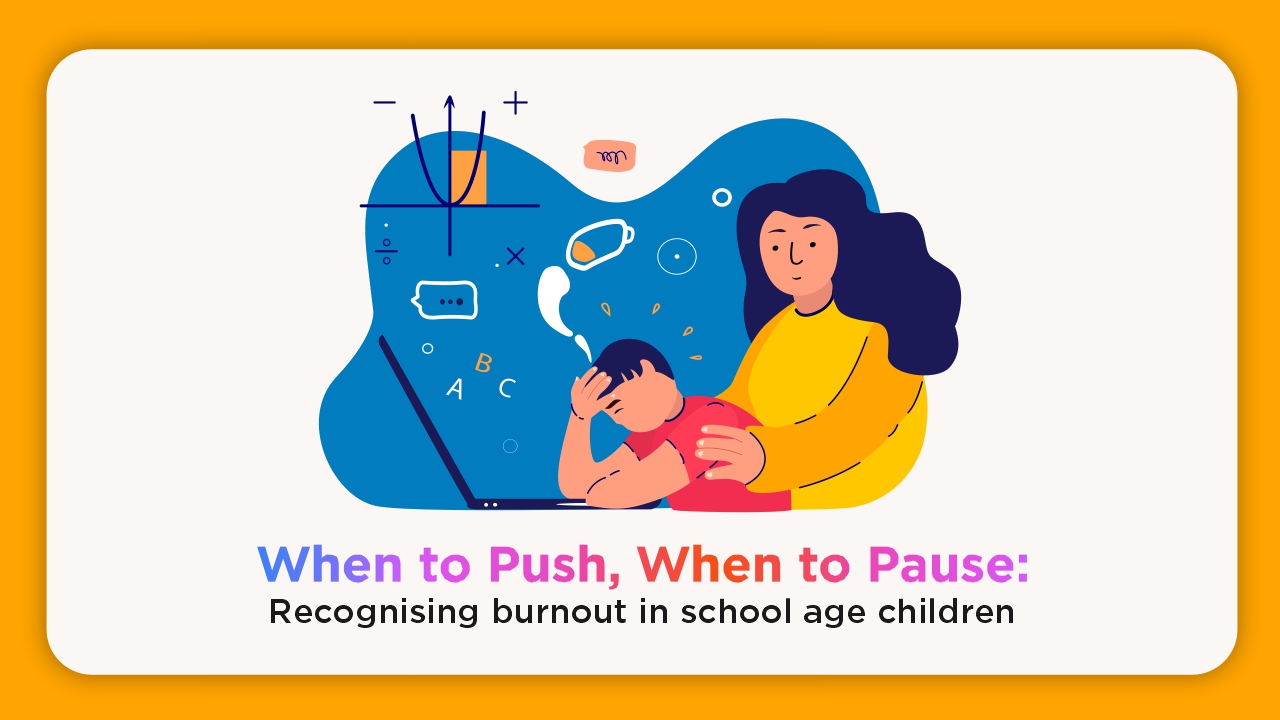
In this hypercompetitive educational climate, academic intensiveness often overshadows emotional well-being. While discipline and consistency are crucial, there comes a point where pressure tips into burnout. The challenge lies in knowing when to encourage perseverance and when to step back. Recognising burnout in school age children is not just about spotting fatigue but also about understanding a growing disconnect between effort and well-being.
Burnout, as defined by the World Health Organization, is a state of chronic physical and emotional exhaustion, often accompanied by feelings of cynicism, detachment and reduced efficacy.
What is Childhood Burnout?
Burnout in children is a state of emotional, mental and sometimes physical exhaustion caused by prolonged stress. Unlike temporary tiredness, it lingers, affecting motivation, mood and even physical health. According to a 2022 study published in the Journal of Child Psychology and Psychiatry, students facing continuous academic pressure without emotional outlets are more prone to anxiety, disrupted sleep and loss of enthusiasm for learning.
Warning Signs Not to Ignore
Recognising the early signs of burnout is vital. Common indicators include:
a. Persistent fatigue even after rest.
b. Sudden drop in academic performance.
c. Mood swings or withdrawal from friends and family.
d. Frequent headaches or stomach aches without a medical cause.
e. Apathy towards activities once enjoyed.
These symptoms are not just phases but rather serve as the body’s distress signals, hinting at the need for balance.
Why Indian Students Are at Greater Risk?
a. High Societal and Familial Pressure: Academic success is often equated with social status and family pride in many Indian households.
b. Emphasis on Competitive Exams: Students face immense pressure to excel in board exams, Olympiads and entrance tests like JEE and NEET.
c. Pursuit of Perfection: A culture of constant comparison and high expectations pushes children towards intensive academic goals.
d. Overloaded Schedules: Long school hours, followed by coaching classes and tuitions, leave little room for rest or recreation.
e. Rising Academic Burnout: The continuous cycle of study and performance is leading to increased mental exhaustion and stress among students.
Scientific Insight: The Brain Needs Rest
Cognitive neuroscientists have shown that constant pressure hampers the brain’s executive functions critical for decision-making and memory. According to Harvard’s Centre on the Developing Child, chronic stress alters the brain’s architecture, reducing learning efficiency and emotional resilience. A 2022 study published in Nature Reviews Neuroscience found that chronic stress can shrink the prefrontal cortex by up to 10%, directly impairing concentration, problem-solving, and emotional regulation. Additionally, students exposed to long-term academic stress show a 25–35% decline in working memory performance, affecting both academic outcomes and mental well-being.
When to Push: The Value of Encouragement
a. Discovering the child’s interests first: Before any form of encouragement, identifying what naturally excites or motivates a child is vital. Interest is the starting point of internal motivation. Pushing without understanding this can lead to resistance.
Example: If a child frequently builds with blocks and shows curiosity about how things work, guiding them toward science or engineering kits might unlock deeper learning potential.
b. Balancing expectations: While encouragement is essential, pushing beyond a child’s emotional or developmental readiness can cause anxiety. It is critical to adjust expectations to match their capacity at each stage.
Example: Rather than expecting a child to ace every exam, focusing on steady improvement and understanding can relieve pressure and enhance outcomes.
c. Stepping out of comfort zones: Once confidence is built through interest and small wins, children can be nudged to explore unfamiliar areas. Doing so develops adaptability and emotional courage. Timing is important, this works best when the child already feels supported and secure.
Example: A hesitant child who enjoys painting may be encouraged to lead a group art project, gradually expanding social and creative boundaries.
d. Goal setting and perseverance: Helping children set realistic, incremental goals and supporting them through setbacks instils long-term discipline and self-belief. These efforts are most effective when aligned with what the child finds meaningful.
Example: A child interested in athletics could aim to improve their timing week by week, learning perseverance and celebrating progress along the way.
e. Constructive challenge fosters growth: Encouraging children to take on manageable challenges, especially within their areas of interest can nurture resilience and build genuine self-confidence. The right challenge at the right time fosters healthy development.
Example: A child passionate about reading may benefit from joining a school literary club or participating in book review contests to stretch their abilities.
f. Creating a supportive environment: Every push must be paired with emotional safety. Encouragement should never be based on fear of failure or external comparison. Instead, children need the reassurance that effort is more valuable than immediate success.
Example: If a child stumbles in a competition, responding with empathy and helping them reflect positively on the experience builds resilience without damage to self-esteem.
When to Pause: The Need for Recovery
a. When mental fatigue sets in, rest becomes essential: Just as athletes require rest days to restore their bodies, school age children need cognitive breaks to sustain peak performance. Constant academic pressure without mental rest can lead to burnout and reduced motivation.
Example: After a demanding series of unit tests, allowing the child a weekend free from structured study helps restore focus and reduce stress.
b. When the child loses interest or becomes irritable, it is time to reintroduce play: Frequent irritability, disinterest in studies or emotional outbursts can indicate cognitive overload. In such moments, unstructured play, hobbies or simple family time act as a reset button.
Example: If a child begins resisting homework or displays a short temper after school, encouraging an hour of painting, cycling or even board games could provide the mental break needed.
c. When learning becomes mechanical, breaks are necessary for retention: If studying feels robotic and the child is unable to recall or apply concepts, it may signal that the brain is overloaded. Purposeful rest improves memory, creativity and problem-solving.
Example: After a long evening of study sessions, inserting a 15-minute break for stretching or a light snack can refresh the mind and improve retention in the next session.
According to the American Psychological Association, students who take purposeful breaks show improved concentration, creativity and problem-solving skills.
Practical Solutions for Parents
a. Open Communication: Encourage children to express their feelings without fear of judgement.
b. Structured Downtime: Ensure time is allocated for hobbies, rest and social interaction.
c. Balanced Schedules: Avoid overscheduling. Focus on quality learning rather than quantity.
d. Mindfulness Practices: Introduce relaxation techniques like breathing exercises or journaling.
e. Sleep Hygiene: Ensure at least 8–9 hours of uninterrupted sleep for school aged children.
Narayana Schools’ Initiatives: Helping Children Thrive, Not Just Survive
At Narayana Schools, we are committed to the all-round development of every child, where academic excellence is nurtured alongside physical health, emotional resilience and mental well-being.
Four powerful initiatives exemplify this commitment:
a. DISHA Mental Well-being Programme: Burnout often begins where emotional expression ends. DISHA provides a structured platform for students to speak freely, manage stress and seek help when overwhelmed. By normalising emotional conversations and offering access to trained counsellors, we ensure that students feel heard and supported, reducing the internal pressure that often goes unnoticed.
b. Yoga Veekshan: When students are constantly in ‘go-mode’, pause becomes powerful. Yoga Veekshan introduces daily mindful breathing, yoga and relaxation techniques to help children centre themselves amidst the chaos. It nurtures emotional balance, mental clarity and inner calm, all of which are essential in recognising and preventing academic burnout.
c. nSports Age-Appropriate Sports Curriculum: Physical activity is not just about fitness, it is a vital counterbalance to academic intensity. nSports gives students the opportunity to recharge their minds and bodies through structured, age-appropriate sports that promote teamwork, discipline and healthy stress relief. Sports act as a natural ‘pause button’ helping maintain mental agility and motivation.
d. Soft Skills: A major reason students suffer in silence is the inability to communicate their inner struggles. The soft skills programme teaches children to express their thoughts and emotions, whether it is sharing anxieties with parents, articulating confusion to teachers or building self-confidence through public speaking. By fostering open expression, we equip them to ask for help when they need to pause and advocate for themselves when they are ready to push.
In a world that constantly chases performance and perfection, these initiatives remind us that true success lies not just in reaching goals, but in preserving inner peace along the way.
Understanding when to push and when to pause is not about lowering standards but about raising emotionally healthy learners. A child who feels heard, rested and supported is far more likely to thrive both in school and in life rather than an overburdened, unheard, unrested and unsupported one. It is because in the journey of education balance is not just beneficial it is essential.
At Narayana Schools, we understand that well-being is the foundation of true success. By blending academic success with emotional intelligence, mindfulness, physical activity and open communication, we ensure that students are not only prepared for challenges but protected from burnout. For us education is not just about reaching the top, but about having the strength, balance and clarity to dream big and pursue those dreams with purpose, because at Narayana Schools, your dreams are our dreams.
I love how this post highlights the fine line between pushing children to persevere and giving them space when needed. It’s such a tricky balance to strike, but it’s so essential for both their mental and physical health.
The point about understanding the disconnect between effort and well-being really stood out to me. It’s a valuable lens for parents and educators to assess whether a child is genuinely thriving or simply pushing through exhaustion.
My brother recommnded I may like tthis website.
He waas once totally right. This post actually made myy day.
Youu ccan not bellieve jst howw much tiime I haad spent for this
info! Thanks!
Excuse for that I interfere … I understand this question. I invite to discussion.
Recognizing the difference between temporary tiredness and actual burnout is crucial. Many times, children are pushed past their limits without us realizing it. Taking a step back and allowing them time to recharge can make all the difference.