
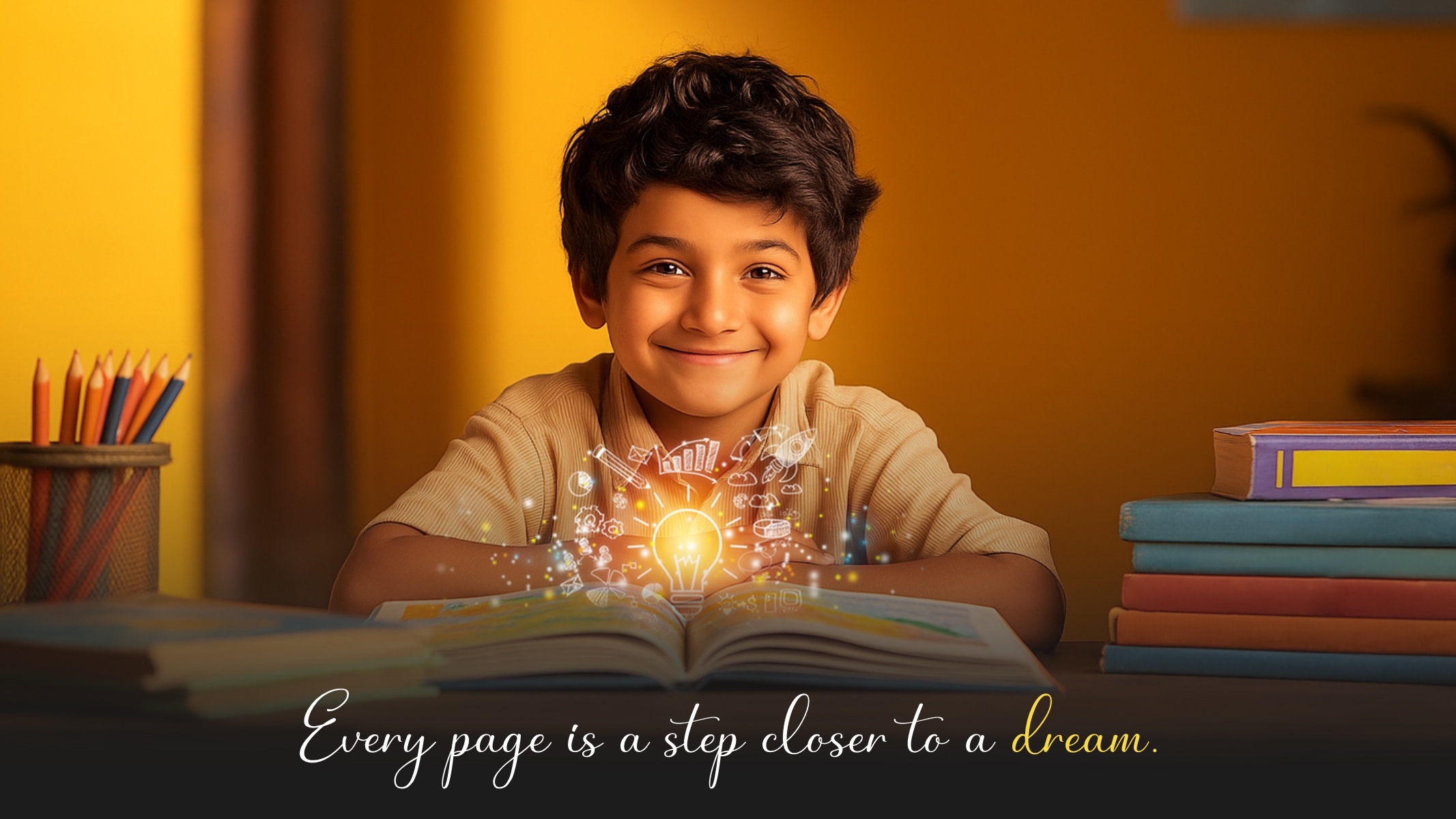
Developing a love for reading in children is one of the most valuable gifts that education can offer. Beyond academics, reading builds imagination, empathy, focus and creativity. Studies by the American Academy of Paediatrics and the Harvard Graduate School of Education reveal that early exposure to books strengthens language development, cognitive growth and emotional intelligence. Encouraging reading through every stage of a child’s growth, from early storytelling to independent exploration and reflective learning, nurtures curiosity and a lifelong love for learning.
Here are some age-appropriate book recommendations that help young minds grow intellectually, emotionally and creatively.
1. Age Group 3–6 Years: Early Imagination and Language Development
At this stage, children are beginning to explore sounds, rhythm and imagination. Books with rhymes, repetition and vivid illustrations nurture listening skills, vocabulary and creativity.
Recommendations
| Books/Series | Authors | Description/Focus |
| The Cat in the Hat, Green Eggs and Ham | Dr. Seuss | Fun rhymes that develop phonemic awareness and imagination. |
| The Tale of Peter Rabbit | Beatrix Potter | Teaches gentle moral lessons through animal adventures. |
| Winnie The Pooh | A. A. Milne | Builds emotional intelligence and empathy through whimsical tales. |
| Where The Wild Things Are | Maurice Sendak | Encourages creativity and emotional expression. |
| The Polar Express | Chris Van Allsburg | Inspires wonder and the power of belief. |
| Charlotte’s Web | E. B. White | Introduces value of friendship and compassion. |
2. Age Group 7–10 Years: Curiosity, Morality and Early Comprehension
Children in this group enjoy adventurous tales and moral stories. Reading nurtures curiosity, comprehension, and a sense of right and wrong.
Recommendations
| Books/Series | Authors/Publishers | Description/Focus |
| Panchatantra | Ancient Indian Fables | Cultivates wisdom, morality, and analytical thinking. |
| Aesop’s Fables | Aesop | Short moral stories fostering reasoning and ethical awareness. |
| Amar Chitra Katha | Anant Pai | Brings Indian mythology, history and folklore alive. |
| Tinkle Comics | ACK Media | Improves reading fluency through humour and relatable tales. |
| National Geographic Kids | National Geographic | Sparks curiosity about the world and science. |
| The Adventures of Tom Sawyer, The Adventures of Huckleberry Finn |
Mark Twain | Fosters adventure, imagination, social awareness, moral awareness and individuality. |
| The Secret Garden | Frances Hodgson Burnett | Encourages empathy and appreciation of nature. |
3. Age Group 11–14 Years: Exploration, Empathy and Imagination
Readers begin exploring complex ideas and longer narratives. Books at this stage nurture imagination, empathy and global understanding.
Recommendations
| Books/Series | Authors/Publishers | Description/Focus |
| Harry Potter Series | J. K. Rowling | Develops emotional depth, moral choices and creativity. |
| Percy Jackson Series | Rick Riordan | Introduces mythology and self-discovery through adventure. |
| Tintin Series | Hergé | Encourages curiosity, problem-solving and exploration. |
| National Geographic Magazine | National Geographic Society | Expands awareness of science, culture and the planet. |
| Potol Babu, Film Star | Satyajit Ray | Highlights simplicity, humility and artistic expression. |
| Gulliver’s Travels | Jonathan Swift | Encourages critical thinking through satire. |
| The Time Machine | H. G. Wells | Stimulates curiosity about science and the future. |
4. Age Group 15–17 Years: Critical Thinking and Emotional Maturity
Adolescents at this stage are ready for layered narratives that challenge perspectives and build analytical depth. Reading nurtures critical thinking and moral reasoning.
Recommendations
| Books/Series | Authors/Publishers | Description/Focus |
| Pride and Prejudice | Jane Austen | Encourages reflection on society, gender and morality. |
| The Hunchback of Notre-Dame | Victor Hugo | Teaches empathy and understanding of human nature. |
| Sherlock Holmes Series | Arthur Conan Doyle | Sharpens reasoning and observation. |
| Anand Math | Bankim Chandra Chattopadhyay | Instils patriotism and moral integrity. |
| Manorama Yearbook | Malayala Manorama | Builds awareness of current affairs and general knowledge. |
| Rocket Boys (October Sky) | Homer H. Hickam Jr. | A coming-of-age memoir about a boy inspired by space exploration, nurturing dreams, resilience and innovation. |
| A Brief History of Time | Stephen Hawking | Builds understanding of physics and the universe. |
| Wings of Fire | Dr. A. P. J. Abdul Kalam | Inspires innovation, resilience, and scientific temperament. |
| Hidden Figures | Margot Lee Shetterly | Highlights women’s role in science and perseverance. |
| The Origin of Species | Charles Darwin | Encourages scientific curiosity and rational thinking. |
5. Age Group 18+ Years: Depth, Philosophy and Global Perspectives
Mature readers explore classics, philosophical works and complex human themes. Reading nurtures critical analysis, empathy and lifelong learning.
Recommendations
| Books/Series | Authors/Publishers | Description/Focus |
| Anna Karenina | Leo Tolstoy | Explores moral dilemmas, love and society. |
| To the Lighthouse | Virginia Woolf | Delves into introspection and human psychology. |
| Great Expectations | Charles Dickens | Develops empathy for human struggles and ambitions. |
| Plays and Poems
|
William Shakespeare | Explores human nature, love, ambition, morality, imagination and artistic expression, and nurtures literary appreciation, emotional intelligence and critical thinking. |
| Midnight’s Children | Salman Rushdie | Reflects on identity, culture and postcolonial India. |
| Gitanjali | Rabindranath Tagore | Fosters spiritual awareness and poetic sensitivity. |
| Novels and Short Stories | Munshi Premchand | Highlights rural India, social reform, ethical dilemmas and human values, and nurtures empathy and moral reflection. |
| Poems and Works | Kazi Nazrul Islam | Explores patriotism, social justice, courage and human emotions, and inspires creativity, cultural pride and critical thinking. |
| The Innovators: How a Group of Hackers, Geniuses, and Geeks Created the Digital Revolution | Walter Isaacson | Chronicles the people behind modern computing, from Ada Lovelace to Steve Jobs, emphasising creativity and collaboration. |
| Zero to One | Peter Thiel | Enhances philosophical and evolutionary understanding. |
| Long Walk to Freedom | Nelson Mandela | Inspires leadership, justice and moral strength. |
| Jack: Straight from the Gut | Jack Welch with John A. Byrne | An autobiography detailing prominent American Business Executive Jack Welch’s journey from humble beginnings to transforming General Electric (GE into one of the world’s most successful companies. Inspires leadership, vision, and innovation. |
| Sapiens: A Brief History of Humankind | Yuval Noah Harari | Enhances philosophical and evolutionary understanding. |
Encouraging children to take part in a reading challenge (where completing a book or maintaining consistent reading is the goal) or to maintain a family reading journal makes reading both purposeful and fun. Building simple habits such as reading together for ten minutes daily can lead to lasting academic and emotional benefits.
At Narayana Schools, fostering a culture of reading and reflection lies at the heart of learning, for it is curiosity that ignites imagination, and imagination that shapes dreams. When young minds read, reflect and wonder, they begin to believe and that belief is where every great dream takes flight. With well-stocked libraries and dedicated age-appropriate soft-skills programmes that encourage and promote reading, comprehension and public speaking, we believe that every child’s curiosity fuels their dreams and we are here to help them take one step closer to realising those dreams, because at Narayana Schools, your dreams are our dreams.
I really appreciateBlog comment creation guide how this post emphasizes the connection between early reading and emotional development. It’s easy to focus only on academic benefits, but nurturing imagination and empathy through age-appropriate books is what truly shapes lifelong learners. I’d love to see more examples of how parents and teachers can integrate these reading habits into daily routines at home or in the classroom.