
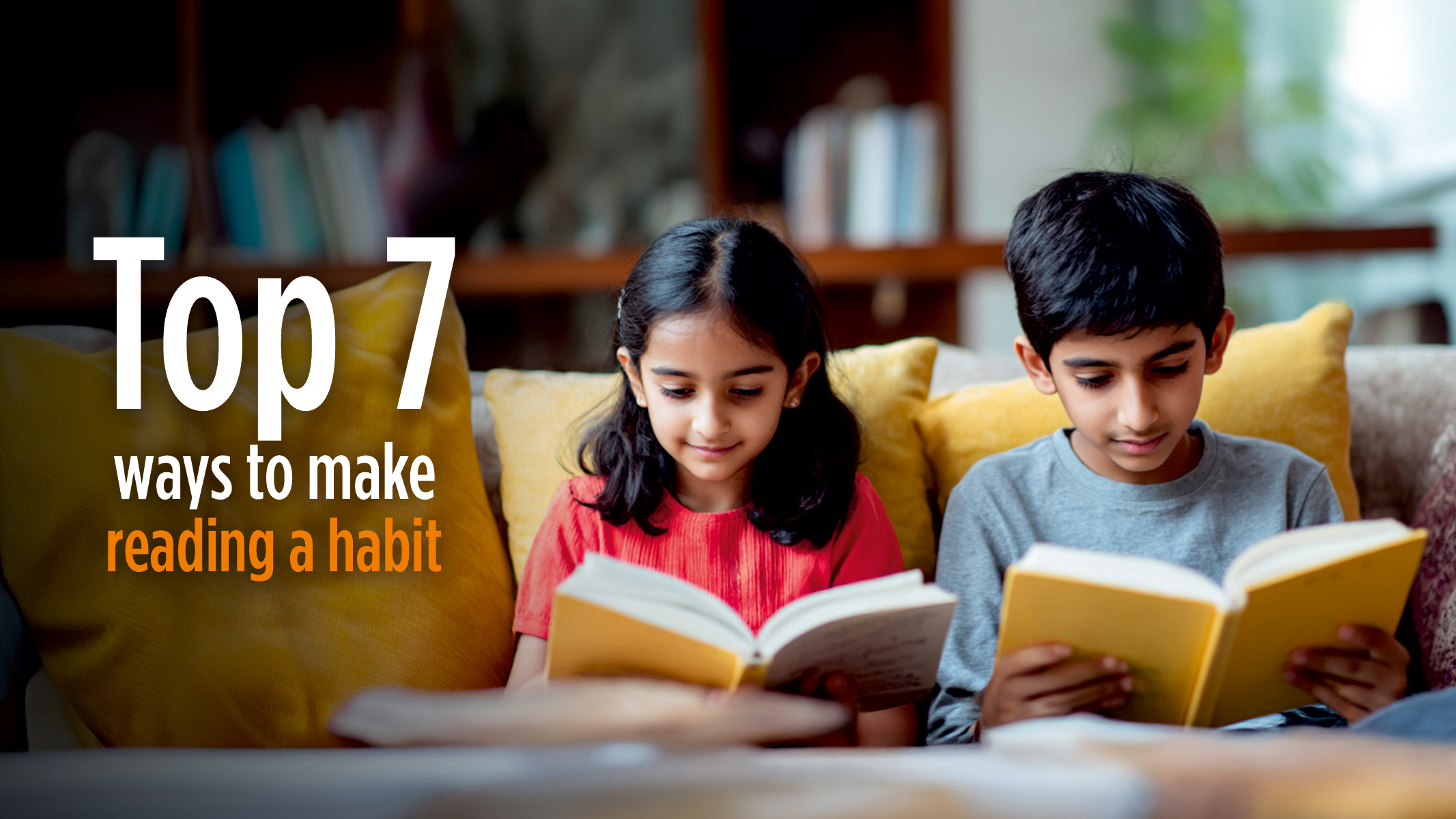
In an era dominated by digital screens and online distractions, nurturing a child’s love for reading habits is more essential than ever. Research consistently highlights the profound impact of both children reading independently and being read to by others, each playing a vital role in enhancing cognitive development, academic growth and emotional well-being.
Here are seven evidence-based strategies to cultivate a lasting reading habit in children
1. Create a Print-Rich Environment at Home
Surrounding children with books, comics, newspapers, magazines, labels (such as product tags, signboards, or packaging) and other written materials fosters an environment where reading becomes a natural part of daily life. A study published in the Journal of Emerging Technologies and Innovative Research emphasises that a print-rich environment enhances literacy skills and nurtures a lasting love for reading. Moreover, frequent reading, particularly of books and newspapers, broadens perspective and sharpens analytical thinking, greatly benefiting those inclined towards debating, public speaking, law or civil services.
2. Read Aloud Together
Engaging in shared reading sessions not only improves vocabulary and comprehension but also strengthens the parent-child bond. Research from the University of Rochester indicates that reading aloud for just 15 minutes daily can set children on a path to long-term academic success.
3. Incorporate Reading into Daily Activities
Integrating reading in daily life, such as reading recipes, instructions or labels, demonstrates the practical applications of learning. This approach reinforces the idea that reading is a valuable life skill beyond the classroom.
4. Limit Screen Time
Excessive screen time has been linked to lower reading proficiency and academic performance. A study in JAMA Network Open found that higher levels of screen time in early childhood are associated with lower reading and mathematics scores. Establishing screen-free zones and encouraging book reading can significantly improve reading habits.
5. Choose Books That Match Interests
Selecting books for children that align with personal interests, such as sports, animals, space, fantasy, etc., can make reading more engaging. Libraries and bookstores often have dedicated sections, making it easier to find age-appropriate books that spark curiosity.
6. Establish a Reading Routine
Setting aside a specific time for daily reading, whether before bedtime or after school, helps children develop reading consistency. A reading routine reinforces the importance of traditional non-digital reading as a regular habit rather than a task.
7. Be a Reading Role Model
Children are more likely to adopt reading habits when they observe adults reading regularly. Demonstrating a love for books, discussing stories and sharing reading experiences can inspire children to engage with literature actively.
Fostering strong reading habits in children lays the foundation for academic success, critical thinking and lifelong learning. By creating a print-rich environment, reading aloud, integrating reading into daily life and modelling a love for books, parents can ensure that children not only develop strong reading and comprehension abilities but also cultivate curiosity, imagination and empathy.
At Narayana Schools, a culture of reading is actively encouraged through well-stocked libraries and a dedicated age-appropriate soft skills programme that focuses on and promotes reading, comprehension and public speaking. We believe this helps students to become confident, knowledgeable and well-rounded individuals, as every step taken in reading, learning and reflection brings them closer to fulfilling their dreams, because at Narayana Schools, your dreams are our dreams.
Your insights and detailed explanations really helped deepen my understanding of this topic. Looking forward to more content like this.