
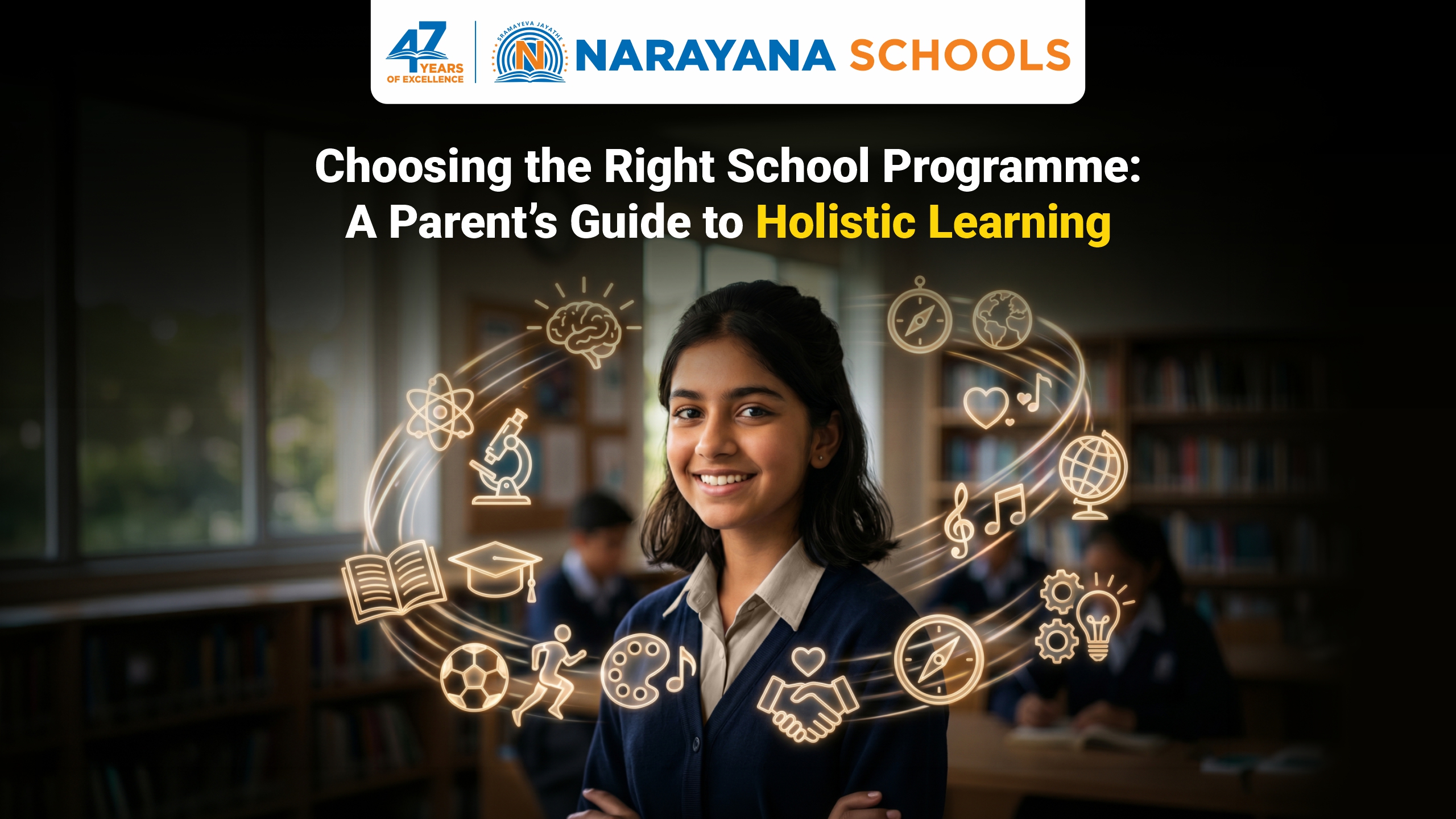
Selecting the right school programme today goes far beyond academics. It involves choosing an ecosystem that nurtures holistic development, emotional well-being, critical thinking and lifelong learning skills. Research in education, neuroscience and child psychology consistently highlights that a balanced approach to learning shapes not just academic success, but also confidence, adaptability and future readiness.
- Understanding holistic learning beyond academics
- Holistic learning focuses on cognitive, emotional, social and physical growth.
- Studies by UNESCO indicate that students exposed to balanced learning environments show higher engagement and improved long-term outcomes.
- Integrating academics with co-curricular activities strengthens problem-solving abilities and interpersonal skills.
- Evaluating curriculum depth and flexibility
- A strong curriculum promotes conceptual clarity rather than rote memorisation.
- Research supports interdisciplinary learning as a key factor in improving retention and real-world application. For example, combining Mathematics with Science through data analysis in experiments, or linking History with Geography to understand how civilisations evolved based on terrain and climate.
- Exposure to diverse educational frameworks enables children to develop adaptability and a broader perspective. For instance, a curriculum drawing from Central Board of Secondary Education for structure, International Baccalaureate for inquiry-based learning, and Cambridge Assessment International Education for global application helps learners adapt to different styles of thinking and problem-solving.
- Importance of early childhood education
- According to the National Institute for Early Education Research (NIEER), structured early education significantly enhances future academic performance.
- Play-based and activity-driven learning strengthens cognitive development, while early social interaction builds emotional intelligence and confidence.
- Tailored mentorship and support
- The American Psychological Association (APA) highlights that tailored mentoring improves both confidence and academic outcomes.
- Tailored teaching, mentoring and assessments recognise that one size does not fit all, helping identify strengths and address learning gaps early.
- Strong parent-teacher collaboration further reinforces a supportive and adaptive learning environment.
- Continuous assessment and meaningful feedback
- The National Council of Educational Research and Training (NCERT) emphasises Continuous and Comprehensive Evaluation (CCE) as a critical tool for deeper understanding.
- Regular assessments, such as weekly quizzes, periodic tests, concept checks, assignments and classroom evaluations, combined with detailed analysis shift the focus from marks to progress, encouraging improvement and reducing academic stress.
- Focus on future-ready skills
- Modern education must develop critical thinking, communication, collaboration and creativity.
- Neuroscience studies indicate that combining academics with extracurricular exposure enhances cognitive flexibility and innovation.
- Participation in competitive platforms further builds resilience and confidence. Like:
Olympiads such as the International Mathematics Olympiad and National Science Olympiad
b. Hackathons like the Smart India Hackathon
c. Coding contests such as Google Code Jam
d. Robotics competitions like the FIRST Robotics Competition
e. Innovation challenges such as the Atal Tinkering Marathon
f. Other platforms including debates, Model United Nations (MUNs), quizzes and design challenges
These provide structured opportunities to apply knowledge and perform under pressure.
- Emotional well-being and life skills integration
- Child psychology research confirms that emotional stability plays a vital role in academic success.
- Programmes that include mental wellness, communication skills and leadership training help children manage challenges effectively and grow into balanced individuals. For example, mindfulness and stress-management sessions, school counselling initiatives, public speaking and debate clubs, peer mentoring programmes, leadership camps, group projects, theatre and role-play activities, and student councils that encourage decision-making and responsibility.
How Narayana Schools supports holistic learning at every stage?
With decades of expertise, Narayana Schools has created a comprehensive ecosystem of age-appropriate programmes designed to support every stage of a child’s growth. From the eKidz pre-primary programme (Nursery to UKG) to the eChamps primary programme (Classes 1–5) and the eTechno middle and secondary programme (Classes 6–10), each level is thoughtfully aligned with developmental needs.
At the core lies an Integrated Curriculum, drawing from CBSE, ICSE, IGCSE and IB frameworks, ensuring strong conceptual understanding and a well-rounded academic foundation. A unique feature, Adoption Calling, assigns a dedicated teacher to closely monitor progress and maintain fortnightly communication with parents, creating a strong partnership that supports both academic and personal growth.
Each programme is designed with specific developmental goals. The eKidz programme focuses on early brain development through play-based learning, phonics and motor skills, helping children confidently step into the world beyond their families. The eChamps programme builds a strong foundation through activity-based and experiential learning, while also addressing individual learning gaps through structured Learner Support Programme. The eTechno programme prepares students for future challenges with a focus on analytical thinking, structured assessments, competitive exam exposure and personalised performance analysis.
Holistic development is seamlessly integrated through Soft Skills programmes, nSports and creative platforms such as student-led activities and clubs. Initiatives like JAM (Just A Minute), debates, news reading, elocution and mock interviews help students develop real-world communication skills in a safe and encouraging environment. Activities and events such as KKC (Kahaniyon Ka Caravan), MOC (Junior Master Orator Contest), Spell Bee, Quiz Whizz and Model United Nations (MUN) further nurture confidence, articulation, critical thinking and global awareness. Mental well-being is supported through initiatives like the Disha programme, ensuring emotional resilience alongside academic growth.
At the eTechno level, students are further supported through the Council for Nurturing Academic Potential in Studies (CNAPS), which focuses on identifying, nurturing and strengthening academic potential through structured assessments and continuous feedback. This leads to the Olympiad Programme, where students are trained in advanced problem-solving, critical thinking and application-based learning. The programme equips students to excel in national and international Olympiads and confidently navigate competitive academic environments, turning potential into performance.
This comprehensive and research driven approach ensures that children grow into confident, capable and future-ready individuals, equipped not just for examinations but for any challenges and circumstances in life to fulfil their dreams, because at Narayana Schools, your dreams are our dreams.
This insightful piece perfectly captures why looking beyond just grades is crucial for a child’s future readiness. Integrating emotional well-being with cognitive growth really does create the adaptable mindset students need in today’s world. It’s refreshing to see a guide that emphasizes such a balanced ecosystem for holistic development.