
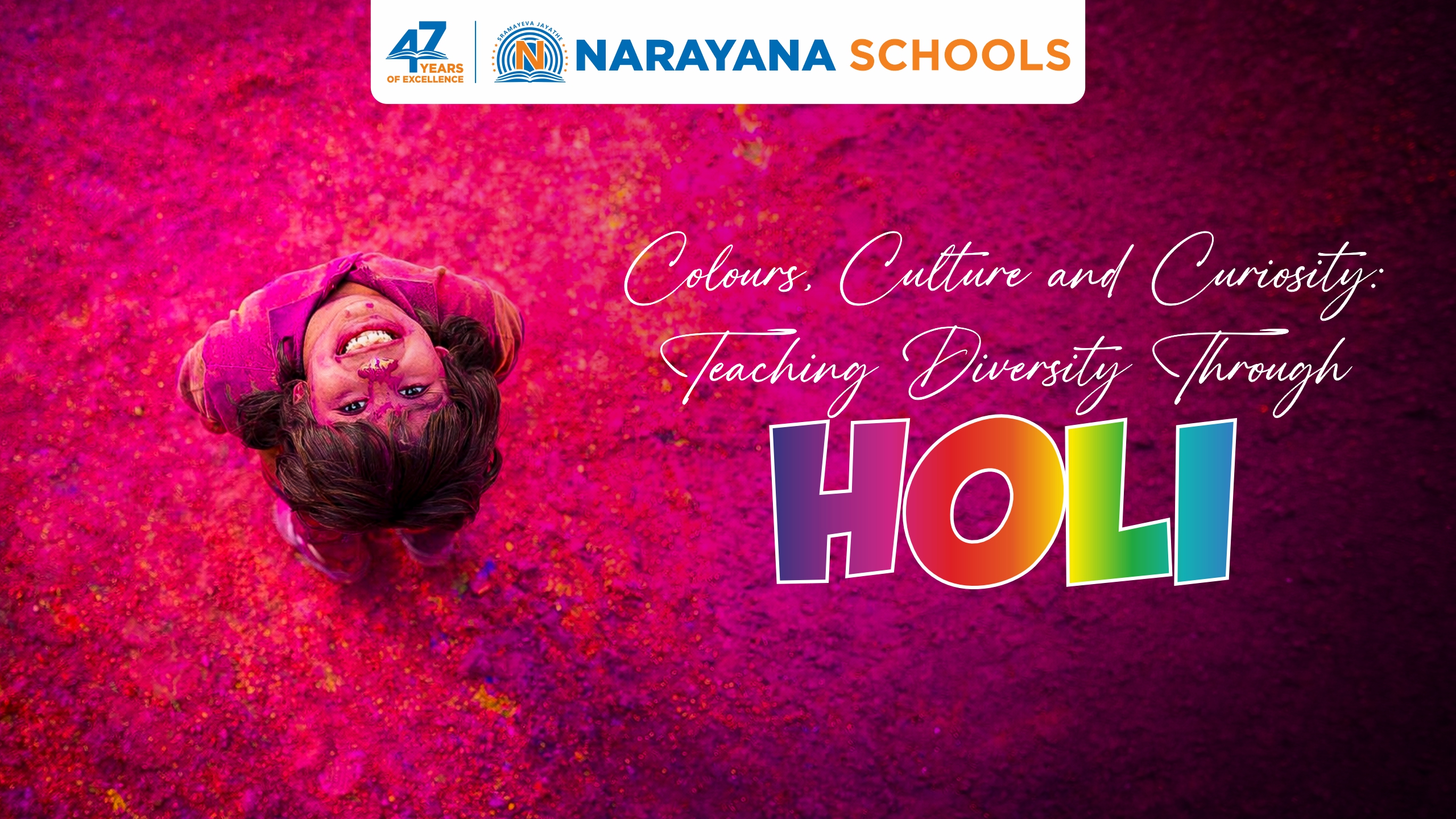
On the full moon day of the Hindu month of Phalguna, India celebrates Holi festival, a vibrant expression of Indian culture, seasonal change and social harmony. The date shifts according to the lunar calendar, symbolising renewal as winter gives way to summer. Historically rooted in the legend of Prahlada and Holika, Holi signifies the triumph of good over evil, resilience over adversity and unity across differences.
For families it is important to note that, Holi for children can become more than just playing with colours and celebration, it is an opportunity to nurture cultural awareness, empathy and scientific curiosity.
1. Why Holi Matters in Indian Tradition
Holi reflects India’s pluralistic ethos. Sociological research from the Indian Council of Social Science Research highlights that festivals strengthen inter-community bonds and collective identity. The ritual of Holika Dahan, observed on the eve of Holi, symbolises moral courage and the importance of standing by truth. According to Hindu mythology, Holika attempted to burn her nephew Prahlada in a fire at the command of King Hiranyakashipu, believing she was immune to flames. However, her misuse of power led to her destruction, while Prahlada’s unwavering faith and commitment to righteousness protected him. The episode reinforces the ethical lesson that arrogance and injustice ultimately fail, whereas integrity and truth prevail.
2. What Holi Signifies for Young Learners
Developmental psychologists note that shared cultural experiences enhance social belonging and emotional intelligence. Participation in traditional songs, stories and rituals helps children connect history with lived experience, strengthening both identity and inclusivity.
3. The Science Behind the Colours
The science of Holi offers fascinating learning moments. Historically, natural gulal was derived from flowers such as tesu (palash), turmeric and neem. Research in ethnobotany shows that these plant-based colours possessed mild antibacterial properties, beneficial during seasonal transitions when immunity can fluctuate. Discussing about natural colours for Holi introduces children to chemistry, plant science and sustainable practices.
4. Health and Environmental Awareness
Modern synthetic colours may contain harmful chemicals. Public health studies published by the Indian Council of Medical Research caution against skin and eye irritation caused by artificial dyes. Opting for eco-friendly alternatives, protective clothing and hydration ensures safe celebration while reinforcing environmental responsibility.
5. Teaching Diversity Through Celebration
Holi is celebrated differently across India, from Lathmar Holi in Uttar Pradesh to Yaosang in Manipur, reflecting regional diversity within unity. Cultural studies emphasise that exposure to such variations fosters respect for differences from an early age. Conversations around these traditions deepen geographical and historical understanding.
6. Practical Ways to Encourage Curiosity
• Exploring the chemistry of colours through simple home experiments (e.g., mixing turmeric with water to observe natural pigments, adding lemon juice to turmeric to see an acid base colour change, extracting colour from crushed hibiscus or spinach leaves).
• Reading mythological narratives to connect values with storytelling.
• Encouraging community interaction to strengthen social empathy.
• Discussing water conservation to build environmental consciousness.
In essence, Holi celebration in India is not merely a festival of colour but a living classroom. When approached thoughtfully, it becomes a meaningful bridge between tradition, science and diversity, shaping informed, compassionate and curious young minds.