
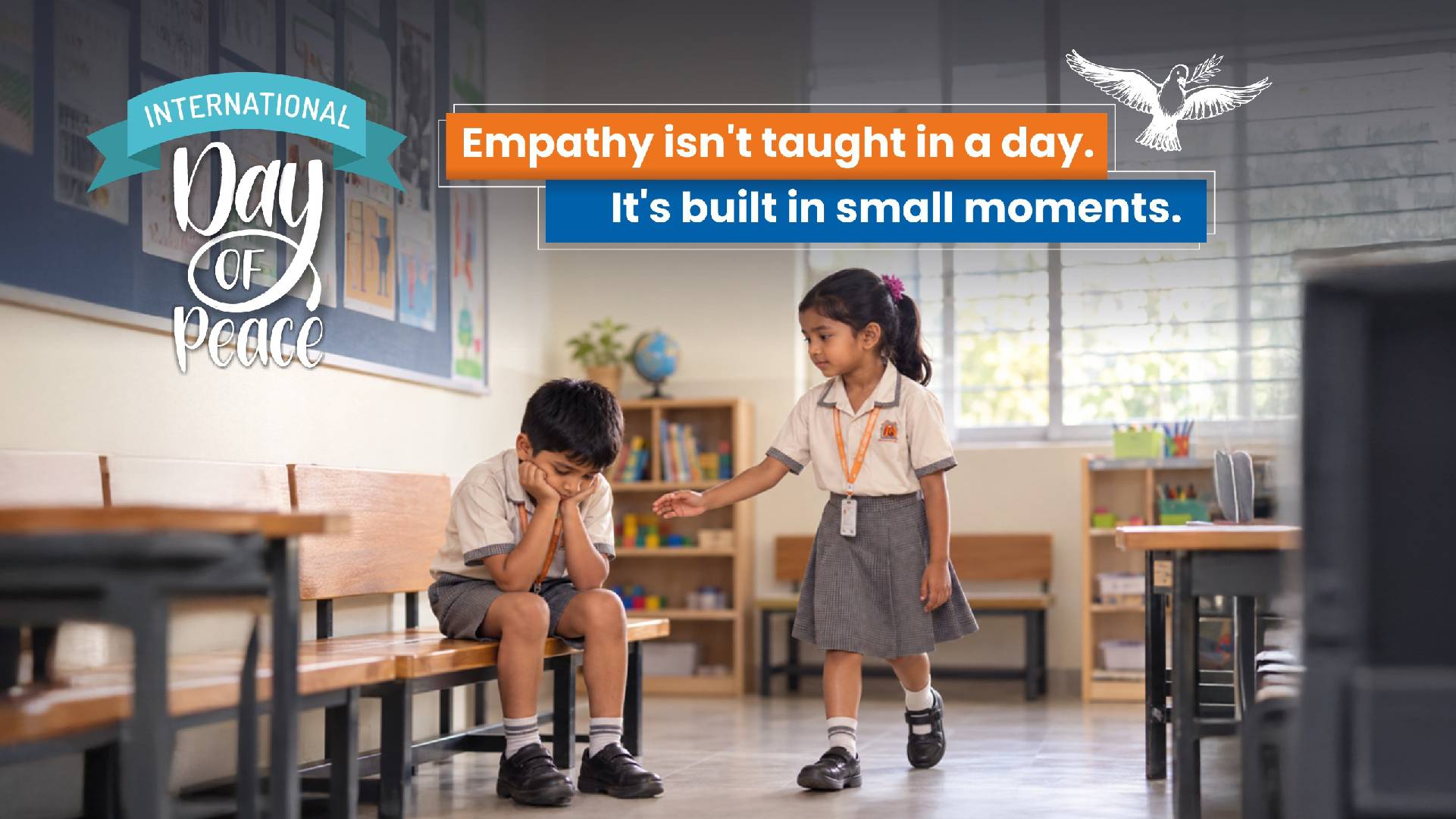
Peace begins with understanding, both of others and of oneself. Children need to learn that everyone has different feelings, abilities and experiences, and that disagreements are a natural part of growing up. Empathy helps them recognise these differences, listen with patience and respond with kindness. Parents can also help children understand that peace within oneself comes from giving every task their best effort, learning from mistakes and being content with the outcome rather than constantly comparing it with others. When children learn to accept themselves, respect others and handle success and disappointment with balance, they develop the emotional foundation needed to build more peaceful relationships.
Every year on 21 September, the world marks International Day of Peace. The United Nations set up this day in 1981 to remind everyone that peace starts small, often in a classroom or at home. For parents, peace is not just a big idea; it is a daily habit that can be taught to children.
Why Is Empathy Important in Early Education?
Empathy means noticing and understanding how someone else feels. Researchers agree that it should be taught early, not left to chance. A 2011 study by Joseph Durlak and his team, published in the journal Child Development, examined 213 school programmes and more than 2,70,000 students. Children who learned social and emotional skills performed better in class, scoring about 11 percentile points higher than those who did not. Kindness and good grades, it turns out, often go hand in hand.
How to Teach Empathy to Children at Home?
A practical approach starts with simple questions. While reading a bedtime story, parents can be encouraged to ask how a character might be feeling, rather than just asking what happens next. During sibling arguments, children can be asked to guess how the other person feels before deciding who is right. These small, everyday moments teach empathy far better than a single lecture ever could.
Peace Education Activities for Kids
Peace education activities for kids need not be complicated. Around 21 September, and through the year, simple ideas work well: drawing what peace looks like, writing a kind note to a classmate, or sharing a snack with someone sitting alone. A well-known Canadian programme called Roots of Empathy, created by educator Mary Gordon, brings a baby into classrooms so children can watch and talk about the baby’s feelings. The same programme has since been implemented and studied across North America, Europe and Oceania, with research reporting reductions in aggression and bullying alongside increases in empathy and prosocial behaviour.
Social-Emotional Learning in Schools: Why It Matters as Much as Marks
Some parents worry that time spent on feelings and kindness takes away from studies. Social-emotional learning in schools does the opposite; research shows it tends to support academic learning, rather than compete with it. A calmer, more understanding classroom is usually also a more focused one.
Character Building in School Curriculum: What Are CBSE Schools Already Doing?
India’s National Education Policy 2020 identifies empathy, along with teamwork and cultural awareness, as skills schools should build alongside reading and mathematics. Character building in school curriculum is no longer optional; many CBSE schools’ values education programmes already include circle-time talks and value-education periods for exactly this reason, not just around Peace Day, but through the year.
How Narayana Schools Promotes Values-Based Learning
Narayana Schools promotes values-based learning not as a one-day event, but as part of everyday school life. Regular circle-time discussions, house-based community activities, and dedicated value-education periods give children space to talk about feelings, fairness, and empathy.
Complementing this, the Life Skills Programme at the eChamps level (Classes 1–5) nurtures essential skills that shape character and confidence:
- Communication Skills: Strengthening listening, speaking, reading, and writing abilities to help children express themselves clearly and confidently.
- Social Skills: Teaching respect, interaction, table manners, and etiquette, ensuring children thrive in group settings and community life.
- Emotional Skills: Helping children understand that participation matters more than winning, and that both triumphs and setbacks contribute to their growth journey.
Together, these initiatives ensure that values are not taught in isolation but woven into the fabric of daily school experiences, preparing children to be empathetic, resilient, and socially responsible individuals.
The Larger Lesson
Peace, at its smallest, looks like a child pausing before reacting. Teaching that pause patiently, at home and in school, helps children grow into confident, capable people who can chase their dreams with kindness intact, because at Narayana Schools, your dreams are our dreams.
Frequently Asked Questions
What is International Day of Peace and why is it celebrated?
It is a day set by the United Nations in 1981, marked every 21 September, to remind the world that peace begins with small, everyday choices, including how children are taught to treat one another.
How can parents build empathy at home?
Simple habits help: talking about feelings in stories, asking children to see arguments from another person’s side, and encouraging small acts of kindness towards others.
What is values-based education?
It is teaching that goes beyond marks and subjects, helping children build honesty, kindness, fairness and respect alongside academic knowledge.
Why is social-emotional learning important for children?
Research shows it helps children manage emotions, get along with others, and even do better academically, making it as important as any other subject.