
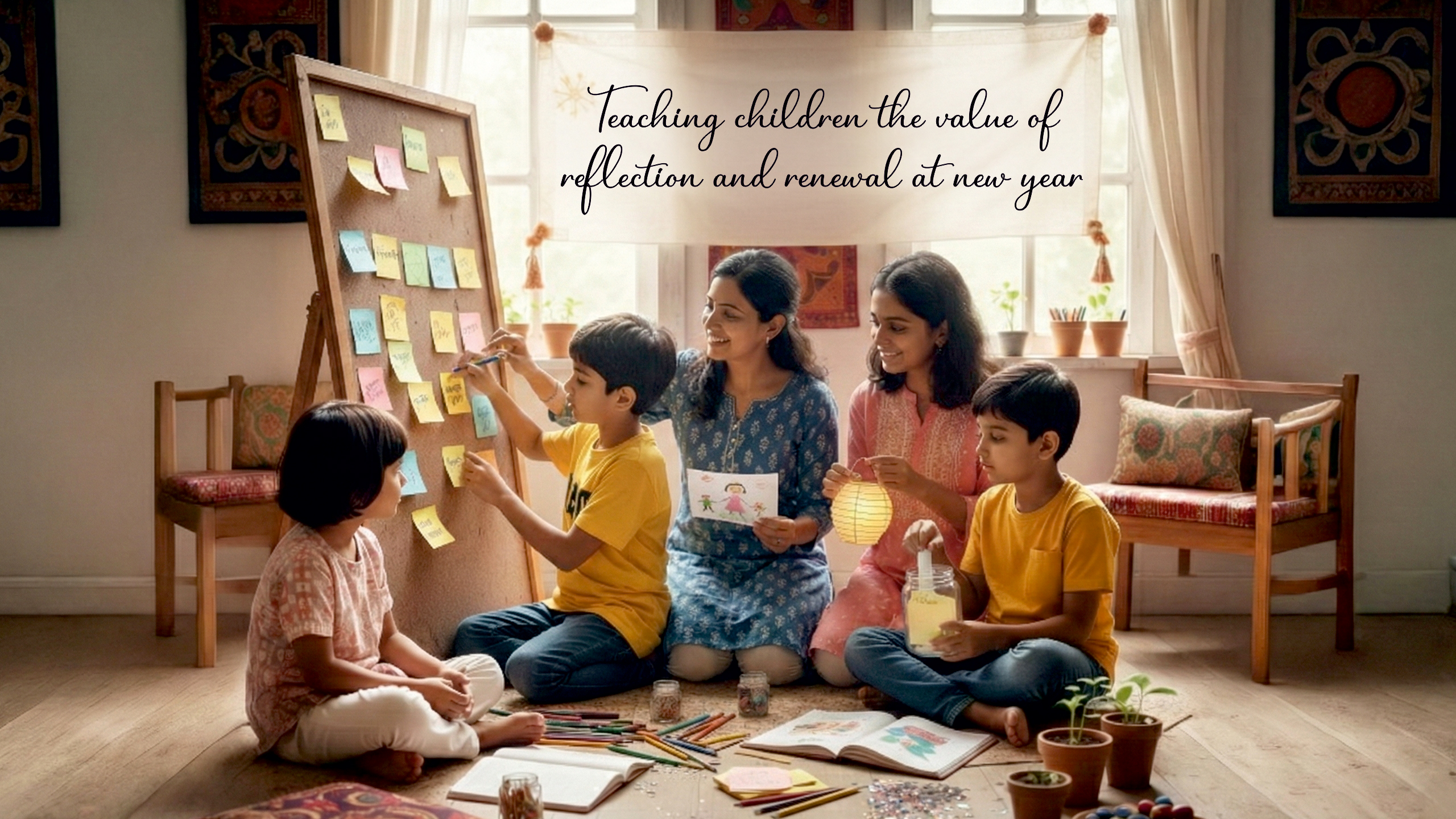
New Year is not just a calendar change, it also acts as a powerful psychological reset for children. This period offers families a meaningful opportunity to introduce reflection and renewal, which research in child development and educational psychology links to stronger emotional regulation, motivation and lifelong learning habits.
- Introduce Reflection as a Gentle Review and Not a Judgement
- Encourage conversations about experiences, efforts and learnings rather than successes or failures.
- Developmental psychology research shows reflective dialogue strengthens emotional intelligence in children.
- This approach helps children process challenges without fear or self-criticism.
- Use the New Year as a Natural ‘Fresh Start’
- Behavioural studies from the Wharton School describe the Fresh Start Effect, where clear beginnings such as a new year, new month or new term boost motivation and goal-setting.
- Early January acts as a mental reset point that increases goal clarity.
- Explaining this concept helps children view the New Year as an opportunity, not pressure.
- Shift Focus from Outcomes to Growth
- Reflection should centre on improvement, effort and consistency rather than marks alone.
- Carol Dweck’s growth mindset research shows this builds confidence and persistence.
- This perspective supports positive learning habits across all academic stages.
- Encourage Small and Purposeful Intentions
- Psychologists recommend age-appropriate goal setting instead of long resolutions.
- Short intentions such as reading daily or staying organised feel achievable.
- Renewal becomes a process of steady progress rather than dramatic change.
- Connect Renewal with Routine Reset
- Research indicates that gradually resetting sleep, study and screen routines improves focus.
- Structured yet flexible routines enhance cognitive readiness after holidays.
- This balance prevents overwhelm while restoring learning rhythm.
- Model Reflection Through Family Practices
- Children learn reflection best through observation and shared experiences.
- Simple family discussions about lessons from the year build parent-child educational bonding.
- These moments normalise reflection as a life skill.
- Reinforce Emotional Renewal Alongside Academic Goals
- Mental health studies in the Journal of Child Psychology and Psychiatry stress emotional reset.
- Conversations around stress, balance and expectations support student emotional wellbeing.
- Emotional renewal strengthens academic readiness and resilience.
Teaching reflection and renewal at New Year is like helping children organise their inner world before a new chapter begins. With consistent guidance, this practice builds clarity, motivation and balance that supports both learning and life throughout the year.
Teaching Children the Value of Reflection and Renewal at New Year
I love the idea of using the New Year as a time for emotional renewal rather than just setting goals. It’s so important for kids to reflect on their feelings and experiences, not just their achievements. It helps build resilience!