
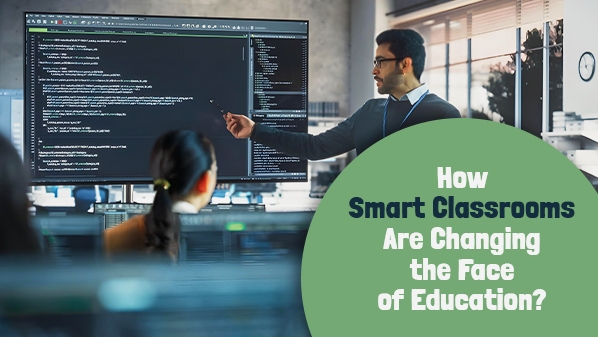
Rapid technology changes have impacted nearly every industry, and education is no different. Over the past few years, the conventional classroom has evolved into the smart classroom. Smart classrooms, empowered with sophisticated technology, have revolutionized the entire process of teacher-student interaction to achieve dynamic, engaging, and effective learning. These classrooms are being adopted increasingly worldwide, and schools, such as the English Medium School in Durgapur, are adapting to this trend to make their learning process more innovative.
The Concept of Smart Classrooms
A smart classroom is an environment that uses a modern touch on the traditional mode of teaching so that it brings interactivity into learning. Some tools used for integration include an interactive whiteboard, projectors, digital tablets, and even online resources to change the entire learning process. It makes delivery more engaging and effective in a lesson, therefore easier for them to understand something difficult. A student is not just a passive receiver of information but is, rather, engaged in the act of learning digitally.
The Role of Technology in Education
Technology plays a central role in education. Digital solutions have started replacing the traditional chalk-and-talk method of teaching due to its applicability in learning diversity among students. Multimedia, in a smart classroom, facilitates more interesting and accessible lessons. For example, when a history lesson is taught, the teacher can use videos, animations, and 3D models of historical events to present the material. Similarly, on subjects like mathematics, students can easily grasp abstract concepts by following various interaction simulations.
In addition to multimedia content, educational apps and online resources are used by students to supplement their learning. Such resources are usually interactive and suited to individual learning styles, so they can be appropriate for both fast learners and those who need more support. Digital platforms also make it possible to conduct real-time assessment of the student’s progress, allowing teachers to modify their teaching approach in response.
The Benefits of Smart Classrooms
1. Engaged Learning- The major benefit of smart classrooms is the engagement of students. Lessons are more interactive and stimulating for the students with the use of technology. Interactive whiteboards and tablets enable students to participate actively in class discussions and projects. It helps them engage more deeply in the subject matter.
2. Personalized Learning: Each child learns differently. Some pick things up easily while others take their time and may need additional help. The flexibility of smart classrooms allows them to adapt to every student’s needs. Digital tools enable teachers to give homework in accordance with a student‘s potential, allowing each student to complete the homework according to their abilities.
3. Shared Teamwork: Smart classrooms help to create teamwork amongst the students. Group activities and virtual discussions are meant to engage group work and online activities that are helpful in solving problems together rather than in isolated capabilities. In this way, students learn from each other and develop ideal techniques such as problem-solving and critical thinking. For example, children from the English Medium School in Durgapur would be engaged in group work which, using digital tools, would help them disseminate ideas and present effectively.
4. Access to Global Resources: Smart classes break the limitations of geographical places. With a global internet connectivity, students could connect with people who are geographically far located, participate in virtual field studies, and attain educational resources at their fingertips and from all across the globe, thus broadening their learning experiences and keeping pace with the ongoing developments in related fields.
5. Improved Teacher Productivity: Technology not only benefits students but also their teachers. Technology equips smart classrooms with facilities that help them manage their lesson plans effectively. Digital lesson planning, virtual tests, and grading systems online have helped teachers avoid time-consuming work and focus on teaching more than ever. A teacher can get real-time data about the improvement of students to provide instant support and feedback.
The Future of Smart Classrooms
Technology can be integrated without affecting the normal teaching process of education. This is the initial step towards much more extensive development, making learning more personalized, interesting, and accessible. All these technologies in smart classrooms would change with each passing day along with the advancing technology. In the near future, virtual reality, augmented reality, artificial intelligence, and a host of other emerging technologies would define the very nature of learning.
For every institution staying ahead of these technological advancements will ensure that their students receive a high-quality education that prepares them for the challenges of tomorrow.
Smart classrooms are changing the face of education. In this regard, students can expect an improved experience in learning with the integration of technology into their learning process, making the teaching-learning process interactive, engaging, and personalized towards academic success in a rapidly changing world. The English Medium School in Durgapur and other visionary institutions are at the forefront of this educational revolution, guaranteeing that their students get the best possible chances to succeed in the 21st century.