
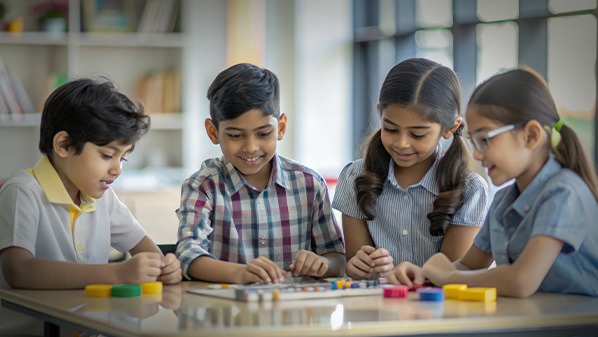
The Central Board of Secondary Education (CBSE) in recent years has acknowledged the need to go beyond conventional textbook-based teaching. The change is for the purpose of developing critical thinking and problem-solving skills pertaining to real-life issues among students. International schools in West Bengal with holistic education have led this change, implementing innovative teaching strategies to design more interactive and productive learning environments.
Project-Based Learning: Bridging Theory and Practice
Project-Based Learning (PBL) is a dynamic model that motivates students to discover real challenges and come up with solutions via investigation and experimentation. PBL in CBSE schools enables learners to undertake cross-disciplinary projects which enriches their knowledge of academic concepts alongside developing vital skills like problem-solving and collaboration. It changes the orientation from memorisation by rote to active learning, rendering education more relevant and interactive.
International schools in West Bengal with holistic education have also successfully integrated PBL into their curricula. Narayana International School, Khiddirpore, converges nascent digital technologies with the best-in-class research evidence to produce well-rounded future leaders. Through real-life projects, learners transfer theoretical insights and masterable life skills necessary for upcoming scholarship and work tasks.
Flipped Classrooms: Enhancing Student Engagement
The flipped classroom approach gets the upper hand over conventional teaching by presenting instruction online outside class time. It promotes self-guided learning and boosts student-teacher interactions, which efficiently caters to varying styles of learning. International schools in West Bengal with holistic education have accepted this approach to create a more interactive learning experience. Using the flipped classroom methodology, learners are able to review learning content at their own speed which creates a more personalised and thorough understanding of the material.
Integration of Technology: Preparing for a Digital Future
The seamless usage of technology in the teaching and learning process has transformed the idea of education from what it previously used to be. CBSE schools are now implementing the technological advancements to build interactive learning spaces for students. The entire process is supported by these digital tools. They offer access to a number of resources for the students and equip them to face the challenges of the future.
International Schools in West Bengal with holistic education are at the helm of incorporating technology into their curricula. Through the inclusion of technological tools in their curriculum, these schools provide students with the appropriate skills to tackle and thrive in a digitalising world.
International schools in West Bengal with holistic education are leading the way in the change where methods like project-based learning, flipped classrooms, and technology integration are facilitating student engagement and learning. These strategies ensure that learning becomes more engaging and interactive and impart to students the key competencies necessary for success in the 21st century.