
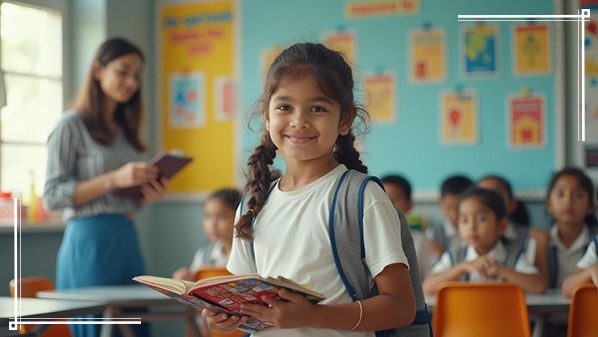
Education today is no longer confined to academic achievement alone. In a rapidly evolving world, the ability to think critically, solve problems, collaborate, and adapt is just as important as scoring marks in exams. To address this need, the Central Board of Secondary Education (CBSE) introduced the Continuous and Comprehensive Evaluation (CCE) system — a modern, child-centred approach that ensures well-rounded development.
At the best CBSE school in West Bengal, this system is more than just a guideline; it is the backbone of the institution’s academic philosophy. Let’s explore what CCE entails and the key benefits it offers to students, parents, and educators.
What is Continuous and Comprehensive Evaluation (CCE)?
CCE is an evaluation system that aims to assess all aspects of a student’s development continuously throughout the academic year. It focuses on both scholastic areas (such as languages, mathematics, and sciences) and the co-scholastic domains (including life skills, attitudes, values, sports, and creative arts).
Rather than relying solely on one-off exams, CCE employs a combination of formative assessments (ongoing, classroom-based activities) and summative assessments (term-end exams) to gauge a child’s progress. The goal is to reduce stress, encourage learning, and offer constructive feedback that helps students grow consistently.
Key Benefits of CCE in CBSE Schools
1. Reduces Exam Stress
Traditional education systems place a high amount of pressure on year-end examinations. CCE replaces this high-stakes approach with frequent, low-pressure assessments, allowing students to focus on learning rather than just scoring.
At the top CBSE school in West Bengal, teachers utilise quizzes, projects, group discussions, and peer reviews as tools to assess students regularly. This reduces anxiety and builds a healthier attitude toward academics.
2. Holistic Development of Students
CCE evaluates both intellectual and personal growth. Apart from academics, it takes into account a child’s communication skills, teamwork, emotional intelligence, and moral values. These co-scholastic evaluations are vital for preparing students for real-life challenges.
A top CBSE school ensures that activities such as debates, art competitions, community service, and physical education are seamlessly integrated into the academic calendar, allowing each student to excel in multiple areas.
3. Promotes Regular Study Habits
Because assessments are conducted continuously, students are encouraged to stay consistent in their studies. This prevents last-minute cramming and fosters a deeper understanding of subjects.
At the best CBSE school in West Bengal, students receive weekly feedback, enabling them to identify gaps early and take timely action — a habit that fosters discipline and academic responsibility.
4. Focuses on Individual Learning Styles
CCE is flexible, enabling educators to tailor their teaching methods to individual learning patterns. Every child learns differently — some excel with visual aids, others through hands-on activities or storytelling.
Progressive CBSE schools implement differentiated teaching techniques as part of the Continuous and Comprehensive Evaluation (CCE) framework, making education more inclusive and effective for all students, regardless of their abilities or learning pace.
5. Encourages Creativity and Innovation
With CCE, assessments are not restricted to pen-and-paper tests. Students are often evaluated through creative assignments, model-making, presentations, story writing, science experiments, and other similar activities.
This method not only makes learning enjoyable but also allows students to think independently, explore ideas, and become innovative thinkers — a trait highly valued in today’s world.
6. Improved Teacher-Student Relationship
The continuous nature of CCE ensures that teachers closely track each student’s progress, understanding their strengths and challenges. This leads to more personalised attention and a stronger emotional connection between students and educators.
At the best CBSE school in West Bengal, parents frequently receive detailed progress reports and interact with teachers to jointly support their child’s development, creating a strong academic partnership.
7. Provide timely and Constructive Feedback
One of the strongest features of CCE is its feedback mechanism. Rather than waiting for year-end report cards, students receive immediate feedback after every task or test, helping them reflect, improve, and move forward.
This approach fosters a growth mindset, where students are not afraid to make mistakes but see them as learning opportunities.
8. Lays the Foundation for Lifelong Learning
CCE instils habits such as self-assessment, time management, collaborative learning, and critical thinking. These are not just academic tools — they are life skills.
The top CBSE schools in West Bengal ensure that these values are embedded in day-to-day learning, preparing students to succeed in higher education, careers, and personal life.
Conclusion
The Continuous and Comprehensive Evaluation system is a bold step forward in creating education that genuinely serves the child — not just the system. It nurtures curiosity, values consistent effort, and appreciates a student’s uniqueness.
If you’re searching for the best CBSE school in West Bengal, ensure that it follows the CCE framework in both spirit and practice. Because the right school doesn’t just prepare your child for exams — it prepares them for life.
Additional Reading:
- How are Expat Students Treated in Narayana?
- How Can Smart Classrooms in CBSE School in Durgapur Shape a Student?