
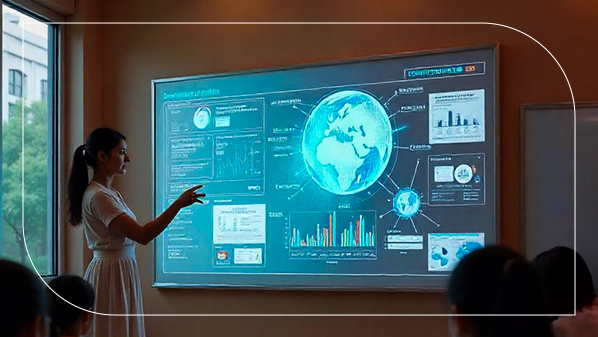
Technology has been serving to augment education. But as we adopt smartboards, tablets, web-based learning interfaces, etc, it is all the more necessary that we do not sacrifice true human interaction in light of these advancements. What is necessary is finding the perfect balance, particularly for an English medium school in Fulbari that holds intellectual growth and emotional growth in high regard.
The Blend of Tradition with Technology
Technology has changed the means of knowledge access by the students. With the advent of virtual laboratories and learning applications, contemporary tools have made learning more effective and interesting. Still, in an English medium school in Fulbari, the essence of human touch remains at the core of pedagogy. Promoting the use of educational technology always keeps the teacher’s role as the primary guide in mentoring and inspiring the learners.
Our classrooms make use of digital tools to enhance and not as a substitute for instruction. Educators still facilitate discussion and reply with understanding. This dynamic mix of the old and the new is a boon that helps students enjoy both worlds at the same time. They have access to current resources while developing strong relationships with their teachers and classmates.
Creating a Collaborative Environment
Collaboration is at the centre of learning, and no device can replace the emotional intelligence that comes from human contact. In one of our English medium schools in Fulbari, technology is employed to facilitate collaboration and not isolation of learners. We leverage group projects and peer-to-peer mentoring, usually facilitated through digital platforms but always rooted in real-time communication.
Video conferencing and shared documents enable the students to work together without the confines of the classroom. These resources can only be facilitated by the guidance of a teacher who maintains an emphasis on teamwork and mutual responsibility. By integrating technology into our cooperative exercises, we teach students to speak concisely and assist each other; abilities that we must live by outside school.
Fostering Emotional Intelligence in a Digital Age
With increased access to screens and devices, fears of lower emotional intelligence among young students have increased. This is why an English medium school in Fulbari gives high priority to social-emotional learning. Technology aids our mission through mindfulness apps and online counselling platforms, but the human touch continues to stay central.
Students are supported to learn by teachers who have been taught to notice and react to students’ emotional needs. Pastoral care and face-to-face counselling are pillars of our school culture. We also invite students to participate in extracurricular activities like drama, music and sports, all of which promote face-to-face contact and emotional expression.
In a world where electronic communication may take over from human interaction, we make a conscious effort to preserve strong human bonds. The parent-teacher conferences and collaborative learning activities are routine sessions of face-to-face human engagement and relationship-building. These make a conscious effort to ensure that students develop not just academically but also as empathetic, self-aware human beings.
Technology, if applied wisely, may improve the learning experience without losing the human touch. At an English medium school in Fulbari, we recognise that screens can never take the place of smiles, and apps cannot substitute for empathy. Our strategy is to combine the best of both world where we utilise digital mediums to provide enriched learning while ensuring relationships and emotional development remain central to education. By thoughtfully managing our use of technology, we attempt to prepare our students not just for exams but for life. In this way, schools are more than schools; they are a community where humanity and technology go hand in hand.
Additional Reading:
- Creating Future Leaders: Narayana’s Focus on Student Voice and Choice
- Top Skills Students Need in 2025 and How We’re Preparing Them Today?