
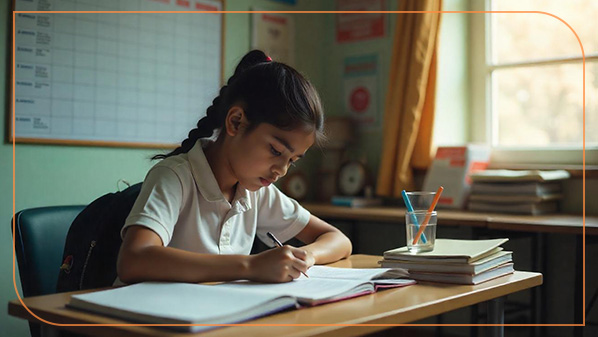
CBSE Board Exams are crucial milestones in every student’s academic journey. They not only assess what you’ve learned but also shape future opportunities in higher education. Scoring high isn’t about last-minute cramming—it’s about smart strategies, disciplined study habits, and a positive mindset.
10 Mind Blowing Tips to Score High in CBSE Board Exams
Here are the top study tips that can help you prepare effectively and perform confidently in your board exams. These practices are often encouraged in the best CBSE school with holistic education, where academic excellence is balanced with mental well-being and co-curricular growth.
1. Understand the Syllabus Thoroughly
The first step in preparing smartly is knowing what to prepare. Get a complete understanding of the CBSE syllabus for each subject. Highlight the weightage of each unit, and focus more on high-mark chapters.
Students at the best CBSE school with holistic education are trained to approach the syllabus strategically. Teachers provide breakdowns, blueprints, and prioritised topic lists to help students streamline their efforts.
2. Create a Realistic Study Plan
A personalized timetable is your best friend. Divide your daily hours between core subjects, revision, practice papers, and short breaks. Make sure to allocate more time to subjects or chapters you find difficult.
Break long study hours into short, focused sessions with 5-10 minute breaks in between. This reduces fatigue and increases retention.
3. Stick to NCERT Books First
For CBSE exams, NCERT books are the primary resource. Understand concepts, solve all exercises, and don’t skip the examples in between. NCERT books are concise, exam-oriented, and align perfectly with the CBSE question pattern.
Even the best English-medium school in West Bengal emphasises starting preparation from NCERTs before referring to advanced guides or reference materials.
4. Practice With Sample Papers and Previous Years’ Questions
Once your syllabus is completed, begin solving sample papers, mock tests, and previous years’ board papers. These will help you get familiar with the paper pattern, marking scheme, and time management.
A great tip is to time yourself as if you’re sitting for the actual exam. Then, analyse your answers critically and identify where you went wrong. This method helps improve speed, accuracy, and confidence.
5. Revise Smartly, Not Just Repeatedly
Revision is not about going through everything again and again. Instead, summarise each chapter in bullet points, create flashcards, or use mind maps to make your notes visual and engaging.
At the best CBSE school with holistic education, students are taught revision techniques that aid memory retention, such as the 24-hour revision rule, spaced repetition, and self-quizzing.
6. Strengthen Your Writing Skills
How you write your answers in the exam makes a huge difference. Practice writing clear, structured answers using keywords, bullet points, and diagrams (wherever applicable) and underlining essential phrases.
Work on your handwriting and presentation. Examiners appreciate neat work and well-organised answers, which could earn you extra marks even without additional content.
7. Stay Consistent With Your Doubt-Clearing
Never let your doubts pile up. The earlier you resolve your confusion, the easier it becomes to move forward. Whether through peer discussion or asking teachers, ensure every concept is crystal clear.
The best English-medium school in West Bengal fosters an open learning culture, where students are actively engaged in interactive sessions that clear doubts and remedial classes.
8. Prioritise Mental and Physical Health
Stress is a silent performance killer. Make sure you get 7-8 hours of sleep, eat nutritious food, and stay physically active. Even a 20-minute walk or stretching session can refresh your brain.
Meditation or mindfulness techniques also help reduce anxiety before exams. The best CBSE schools with holistic education include wellness programmes and yoga sessions in their routine to keep students mentally resilient.
9. Avoid Last-Minute Cramming
Rushing through topics the night before an exam only adds pressure and confuses you further. Instead, revise only what you’ve already learned. Go over summaries, formulas, or diagrams rather than picking up new chapters.
Plan your syllabus completion well in advance, leaving at least 15–20 days for revision and solving mock tests.
10. Stay Positive and Believe in Yourself
A positive mindset can do wonders. Don’t compare your preparation with others. Focus on your growth and be consistent. Celebrate small wins—completing a tough chapter, solving a paper without errors, or understanding a difficult concept.
Confidence, when paired with preparation, leads to excellence. That’s the kind of growth mindset promoted by the best CBSE school with holistic education, where students are nurtured not just to score well but to thrive holistically.
Final Thoughts
Cracking CBSE board exams isn’t about being a genius—it’s about being consistent, strategic, and balanced. The best English-medium school in West Bengal ensures that students are not only academically trained but also emotionally prepared to face board exams with calmness and courage.
Adopt these study tips early in the year, and you’ll find your preparation not just practical but empowering. Stay committed, stay organised, and, most importantly, believe in your ability to succeed.
Additional Reading:
- How are Expat Students Treated in Narayana?
- What Makes Narayana School, Durgapur The Benchmark of Quality Education?