
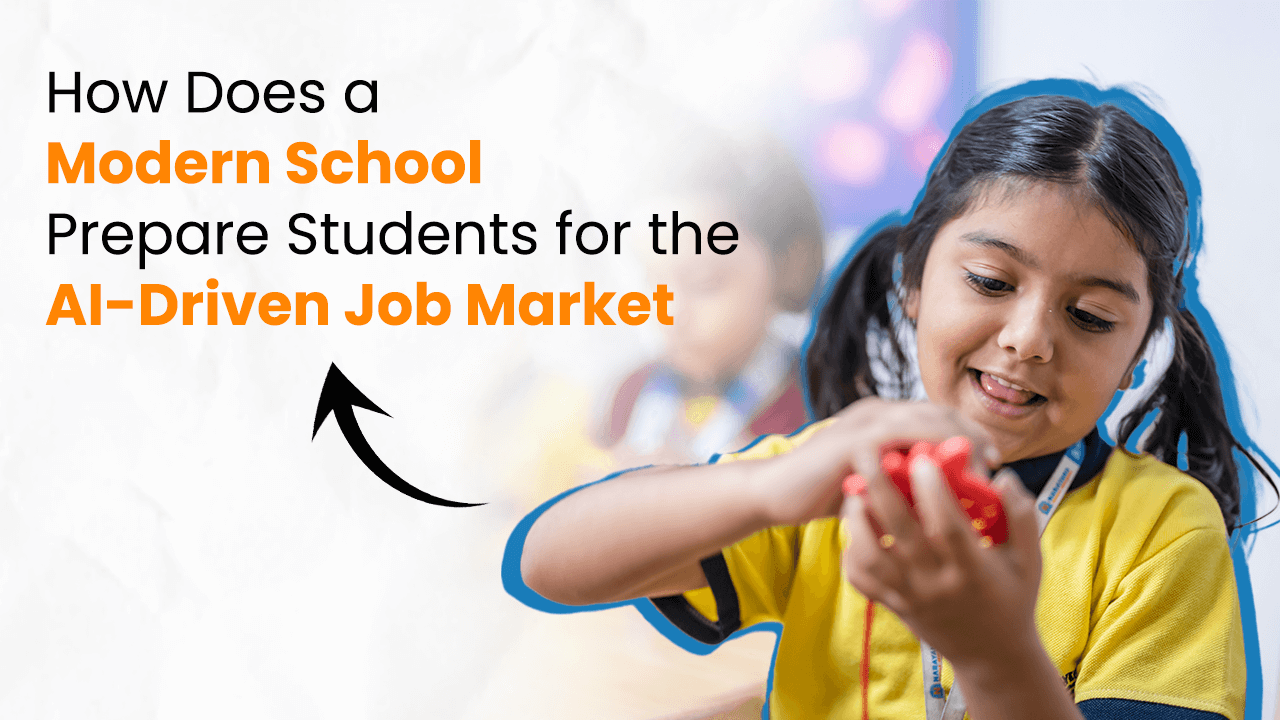
The job world is changing very fast. Machines, smart software and digital solutions are revolutionising every profession. Modern schools now make students ready to study and also to think, innovate and evolve. The objective is to get children ready for an AI-enabled work environment, where devices and people will work together in various capacities.
A New Age of Opportunity
When we were young children, we wanted to be doctors, teachers and engineers. Things have changed pretty dramatically. Now kids want to be robot designers, AI app makers or even drone pilots. These are careers that were wrought several years ago. As parents, this idea both excites and concerns us. We want our kids to have good work opportunities. But we brace for them not being ready for that world.
The fact is that schools are about much more than books and exam scores. Schools are turning into institutions where students learn how to work with computers, machinery and artificial intelligence (AI). In this era of automation, a modern school is the starting point to get a child ready for the professional world of tomorrow.
What is the AI-Driven Job Market?
We must be clear about what an AI-driven job market is. An AI career market is a world in which computers and smart machines assist people in getting their work done quickly and more efficiently. These machines can “think” through data and patterns.
An example:
- Smart home assistants like Alexa or Siri use artificial intelligence to interpret what we say
- Self-driving cars are almost able to drive to your destination autonomously, with the help of real-time data gathered by advanced sensors and decision-making
- Artificial intelligence is helping doctors with the early detection of disease in hospitals
- Robots are a part of the packaging and assembly process in factories
That’s why almost every sector, from farming to medicine, is changing. Machines are adapting to perform more. But they remain dependent on smart, qualified individuals to manage them. That’s where our kids play a role. The next generation must know how to work with AI. They should not be afraid of it.
Key Skills Needed in an AI-Driven Future
The future will not be about memorising facts but about thinking, inventing and learning. Some important competencies that schools today are nurturing in students are:
- Problem-Solving Skills: Educating children on what, why, and how behind a concept helps them understand better. It enables them to critically analyse any problem and apply logic creatively so that they can solve any problem, either related to projects or day-to-day life.
- Digital Literacy: Digital Literacy is knowing the computers, apps and digital tools available and using them responsibly. It ranges from simple coding to knowing about data, so when students learn about and therefore know about digital literacy, they will stay secure in a very digitally savvy world.
- Creativity & Innovation: AI can be funny, can think and can be capable, but only humans can dream. Schools allow for a more creative approach to learning through projects, art making or design to develop something new, which promotes creativity.
- Adaptability & Lifelong Learning: As technology changes daily, children must learn to upgrade their knowledge. Their adaptability will allow them to successfully change jobs and retain their resilience regardless of the context.
- Collaboration & Communication: Future jobs will require collaboration with people from other states and countries. Children need to learn to effectively communicate ideas and collaborate in teams.
Why are Schools Adapting Now
The world is moving fast. Many jobs that exist now will change or no longer exist in a few years. If schools continue to educate their students the same way schools have always educated their students, children will learn sometime later in life that they cannot adapt. Kids are not memorising lessons or taking tests similar to what we do in school approaches. That is why schools are starting to add new subjects in addition to their regular lessons.
They are using digital resources and incorporating hands-on learning. These innovations make students confident, curious and work-ready. It is no longer about just passing the exams. It’s also about being ready for life.
How Schools Develop These Skills in Students
Schools can build these skills among the students in the following ways:
1. Curriculum and Teaching Methods
Schools are now adding subjects such as robotics, coding and artificial intelligence to the regular curriculum. Students are focusing on practical work activities rather than studying subjects from textbooks. They either build models of robots or use simple AI apps.
Problem-based learning is also becoming more popular. Students love solving real-world problems as teams. This enhances teamwork and critical thinking.
There are some schools that employ adaptive learning software that modifies lessons based on each child’s pace. This gives confidence to slow learners while challenging faster learners.
2. Technology & Tools in Classrooms
If you went into a new classroom today, you would most likely see:
- Smart boards so children can interact with lessons.
- Items such as tablets or laptops instead of heavy notebooks.
- Virtual labs that allow online science experiments.
- Robotics kits that enable children to build moving models.
AI Tools can even be beneficial to a teacher, giving instant assessments on tests or exams or suggesting ways to improve learning for each student.
3. Teacher Training & Mentorship
A school is as good as its teachers. Most schools are now training their teachers in AI and digital learning. Workshops are arranged so that teachers can handle new technology with ease. In addition to this, schools are appointing mentors who enable students to develop curiosity, confidence, and communication and not merely subject knowledge.
4. Learning Beyond The Classroom
Education is no longer for four walls. Schools are demonstrating robotic competitions, coding camps and innovation fairs.
Some are even partnering with technology institutes or local universities to give students practical applications. This early encounter begins to normalise learning to be fun in order to build dreams for the future.
Real-World Examples & Success Stories
Young children across locations in India continue to demonstrate their capabilities in remarkable ways. In 2019, a twelve-year-old boy in Vadodara invented a unique instrument to clean water bodies. A student in Tamil Nadu created an AI program to help farmers predict rainfall.
Schools that are teaching robotics and AI in the early grades say students are more engaged, curious, and confident. Education reports say these programs have enhanced creativity by nearly 40% in schools that are a part of them. Such stories indicate that, given the right setting, even small steps towards AI learning can result in huge success.
The Challenges Schools Face in Preparing Students for AI Careers
It is only natural that implementing such changes is not an easy task. Schools face many challenges, particularly in small towns.
- Cost: Opening up computer labs, AI software, and robotics kits is not free.
- Access: Not all schools have good internet connectivity or basic infrastructure yet.
- Teacher Training: Most teachers are still learning how to use technology in their practice.
- Balance: We place so much emphasis on technology that schools have to continue focusing on reading, writing, arts and PE.
- Ethics: AI is based on data, and there can be concerns around privacy and screen time. Schools have to protect kids around tech.
How Schools Overcome These Challenges
Smart schools do not give up. They prepare better.
- They begin step-by-step, perhaps with one computer lab or one robotics class a week.
- They employ low-cost or no-cost AI tools found online.
- Teachers receive ongoing training programs to stay updated with the latest changes.
- Many schools employ a mixed approach. They are educating both with old-fashioned books and digital aids.
- Parents are also encouraged to participate in workshops so they know how AI tools assist their children.
This collaboration between teachers, schools, and parents breaks barriers and makes sure that all children are included.
What Guardians Need to Pay Attention to When Selecting a School
As a guardian, you have a major role in deciding the future of your child. With the next big school choice, pay attention to:
- Does the school have a computer/robotics lab?
- What amount of hands-on experience with technology does your child receive?
- Are the teachers knowledgeable and excited about learning and using technology in their teaching?
- Does the school also teach soft skills like collaboration and creativity?
- How often do they communicate with you about your child’s successes?
- Does your child have a chance to participate in projects, exhibits, and/or competitions?
A school that demonstrates technology, values, and genuine care for students is your best choice in this modern world with new technologies and ideas.
Looking Ahead: What is to Come?
The future looks bright. With AI coming into every field, the kids who understand the basics will be far ahead.
Each year, we see jobs appearing, from farming drones to healthcare assistants powered by AI.
The take-home message with robotics and AI is that not only does the technology aid in creating life skills, such as analytical thinking, creativity, collaboration and problem-solving.
These are the true gems of the 21st century.
It doesn’t matter if your child is a doctor, a teacher, or starts their own business.
These skills will always have a place in the world; they will always be necessary for life.
Why Narayana School is Walking This Path With You
Across India, many schools are trying to evolve. But few have as forcefully driven a transformation as Narayana School. We believe that education should be a preparation for the world our kids will graduate into, not the education world we grew up in. That’s why Narayana has invested in AI and robotics labs, smart classrooms, and project-based learning.
Here, teachers have continuous professional development based on AI-enabled applications for learning. Students are also given continual exposure to coding competitions, innovation fairs, and workshops covering technology and robotics.
Parents are part of the action too. When teachers communicate with parents through communication tools, it helps keep them connected to their child on this journey of curiosity and exploration. At Narayana, education is not just about marks. It’s about empowering each child to be confident, creative, and future-ready.
Conclusion
The employment market is evolving at a speed never seen before. Machines can perform multiple tasks. But they also require human imagination and intelligence. A modern school develops these qualities. It makes children learn, think, and adjust. As a parent, you have the ability to shape your child’s future by actively selecting schools that are designed to prepare students for the future as it unfolds.
And let’s be clear, education is not only about passing a series of exams, but helping your child to stand tall in the world of AI-enabled learning.
Let’s prepare them not only for a job but also for learning for their enjoyment, for their confidence, and for the future they can expect.