
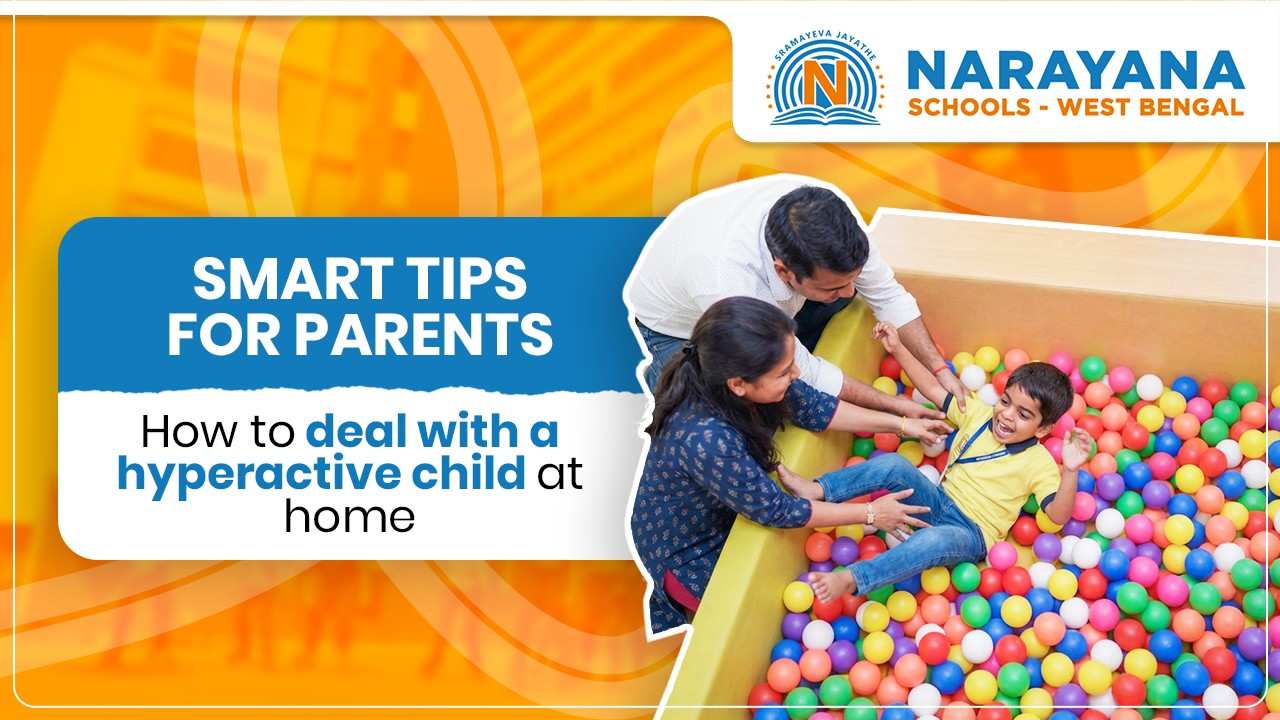
Children are usually quite energetic. They run throughout the home, inquire constantly and laugh at full volume. They have lots of natural curiosity regarding everything that is going on around them. The energy and curiosity that children have for exploration are beautiful, natural aspects of their existence. They express enthusiasm, creativity, and a thirst for knowledge and learning.
There are occasions when children may appear to exhibit higher-than-average levels of activity. Children who are too hyperactive can have difficulty remaining still during meal times. They cannot concentrate on their homework for any appreciable amount of time.
Children need to be provided with repetitive instructions to accomplish any particular task. They tend to move rapidly from one activity to another. You will find them talking incessantly to everyone around them. Parents can have difficulty understanding their child’s hyperactive behaviour and, at times, feel completely overwhelmed with trying to manage their child. Generally speaking, parents will often ask themselves a large number of questions, including the following:
- Why is my child more hyper than other children?
- Why can’t my child remain still and concentrate like other children?
- What is my fault?
The good news is that children with hyperactivity are not problematic kids. Instead, they are more energetic than the majority of other kids (or ‘average’ kids). If this energy is directed appropriately, it will be one of the best resources available to the hyperactive child and can assist them in becoming creative thinkers, confident leaders and strong problem-solvers, as well as being the best resource to their families and the community.
This article will provide parents with an understanding of what hyperactivity is and how to lead their hyperactive child so that they are able to grow into a successful adult.
Understanding Hyperactivity in Children
This is a state characterised by high levels of activity, impulsiveness, and inattentiveness. Hyperactive kids are the ones whose engines are always on. They are always moving around, touching everything they lay their hands on, and talking really fast without any pause.
The main reasons why hyperactive kids are associated with Attention Deficit Hyperactivity Disorder (ADHD) include the following:
- Always moving around
- Having problems remaining seated for long periods of time
- Having problems keeping their attention on one thing
- Interrupting others
- Doing things without thinking
The reasons mentioned above are the reasons why hyperactive kids are associated with ADHD. However, not all kids are hyperactive because, during their growing days, they are in a state of great excitement and curiosity.
The brain of the hyperactive child is developing, and it is natural for children to learn how to control themselves. This is because the child in question is in a state of great emotional development. This means that the child’s parent will be in a position to change their attitude towards the hyperactive child.
Signs of a Hyperactive Child at Home
Every child is unique, and this includes hyperactive children. These children tend to act differently from other children.
Constant Movement
A hyperactive child is always in motion. They are rarely found seated at home. They could be moving around in the house, climbing furniture, and fidgeting.
Short Attention Span
A hyperactive child can grow bored with an item that pleased him/her just 10 minutes earlier, and may not be able to finish school homework because he/she cannot hold on to ideas for long periods of time.
Impulsive Behaviour
A hyperactive child could speak without thinking. They could interrupt others and snatch things from others.
Difficulty in Following Instructions
A hyperactive child could not follow instructions. The parent could have to repeat themselves several times. The child could forget what they were told a few moments before.
Emotional Frustration
If situations or events are not favourable for these children, they may have a hard time controlling their emotions, resulting in crying or anger.
Parents find it very exhausting to manage and instruct their children every day. However, the parents of hyperactive children need to realise that their children cannot act out purposely and/or behave poorly; rather, they are trying to think faster than what is within their ability to control.
Why Punishment Does Not Work
Adults may be tempted to punish and get angry with hyperactive children. However, punishing a child who doesn’t behave in an expected way isn’t going to be beneficial to that child who is hyperactive.
Typically, a hyperactive child is confused about how he or she has acted. When this is constantly pointed out to them via negative feedback and criticism about how they are behaving, they will start to develop an idea that there is something wrong with them.
This may cause hyperactive children to develop low self-esteem as well.
Instead of punishing hyperactive children for their behaviour, they should be guided, understood and allowed to learn to control their behaviour.
Smart Ways to Support a Hyperactive Child at Home
Helping a hyperactive child does not require complex strategies. Simple measures can greatly help.
Developing a Daily Routine
Typically, children with hyperactivity struggle with their schoolwork and tasks because they perceive them as too difficult. A more effective method to help a child sleep is by breaking down the homework and tasks into smaller steps rather than simply having them complete them.
Breaking Tasks into Smaller Steps
Generally, hyperactive children find it hard to do their assignments or other activities because they are too overwhelming for them. Instead of telling them to do their assignments, it is better to break them into smaller steps.
Encourage Positive Behaviour
Praise is a very powerful factor that affects children. Whenever they do what is right or finish a task, it is essential to praise their behaviour. For example:
- “You did a great job finishing that.”
- “I like how carefully you listened.”
- “You worked really hard today.”
By doing this, we encourage the child to do more.
Allow Plenty of Physical Activity
It is said that children who suffer from hyperactivity have more energy reserves. Playing games or running helps to burn out this excess energy. This calms down the mind and increases concentration.
Create a Quiet Study Space
Disturbances or noises distract children. It is essential to provide a quiet space for the child to study. This space should be free from distractions. It is essential to switch off televisions or mobile phones during study time. This calms down the child’s brain.
Teach Simple Relaxation Techniques
Children can be taught many things. One of the essential things to be taught is deep breathing. It is essential to ask the child to breathe deeply through his or her nose for four seconds. Then ask him or her to hold his or her breath for two seconds. Then ask him or her to breathe out slowly.
Maintain Healthy Sleep Habits
Sleeping is a key behaviour of children. Without sufficient sleep, children’s behaviour changes drastically the following day. Children who do not have enough sleep tend to be more irritated and restless. Establishing a culture of sleeping habits is very important. Dimming the lights and reading a book can help relax a child’s mind.
Encourage Healthy Eating
A balanced meal containing grains, fruits, veggies, and a protein source will aid the development of the brain. Avoiding sugary snack foods will assist in alleviating an overactive child.
Emotional Support Makes the Biggest Difference
Children with hyperactivity are frequently on the receiving end of harsh criticism from others in their lives, including being called loud, restless and hard to handle. The words can really hurt the self-confidence of kids with hyperactivity.
Children with hyperactivity must feel loved and accepted for who they are. Therefore, parents must show a level of understanding toward their children to foster a connection with each child.
The connection families demonstrate (i.e., demonstrating unconditional love and empathy) toward their children will assist their children in developing a more secure emotional foundation. It leads to greater success in controlling their hyperactivity.
When Professional Guidance Can Help
At times, hyperactivity is severe enough to hamper learning and everyday functioning.
When a child continually exhibits hyperactive behaviour and struggles to focus or behave appropriately in school, seeking professional advice will assist them.
Professional advice from teachers, paediatricians and child psychologists will provide assistance to help the child develop and become successful.
A parent does not show weakness by helping their child overcome hyperactivity; they are merely taking another step towards helping their child develop and succeed in life.
Why the Right School Environment Matters
While it is vital to support hyperactive children at home, that support alone does not provide the foundation needed for a child to succeed. An equally important component takes place in schools.
A supportive school recognises the uniqueness of each student. Therefore, it creates an environment for students of all types to learn. Creating a nurturing school can help a hyperactive student stay calm and focused.
Schools that encourage children to ask questions and discover their environment provide hyperactive children with a means of positively using their hyperactivity.
Patience is the Greatest Tool
It takes a lot of patience to raise a hyperactive child. Some days will be easier than others, while some will be extremely difficult.
You should be celebrating all your child’s milestones in their hyperactivity level, such as completing homework while being calm, giving full attention to people when listening, and following the directions given by other people.
These small milestones will eventually develop into big milestones over an extended time frame.
Discovering the Child’s Strengths
There are many amazing talents associated with hyperactive children. Their ability to take a creative approach and be inquisitive will drive them to want to be part of anything that they enjoy.
Motivate children to discover what they have an interest in, whether it be through sports, music, painting, storytelling, building or science experiments.
Children will develop confidence when they visualise what they are interested in. Confident children learn how to turn their hyperactivity into accomplishing large achievements throughout their lives.
Why Choose Narayana Schools for Better Grooming of a Hyperactive Child
Hyperactive children tend to have difficulty finding the right direction for their energy and talents. But with the right kind of environment, they can be successful when using their talents positively as well as developing their focus.
Structured Learning System
At Narayana Schools, we provide students with a structured learning system. We follow the CBSE curriculum. This structure helps children develop their ability to focus on their work and have discipline in their lives.
Experienced Teachers
We have experienced teachers who understand that every child is an individual and that each child’s experience with learning will be different. Teachers use patience to help each child receive individualised attention so that they can reach their maximum ability.
Balanced Development
Our educational program promotes the development of well-rounded children through a variety of educational activities. In addition to classroom instruction, we also have a large number of non-traditional activities that we offer children to assist them in using their energy in a positive way.
Individual Attention
In order for each teacher to provide personalised instruction to a child, the teacher partners with the child to assist them in developing the skills required to succeed in the classroom. When a child has problems, the teacher observes the child and provides them with individualised attention to help them solve their problem.
Emphasis on Personality Development
In addition to learning how to communicate well, manage time effectively, and develop self-discipline, Narayana Schools teach students the qualities necessary to build confidence as an adult.
Hyperactivity is a strength that can be positively used with the appropriate educational environment.
Conclusion
Raising a hyperactive child can be challenging. However, it is also an extremely gratifying experience. Many hyperactive children view the world with a sense of curiosity, creativity, and imagination. Hyperactive behaviours in children can be channelled into confidence and focus.
Parents are the most influential part of the equation, as they provide love, emotional comfort, and direction. The support of the entire school system plays an important role in the positive development of your child.
Narayana Schools create structured, supportive school environments in which students will flourish and develop into responsible adults.
Applications for enrolment are now accepted at Narayana Schools. The correct guidance, environment, and foundational principles will create a bright future for your child.