
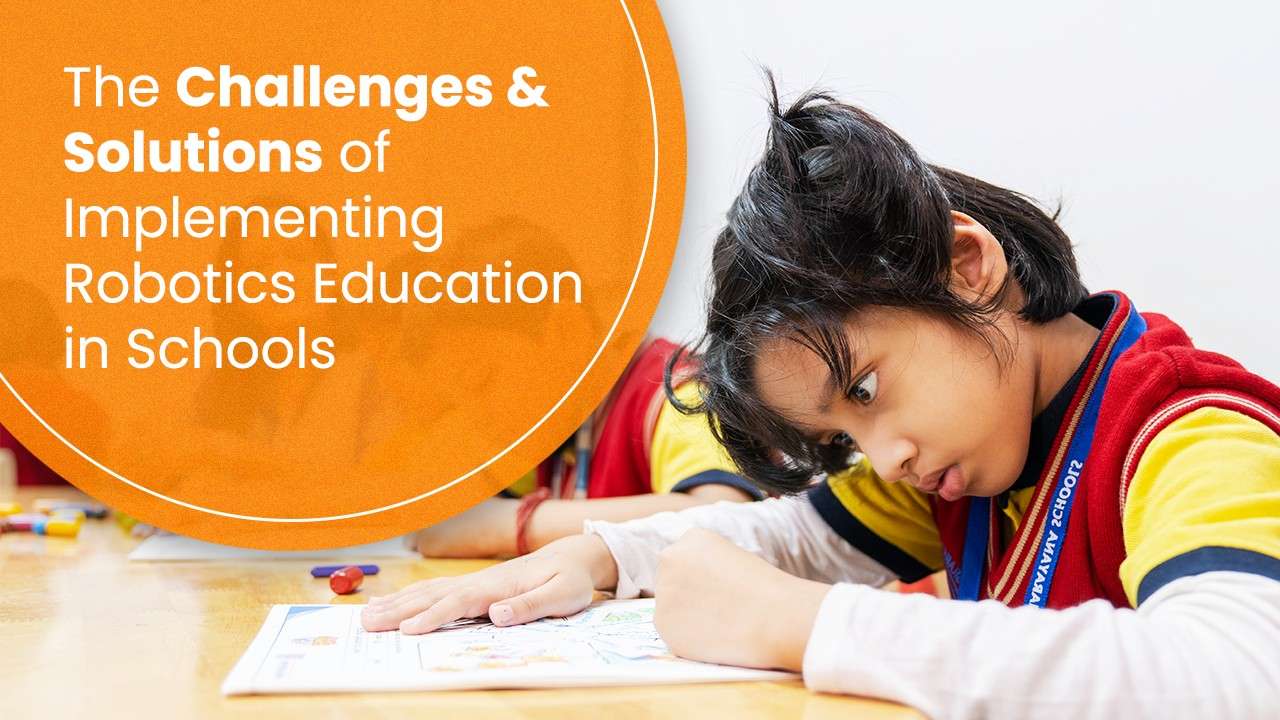
The world around us is changing more rapidly than ever. Machines are becoming smarter, and kids today are growing up with technology that their parents never dreamed of. These days, schools are not merely institutions where children read books. They are places where young minds learn to think, create, and innovate.
Robotics learning is one such exciting move that makes kids go beyond memorisation of lessons and actually learn how things function. But as fascinating as it sounds, introducing robotics to every classroom is not always an easy task. Let’s look at what the real challenges are in schools. We will also see how schools are coming up with smart, practical solutions to overcome them for the benefit of our children’s future.
Robotics in Every Child’s Hands
Imagine a little kid sitting in school, eyes wide with wonder, grasping small wires and a motor. The child presses a switch, and the small robot begins to move. That look of sheer delight on their face is all one needs to see. As parents, we all wish for our children to be happy while they are learning. We wish for them to explore, build, and grow. They should not merely memorise and forget. Robotics does just that. It makes learning fun. Children learn to think, imagine, and invent.
But this brings certain worries to a parent’s mind. Is it possible to introduce robotics into every school easily? Can every child, including those from small towns, benefit from this type of learning? This blog shall explore more about what is deterring a large number of schools from teaching robotics, particularly at the primary level. It is important to learn how some schools are overcoming such challenges. And yes, Narayana School is one of the very few that are already doing their bit to address these issues. Keep reading till the end to find out how.
What Robotics Education Means for Schools & Students
Simply put, robotics implies studying how to create and program tiny machines that can do work. These machines might move, detect light, follow lines, or pick up objects. Kids employ robot kits, sensors, and electronic components to build these robots. For them, it is playing games, but with a purpose. They acquire logic, creativity, and problem-solving without realising it.
Students learn how science and maths become real through robotics. They experience actual outcomes when their robot moves or responds. This generates confidence, discipline, and curiosity.
Common Challenges Schools Face in Adopting Robotics Education
Robotics education is exciting, but it comes with challenges, especially for regular schools trying to introduce it for the first time.
- Infrastructure & Equipment Costs
The biggest problem is money. Robotics kits are expensive. Schools need proper labs, safe tables, and power points. Over time, these robots need repairs and maintenance. Parts may break. Batteries need replacement. This expense can cause a strain for schools with limited budgets.
- Teacher Expertise and Preparedness
Most teachers have never taught with robots. They might be apprehensive about working with tools, programming software, or electronic components. Trained or not, they cannot lead students confidently. Schools must invest time and funds in teacher training, workshops, and mentoring. Until that happens, robotics education will never reach its full potential.
- Curriculum Integration & Time Constraints
School schedules are busy enough with maths, science, languages, and exams. Fitting robotics into this tight schedule becomes difficult. Schools also have trouble figuring out how much robotics they should teach and when. Weekly? Monthly? How to integrate it with the other subjects, such as science and maths, without burdening the students?
- Resource Access & Equity
In some villages and towns, electricity or the internet is not always reliable. Some kids don’t have smartphones or computers in their homes. This creates inequality. Children from urban areas receive more exposure, while others lag behind. That is why schools need to plan robotics in a manner that engages everyone.
- Safety, Supervision & Sustainability
Safety is extremely crucial. Kids play with small wires, motors, and batteries. Schools have to ensure that trained instructors supervise in schools. Mishandling parts can lead to accidents. Also, robotics courses must go on for years. Some schools begin with enthusiasm but fall off later on because of budget or personnel changes. Continuity is a real challenge.
Emotional and Social Challenges
Besides physical challenges, there are emotional and social ones as well. A lot of parents are concerned: “Will this be too difficult for my child?” or “Will my child feel confused due to these machines?” Kids, also, can feel stressed if others learn quickly. Quiet students can feel left behind. Schools sometimes emphasise competitions too much, making even learning a race. That creates stress rather than curiosity. So, motivation and emotional support are just as essential as robots and wires.
Solutions: How Schools Are Overcoming the Challenges
In spite of these obstacles, many schools, including Narayana, are demonstrating that robotics education can work with smart planning and perseverance.
- Smart Budgeting & Phased Investment
Schools are learning how to begin small. They start with some simple kits and step by step make their way towards sophisticated ones. Some schools also share robotics labs with other nearby institutions. Others approach government schemes or NGOs for providing finances for robotics programs. This way, schools can keep costs under control without overburdening parents.
- Teacher Training & Mentorship
Teachers are the key to robotics education. These days, schools are willing to offer teachers training sessions, both online and as extra time on the calendar. Teachers with experience in robotics are mentoring colleagues through peer learning. This enhances confidence and team spirit among staff. Even free online tutorials are guiding teachers through robotics step by step.When teachers are ready, kids benefit automatically.
- Curriculum Design & Flexibility
Successful schools combine robotics with regular subjects. For example, an electricity lesson in science can involve creating a simple circuit for a robot. Robot movement can help a teacher explain distance or time in maths classes. Some schools offer robotics as an optional activity via clubs or activity classes. That way, interested students have an opportunity to learn without placing additional stress on all students.
- Providing Access & Equity
Schools are coming up with innovative ways to reach all students. They utilise portable robot kits which do not need high-end computers. Teachers share offline study guides and printed materials. These resources are beneficial to those who lack internet connections. Local communities also help — parents, alumni, or small organisations provide tools or lend machines. This teamwork makes it possible to never leave any child behind.
- Safety Protocols & Sustainable Models
Safety procedures are now integral parts of robotics programs. Kids wear eye protection or gloves when necessary. Educators remain nearby when tools are being used. Schools also develop maintenance schedules for robots and kits. In the long term, schools are committed to sustaining this program. They are allocating a small fund each year and continuing to train new teachers, to continue before experienced teachers leave/retire.
Benefits Worth Overcoming Challenges
Despite all these challenges, robotics education provides invaluable benefits. Children acquire problem-solving skills from actual experience. They learn to become patient when something does not work and try it again. Robotics enhances creativity. A child can conceptualise something out of imagination and watch it become reality. Confidence increases when the robot moves or performs a task. Guardians are proud to see their children build, repair, and showcase what they created. And yes, it exposes students to careers in automation, AI and engineering. These jobs will shape the world of tomorrow. Most importantly, it makes learning fun!
Case Studies / Examples of Success
In one small town school in Odisha, teachers initiated a simple robotics club with two kits. In a matter of months, students started making models out of waste materials. Science showed an increase in interest. A shy classmate who used to be afraid to talk now led a team in a district robotics competition. In another example, students who were slow in learning math understood better when they applied the concepts to building robots. These inspiring incidents demonstrate that robotics doesn’t merely impart technology. It builds confidence, curiosity, and hope.
What Guardians Should Look for When Choosing a School With a Robotics Program
If you are a parent setting up your child for the future, here are a few easy things to look out for:
- Does the school have a proper robotics lab or even a corner space?
- How often do kids get to handle and play around with robotics equipment? Is it once a term or every week?
- Are teachers qualified and kind to beginners?
- What precautionary measures does the school take?
- Are there additional charges for robotics exercises, and are they open about it?
A good school combines robotics with academics, safety, and fun.
Looking Ahead: What the Future has in Store
The future of robotics in schools is bright. Low-cost robot kits are becoming the norm. Virtual simulations are helping schools with limited space. Even small towns are becoming very interested. Children from all walks of life are forming robotics clubs. In the next few years, robotics will connect closely with artificial intelligence, drone technology, and automation. Career opportunities will emerge in robot design, machine maintenance, automation controls, and industrial design.
But even for kids who pursue other careers, robotics develops skills, teamwork, problem-solving, patience, and creativity. These lessons will remain valuable for a lifetime. Lifelong learning will be the key to success.
How Narayana School Is Addressing These Challenges
We at Narayana School are of the view that robotics need not be a luxury. Every child deserves the same experience. That’s why we have invested in safe robotics labs, updated kits, and teacher training. Our teachers frequently attend workshops to learn new technologies. We conduct robotics sessions and competitions that encourage children to be inquisitive and proactive. We maintain safety by adhering to proper guidelines and continuous monitoring. We also make the program affordable by utilising shared kits, digital tools, and community resources.
Students here learn not just to study but to build, experiment, and present their work. Robotics is a part of their course of study, not an extracurricular activity. Parents receive information about projects so that they can witness their child’s growth with pride.
Conclusion
Implementing robotics in schools is not a cakewalk. There are expenses, challenges, and concerns. But the advantages are much bigger than the obstacles. Kids who learn robotics today will become thinkers, inventors, and leaders tomorrow. As parents, we all want our kids to be prepared for tomorrow. We would love to see them confident, able, and imaginative. Learning robotics provides them with that capability. If you want to observe how it occurs in actual classrooms, come to Narayana School. Meet our teachers. Observe children working in the robotics lab. Imagine the excitement in their eyes at the first robot assembly. That spark is the first step to a brighter future.